
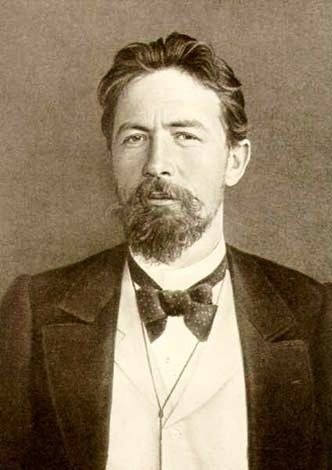
Anton Chekhov, born Anton Pavlovich Chekhov on January 29, 1860, in Taganrog, Russia, is one of the most revered figures in world literature. Known for his contributions as a playwright and short story writer, Chekhov’s works have left an indelible mark on the literary world, shaping the course of modern drama and narrative fiction. His ability to portray the complexities of human nature with subtlety and precision has earned him a place among the great literary figures of all time. This article explores Chekhov’s life, his rise to fame, his significant literary achievements, and his enduring influence on both literature and drama.
Early Life and Background
Anton Chekhov was born into a family of modest means in the port city of Taganrog, situated on the Sea of Azov in southern Russia. His father, Pavel Yegorovich Chekhov, was a grocer and the son of a former serf who had purchased his freedom, while his mother, Yevgeniya Yakovlevna Morozova, came from a family of merchants. Despite their financial struggles, the Chekhov family valued education and made sure that their children received a solid academic foundation.
Chekhov’s early years were marked by a strict and, at times, oppressive upbringing under his father’s tyrannical rule. This difficult childhood, however, was tempered by his love of nature and a vivid imagination, which provided him with solace and inspiration. From an early age, Chekhov developed a keen sense of observation, a trait that would later become central to his writing.
After completing his schooling in Taganrog, Chekhov moved to Moscow in 1879 to join his family, who had relocated there following his father’s bankruptcy. It was in Moscow that Chekhov enrolled in medical school at Moscow State University, balancing his studies with the need to support his family financially.
The Dual Life: Medicine and Writing
Chekhov graduated as a physician in 1884, and medicine became his primary profession for several years. However, he had already begun writing short stories and humorous sketches during his university years, publishing them in various journals under pseudonyms such as “Antosha Chekhonte” and “Man Without a Spleen.” These early writings were often lighthearted and comedic, reflecting the popular style of the time.
Despite the demands of his medical practice, Chekhov continued to write prolifically, viewing literature as a means of supplementing his income. He once remarked, “Medicine is my lawful wife, and literature is my mistress,” a sentiment that captures the dual nature of his career. His early stories, while often humorous, also hinted at the deeper themes of social criticism and human suffering that would later characterize his work.
Chekhov’s literary talent did not go unnoticed. The renowned writer Dmitry Grigorovich recognized Chekhov’s potential and encouraged him to take his writing more seriously. This encouragement marked a turning point in Chekhov’s life, prompting him to focus more on his literary career. His work began to appear in more prominent literary magazines, and his reputation as a writer steadily grew.
Rise to Literary Fame
By the late 1880s, Anton Chekhov had established himself as a significant literary figure in Russia. His early collections of short stories, such as Melpomene’s Tales (1884) and Motley Stories (1886), were well-received and showcased his ability to capture the lives of ordinary people with wit and insight. These stories often portrayed the mundane and sometimes bleak realities of Russian life, but they were infused with Chekhov’s characteristic humor and empathy.
One of Chekhov’s most celebrated early works is The Steppe (1888), a novella that describes the journey of a young boy across the Russian countryside. This work is notable for its vivid descriptions of the landscape and its introspective exploration of the boy’s thoughts and feelings. The Steppe was a critical success and earned Chekhov the prestigious Pushkin Prize from the Russian Academy of Sciences.
During this period, Chekhov also began to experiment with more serious themes in his writing. Stories like Miserly Knight (1887) and The Duel (1891) reflect his growing interest in the darker aspects of human nature and the existential questions that would come to define his later work. These stories marked a shift in Chekhov’s style, moving away from the lighthearted humor of his early writings toward a more somber and reflective tone.
Chekhov’s Contribution to Drama
While Anton Chekhov is perhaps best known for his short stories, his contributions to the world of drama are equally significant. Chekhov’s plays are considered masterpieces of modern theater, characterized by their subtlety, realism, and deep psychological insight.
Chekhov’s first major play, Ivanov (1887), was a critical and commercial success, though it was later revised to better reflect his evolving style. This play, which tells the story of a disillusioned and self-destructive man, marked the beginning of Chekhov’s exploration of complex, multi-dimensional characters in his theatrical work.
The 1890s saw the creation of some of Chekhov’s most famous plays, including The Seagull (1896), Uncle Vanya (1899), Three Sisters (1901), and The Cherry Orchard (1904). These plays are known for their exploration of themes such as unfulfilled desires, the passage of time, and the disintegration of the Russian aristocracy. Chekhov’s characters are often depicted as trapped in their circumstances, struggling with their inability to change their lives or escape their fate.
Chekhov’s style of drama was revolutionary for its time. He eschewed the melodramatic conventions of 19th-century theater in favor of a more naturalistic approach, where the emotional undercurrents of the characters’ lives were revealed through seemingly trivial dialogue and actions. This technique, known as “Chekhov’s gun,” suggests that every element in a story should be necessary and that any details that are not essential should be removed.
The Seagull, which initially failed when it premiered in 1896, was later revived and became a cornerstone of the Moscow Art Theatre under the direction of Konstantin Stanislavski. The success of The Seagull marked a turning point in Chekhov’s career as a dramatist, and it established his reputation as a major playwright.
Later Life and Struggles with Health
Despite his success as a writer, Chekhov’s life was plagued by health problems. He had contracted tuberculosis in his youth, and by the 1890s, the disease had begun to take a serious toll on his health. In 1897, after a severe hemorrhage, Chekhov was forced to acknowledge the severity of his condition and make significant changes to his lifestyle.
In an effort to improve his health, Chekhov moved to Yalta in Crimea, where the milder climate was thought to be beneficial for tuberculosis patients. While living in Yalta, he continued to write, although his output slowed due to his illness. It was during this time that he wrote Three Sisters and The Cherry Orchard, two of his most famous plays.
Chekhov’s marriage to Olga Knipper, a leading actress of the Moscow Art Theatre, in 1901 brought some happiness into his life, though the couple spent much of their marriage apart due to Chekhov’s health and Knipper’s acting commitments in Moscow. Despite the physical distance, their relationship was close, and they maintained a deep emotional connection through frequent letters.
The Legacy of Anton Chekhov
Anton Chekhov’s influence on literature and drama cannot be overstated. His works have been translated into numerous languages and continue to be performed and studied worldwide. Chekhov’s ability to capture the complexities of human experience with empathy and subtlety has made his stories and plays timeless.
In the world of drama, Chekhov’s plays marked a departure from the theatrical conventions of the 19th century, paving the way for modernist and realist movements in the theater. His use of subtext, where the true meaning of the dialogue lies beneath the surface, has been particularly influential. Playwrights such as Tennessee Williams, Arthur Miller, and Samuel Beckett have all cited Chekhov as an inspiration.
In literature, Chekhov is often regarded as one of the greatest short story writers of all time. His stories are celebrated for their economy of language, depth of character, and exploration of universal themes. Chekhov’s ability to evoke a sense of place and atmosphere, combined with his keen psychological insight, has made his stories enduring classics.
Chekhov’s legacy also includes his contributions to social reform. His visit to the penal colony on Sakhalin Island in 1890 resulted in the publication of The Island of Sakhalin (1893), a detailed account of the harsh conditions faced by prisoners and exiles. This work brought attention to the need for reform in the Russian penal system and contributed to the eventual abolition of corporal punishment.
Conclusion
Anton Chekhov was a master of both the short story and the stage, and his work has left an enduring legacy in the worlds of literature and drama. From his early days as a medical student and struggling writer to his later years as one of Russia’s most celebrated authors, Chekhov’s life was a testament to his dedication to his craft and his deep understanding of the human condition.
Despite his struggles with illness and the pressures of his dual career as a doctor and writer, Chekhov produced a body of work that continues to resonate with readers and audiences today. His exploration of the ordinary lives of people, his depiction of the nuances of human emotion, and his innovative approach to drama have made him a towering figure in world literature.
As we continue to study and appreciate Chekhov’s works, his insights into human nature and his contributions to the arts remain as relevant as ever, reminding us of the power of storytelling to illuminate the complexities of life.


