
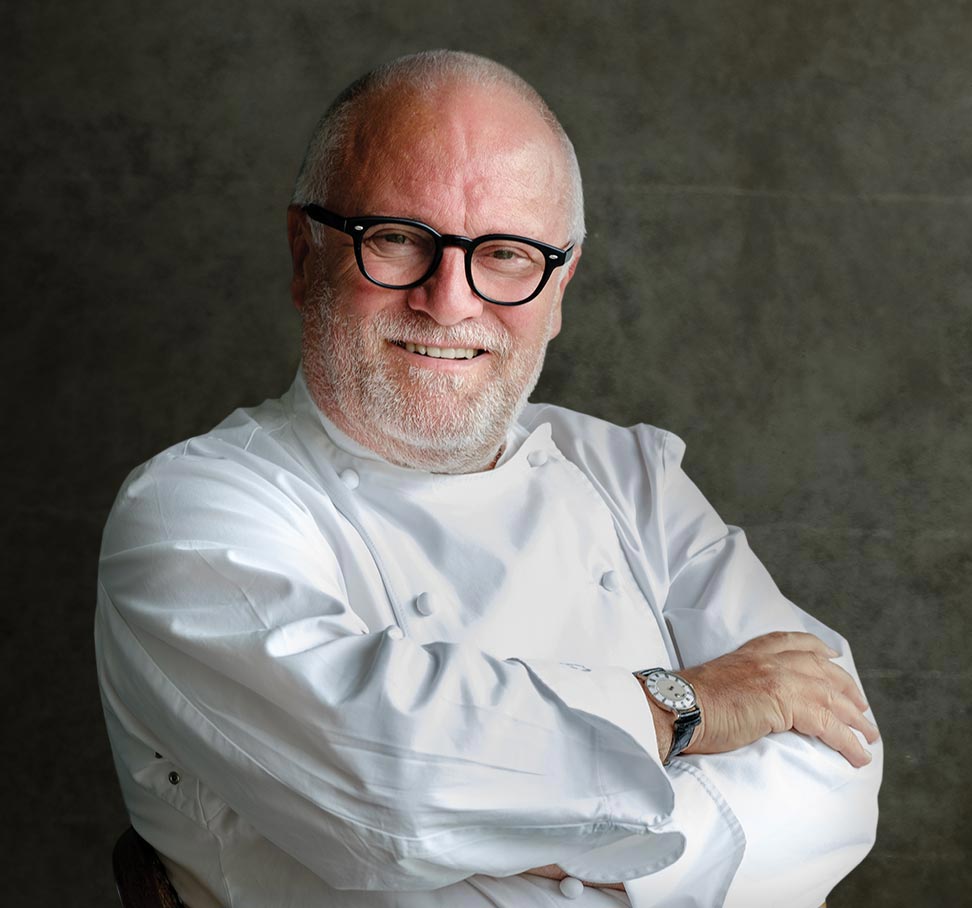
Antonello Colonna is a name that resonates deeply within the culinary world, particularly in Italy, where he is celebrated as a pioneer of modern Roman cuisine. Born into a family with deep culinary roots, Colonna has built an empire that bridges tradition and innovation, earning him international acclaim. This article explores his life, career, and the indelible mark he has made on the global culinary landscape.
Early Life and Culinary Beginnings
Antonello Colonna was born in Italy, and from a young age, he was immersed in the world of gastronomy. His family owned a restaurant, and it was here that Colonna developed his passion for cooking. This early exposure to the culinary arts laid the foundation for what would become a distinguished career. However, Colonna was not content to simply follow in the footsteps of his predecessors; he sought to innovate and redefine what Roman cuisine could be.
In 1985, Colonna took over the family business. This was a pivotal moment in his career, as he began to implement his vision of blending traditional Roman flavors with modern culinary techniques. The restaurant, which he renamed “Antonello Colonna,” became a laboratory of sorts, where Colonna experimented with new ideas while staying true to the rich culinary heritage of Lazio, the region surrounding Rome.
The Rise to Fame: Revolutionizing Roman Cuisine
Colonna’s approach to cuisine was nothing short of revolutionary. While he respected the traditions of Roman cooking, he was not afraid to challenge conventions and introduce new elements that would elevate the dining experience. This blend of the old and the new quickly garnered attention, and by the mid-1980s, Antonello Colonna’s reputation was spreading far beyond the borders of Italy.
One of the key moments in Colonna’s rise to fame was his participation in the event “The wind of Rome is a friendly wind,” organized by the National Italian American Foundation in 1986. This soirée showcased Colonna’s talents to an international audience and solidified his status as a culinary innovator. The following year, Colonna took his talents across the Atlantic, opening a restaurant in New York called “Albero d’Oro,” now known as “Vabene.” This establishment introduced the concept of Jewish-Roman cuisine to the American market, blending the unique flavors of these two rich culinary traditions.
Colonna’s influence continued to grow throughout the 1990s. In 1992, he was invited by the Culinary Institute of America to teach courses on Roman cuisine, further establishing his role as an ambassador of Italian culinary traditions. His expertise was sought after for major events, including the New York Marathon, Columbus Day celebrations, and the 1994 FIFA World Cup. These events allowed Colonna to showcase his skills on a global stage, reaching audiences far beyond Italy.
International Recognition and Culinary Diplomacy
As Colonna’s fame spread, so did his opportunities to represent Italian cuisine on the world stage. In 1996, he was appointed as the culinary supervisor for Casa Italia at the Atlanta Olympics, where he was responsible for feeding the Italian athletes and officials. This role was not only a testament to his culinary skills but also highlighted his ability to manage large-scale operations, a skill that would become increasingly important as his career progressed.
In 1997, Colonna was named “Ambassador of Italian Cuisine in the World” by the Italian National Tourist Board (ENIT). This prestigious title recognized his contributions to promoting Italian gastronomy globally and cemented his status as a leading figure in the culinary world. His role as an ambassador took him to various countries, where he continued to share his passion for Roman cuisine, adapting it to suit local tastes while maintaining its authentic flavors.
Colonna’s global influence was further evidenced by his involvement in the opening of “Paper Moon” in Istanbul, a project that showcased his ability to blend Italian cuisine with local flavors. His culinary diplomacy extended beyond the kitchen, as he became a familiar face on Italian television, hosting a gastronomic segment on the program “Più sani più belli” and appearing in various advertisements for major Italian brands such as De Longhi, Divella, Pecorino Romano, Grana Padano, and La Molisana.
The New Millennium: Expanding Horizons
As the 21st century dawned, Antonello Colonna continued to push the boundaries of his craft. He became increasingly involved in marketing and public relations, using his fame to promote Italian cuisine and culture on a global scale. His participation in prestigious cultural and social events further enhanced his profile, making him a household name not just in Italy but around the world.
In 2007, Colonna opened “Open Colonna,” a restaurant located on the top floor of the Palazzo delle Esposizioni in Rome. This venue became a symbol of Colonna’s approach to cuisine—an open space where tradition met innovation, offering diners an unparalleled gastronomic experience. The restaurant quickly became a favorite among locals and tourists alike, further solidifying Colonna’s reputation as a master of modern Italian cuisine.
Teaching and Mentorship
Beyond his work in the kitchen, Antonello Colonna has also made significant contributions to culinary education. He has served as a professor of Restaurant Management at LUISS, one of Italy’s most prestigious universities. In this role, Colonna has shared his extensive knowledge and experience with the next generation of chefs and restaurateurs, emphasizing the importance of innovation, sustainability, and the preservation of culinary traditions.
Colonna’s mentorship has had a lasting impact on the culinary world, as many of his students have gone on to achieve success in their own right. His teachings have helped shape the future of Italian cuisine, ensuring that the principles of quality, creativity, and respect for tradition continue to guide the industry.
Legacy and Impact
Antonello Colonna’s influence on the culinary world cannot be overstated. He has played a crucial role in transforming Roman cuisine from a regional specialty into a global phenomenon. Through his restaurants, television appearances, and educational efforts, Colonna has introduced millions of people to the rich flavors and history of Lazio, while also pushing the boundaries of what Italian cuisine can be.
Colonna’s legacy is also evident in the numerous awards and accolades he has received throughout his career. From Michelin stars to international honors, his contributions to the culinary arts have been recognized by peers and critics alike. However, Colonna’s true legacy lies in the impact he has had on the way people experience and appreciate food. His ability to blend tradition with innovation has not only delighted diners but has also inspired countless chefs to explore new possibilities in the kitchen.
Historical Context and the Evolution of Italian Cuisine
To fully appreciate Antonello Colonna’s contributions, it is essential to understand the historical context in which he emerged as a culinary leader. Italian cuisine has long been revered for its simplicity, emphasis on fresh ingredients, and strong ties to regional traditions. However, by the late 20th century, there was a growing interest in reinterpreting these traditions in a way that resonated with contemporary tastes and sensibilities.
Colonna was at the forefront of this movement, which sought to elevate traditional Italian dishes by incorporating modern techniques and presentation. This approach, often referred to as “New Italian Cuisine,” was characterized by a respect for the past while embracing the possibilities of the future. Colonna’s work exemplified this philosophy, as he sought to honor the culinary heritage of Lazio while also pushing the boundaries of what Roman cuisine could be.
The success of Colonna and his contemporaries helped to transform Italian cuisine into a global brand, celebrated for its diversity, creativity, and quality. Today, Italian restaurants can be found in almost every corner of the world, and dishes like pasta, pizza, and risotto have become staples of international cuisine. Colonna’s influence on this global phenomenon cannot be underestimated, as his work has helped to define what it means to be an Italian chef in the modern era.
Conclusion: Antonello Colonna’s Enduring Influence
Antonello Colonna’s career is a testament to the power of passion, creativity, and a deep respect for tradition. From his humble beginnings in a family restaurant to becoming a global ambassador of Italian cuisine, Colonna has left an indelible mark on the culinary world. His ability to blend the old with the new has not only earned him international acclaim but has also inspired a new generation of chefs to explore the endless possibilities of Italian cuisine.
As we look to the future, Colonna’s influence will undoubtedly continue to shape the culinary landscape. His commitment to quality, innovation, and education ensures that his legacy will endure, inspiring chefs and food lovers around the world to embrace the rich culinary traditions of Italy while also pushing the boundaries of what is possible in the kitchen.


