
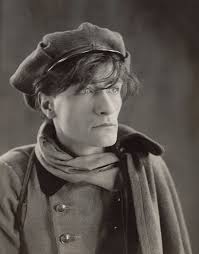
Antonin Artaud, born Antoine Marie Joseph Artaud, on September 4, 1896, in Marseille, France, is a towering figure in the realms of theater and literature. Known for his avant-garde theories and the profound impact he had on modern theater, Artaud’s life was a complex interplay of brilliance and madness. This article delves into his life, achievements, and the historical context that framed his work.
Early Life and Challenges
Artaud was born into a bourgeois family with a rich cultural heritage. His mother, Euphrasie Nalpas, had Turkish roots, and his father, Antoine, was a long-distance captain. From a young age, Artaud faced significant health challenges. At just four years old, he contracted a severe form of meningitis, which many believe was the root cause of his later neurological issues, including stuttering, neuralgia, and severe depression.
During his adolescence, Artaud spent considerable time in sanatoriums, battling his ailments. His love for literature blossomed during these years, with Edgar Allan Poe, Charles Baudelaire, and Arthur Rimbaud becoming his literary idols. However, in 1919, a doctor prescribed him laudanum, leading to a lifelong struggle with opioid addiction.
Journey into Theater
In 1920, Artaud moved to Paris, where he became deeply involved in the theater. He joined the Théâtre de l’Œuvre, directed by Lugné-Poe, a pioneer in bringing avant-garde plays to the French stage. Artaud’s talent quickly shone through, and he became known for his eclectic artistic skills and his acting prowess. He worked on productions like Calderón de la Barca’s “Life is a Dream” and collaborated with notable figures like Charles Dullin and the actress Génica Athanasiou.
Despite his early success in theater, Artaud grew increasingly disillusioned with the roles offered to him. This frustration led him to explore the burgeoning world of cinema. With the help of his cousin Louis Nalpas, he secured roles in films such as “Surcouf, le roi des corsaires” and “Fait divers.”
The Surrealist Movement
Artaud’s involvement with the surrealist movement began in the mid-1920s. He became the director of the Bureau of Surrealist Research and contributed prose poems and screenplays to the movement’s publications. However, his relationship with the surrealists was tumultuous. Artaud’s radical ideas about theater often clashed with the group’s increasingly political stance, leading to his eventual expulsion.
Despite this, Artaud continued to develop his revolutionary ideas about theater. He founded the Théâtre Alfred Jarry in 1926, with the aim of creating a space for experimental and non-traditional performances. Although the theater had to close in 1930 due to financial difficulties, it laid the groundwork for Artaud’s later work on the “Theater of Cruelty.”
The Theater of Cruelty
Artaud’s most significant contribution to modern theater is his concept of the “Theater of Cruelty.” This theory, detailed in his seminal work “The Theater and Its Double,” called for a complete overhaul of the traditional theater experience. Artaud envisioned a theater that would shock the audience out of complacency, using intense physical and emotional performances to reveal deeper truths about the human condition.
He was deeply influenced by his encounter with Balinese theater in 1931, which emphasized the use of non-verbal elements such as gesture, sound, and movement. Artaud sought to incorporate these elements into Western theater, creating a visceral and immersive experience for the audience. His play “Les Cenci,” based on the historical figure Beatrice Cenci, was an attempt to put these theories into practice.
Struggles and Travels
In 1936, Artaud embarked on a journey to Mexico, where he hoped to learn more about indigenous cultures and their rituals. During his time there, he experimented with peyote and delivered lectures on surrealism and revolution. His experiences in Mexico deeply influenced his later work, adding a new dimension to his exploration of spirituality and mysticism.
Artaud’s return to France was fraught with difficulties. His erratic behavior and drug addiction led to several institutionalizations. He was arrested and confined to psychiatric hospitals for most of the late 1930s and early 1940s. During this time, he underwent numerous electroshock treatments, which he later described as torturous and dehumanizing.
Later Years and Legacy
Despite his struggles, Artaud continued to write and create art. In the mid-1940s, he was transferred to a clinic in Ivry-sur-Seine, where he had more freedom and began to reconnect with his old friends and colleagues. Encouraged by Pierre Loeb, he wrote “Van Gogh: The Man Suicided by Society,” a passionate defense of the artist’s genius against the society that misunderstood him.
Artaud’s health continued to decline, and in 1948, he was diagnosed with colorectal cancer. He passed away on March 4, 1948, in a psychiatric clinic in Ivry, likely due to an overdose of chloral hydrate.
Historical Context and Influence
Antonin Artaud’s life and work must be understood within the broader context of early 20th-century Europe. The period was marked by significant social and political upheaval, including the aftermath of World War I, the rise of totalitarian regimes, and the lead-up to World War II. These events influenced Artaud’s thinking and his desire to challenge the status quo.
Artaud’s influence on theater and performance art is profound. His ideas about the Theater of Cruelty have inspired countless directors, playwrights, and performers, including notable figures like Peter Brook and Jerzy Grotowski. Artaud’s emphasis on the physicality of performance and the use of non-verbal communication elements prefigured many contemporary theatrical practices.
His work also resonated with the existentialist and absurdist movements in literature and philosophy, as thinkers like Jean-Paul Sartre and Albert Camus grappled with similar themes of alienation, suffering, and the search for meaning.
Conclusion
Antonin Artaud’s life was marked by immense creativity and profound suffering. His contributions to theater and literature continue to resonate, challenging audiences and artists to rethink the boundaries of performance and the role of art in society. Despite the many hardships he faced, Artaud’s legacy endures as a testament to the power of artistic vision and the enduring quest for truth and expression.
Artaud’s story is a poignant reminder of the thin line between genius and madness, and the ways in which society treats those who dare to defy convention. His life and work invite us to question our assumptions about art, reality, and the human condition, urging us to look beyond the surface to the deeper truths that lie within.


