
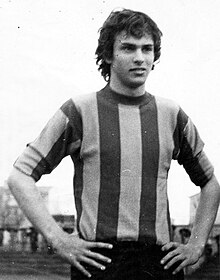
Antonio Cabrini, born on October 8, 1957, in Cremona, Italy, is one of the most iconic figures in Italian football history. Renowned for his exceptional skills as a left-back, Cabrini enjoyed a long and illustrious career, most notably with Juventus and the Italian national team. This article delves into the life, career, and achievements of Antonio Cabrini, offering detailed insights into his journey from a young footballer to a world champion and celebrated coach.
Early Life and Beginnings
Antonio Cabrini’s football journey began in his hometown of Cremona, where he displayed a natural talent for the sport from a young age. Initially playing as a winger for his local team, Cremonese, Cabrini’s potential was evident. However, it was under the guidance of his youth coach, Nolli, that Cabrini transitioned to the position of left-back, a move that would define his career.
At just 16 years old, Cabrini made his debut for Cremonese’s first team during the 1973-74 Serie C season. Although he only played three matches that season, his performances were promising enough to secure him a regular spot in the following season. His impressive displays quickly caught the attention of larger clubs, and in 1975, Juventus—Italy’s most successful football club—acquired the young talent. However, before joining Juventus, Cabrini was loaned to Atalanta, where he gained valuable experience playing in Serie B.
The Juventus Era: Rise to Prominence
Antonio Cabrini made his debut for Juventus on February 13, 1977, in a match against Lazio that ended in a 2-0 victory for the Turin-based club. Despite being only 19 years old at the time, Cabrini’s composure, technical ability, and tactical intelligence quickly earned him a starting position in the team. That season, he played seven matches and scored one goal, helping Juventus secure the Serie A title. This was also the first Scudetto won under the management of Giovanni Trapattoni, who would go on to become one of the most successful coaches in Juventus’ history.
Cabrini’s impact at Juventus was immediate and lasting. Over the course of 13 seasons with the Bianconeri, he made over 350 appearances and scored 35 goals, an impressive tally for a defender. His performances were characterized by a rare combination of defensive solidity and attacking flair, making him one of the most complete full-backs of his generation. Cabrini’s ability to contribute both defensively and offensively made him an invaluable asset to Juventus, as he played a key role in the club’s domestic and international successes during the late 1970s and 1980s.
International Success: The 1982 World Cup Triumph
Cabrini’s excellence at the club level earned him a call-up to the Italian national team, and he made his debut during the 1978 FIFA World Cup in Argentina. Although Italy did not win the tournament, Cabrini’s performances were outstanding, and he quickly established himself as a key player for the Azzurri.
The pinnacle of Cabrini’s international career came in 1982, when Italy won the FIFA World Cup in Spain. Under the management of Enzo Bearzot, Italy had a difficult start to the tournament but eventually found their form, defeating Argentina and Brazil in the second group stage to advance to the semifinals. Cabrini was instrumental in these victories, scoring a crucial goal against Argentina in a 2-1 win.
In the final against West Germany, Cabrini’s place in football history was sealed. Although he missed a penalty in the first half with the score at 0-0, Italy went on to win the match 3-1, securing their third World Cup title. Cabrini’s contribution to the tournament was immense, and his performances earned him a reputation as one of the best left-backs in the world.
Juventus and Beyond: Continued Success in the 1980s
Following the World Cup victory, Cabrini returned to Juventus, where he continued to add to his impressive list of achievements. During the 1980s, Juventus won several domestic and international titles, with Cabrini playing a central role in these successes. Between 1981 and 1982, Juventus won two more Serie A titles, further establishing their dominance in Italian football.
Cabrini’s ability to perform in high-stakes matches was evident in Juventus’ European campaigns. In 1983-84, Juventus won the UEFA Cup Winners’ Cup, followed by their first-ever European Cup (now the UEFA Champions League) in the 1984-85 season. Cabrini’s leadership and experience were crucial in these victories, as he became a symbol of Juventus’ golden era.
In addition to his club success, Cabrini continued to represent Italy at the international level, earning a total of 73 caps and scoring nine goals—a record for an Italian defender at the time. He also captained the national team on several occasions, highlighting his importance and leadership qualities on the pitch.
The Later Years: Transition to Coaching and Media
Antonio Cabrini’s playing career with Juventus came to an end in 1989, after which he joined Bologna for a brief period before retiring in 1991. His final years as a player were marked by the same professionalism and dedication that had characterized his entire career. After retiring from professional football, Cabrini remained involved in the sport, transitioning to a career in coaching and media.
Cabrini’s first foray into coaching came in 2000, when he was appointed as the head coach of Arezzo in Serie C1. He later managed several other Italian clubs, including Crotone and Pisa, before taking on an international coaching role as the head coach of the Syrian national team in 2007. Although his tenure in Syria was short-lived, it demonstrated Cabrini’s willingness to embrace new challenges and contribute to football beyond his playing career.
In addition to his coaching roles, Cabrini became a prominent football commentator and analyst, sharing his insights and expertise on Italian television. His deep understanding of the game, combined with his charismatic personality, made him a respected voice in football media.
Coaching the Italian Women’s National Team
One of Cabrini’s most significant contributions to football after his playing days was his role as the head coach of the Italian women’s national team, a position he held from 2012 to 2017. Cabrini’s appointment marked a significant moment for women’s football in Italy, as he brought his wealth of experience and tactical knowledge to the women’s game.
Under Cabrini’s leadership, the Italian women’s team achieved several notable results, including reaching the quarterfinals of the UEFA Women’s Euro 2013. Although the team did not qualify for the 2015 FIFA Women’s World Cup, Cabrini’s tenure was seen as a period of growth and development for the women’s national team.
Cabrini’s work with the Italian women’s team was part of a broader effort to raise the profile of women’s football in Italy, and his involvement helped to inspire a new generation of female footballers in the country.
Legacy and Personal Life
Antonio Cabrini’s legacy in football is defined by his exceptional career as a player, his contributions as a coach, and his role as a mentor and ambassador for the sport. Known as “Bell’Antonio” for his good looks, Cabrini was not only admired for his footballing abilities but also for his charisma and leadership both on and off the pitch.
In his personal life, Cabrini was married to Consuelo Benzi, with whom he had two children, Martina and Eduardo. After their separation in 1999, Cabrini began a long-term relationship with Marta Sannito, a fashion industry executive.
Cabrini’s contributions to football have been recognized in various ways, including his induction into the Italian Football Hall of Fame. In 2021, he co-authored the book Ti racconto i campioni della Juventus with Paolo Castaldi, in which he shares stories and insights about the legendary players he played alongside during his time at Juventus.
Conclusion: The Enduring Impact of Antonio Cabrini
Antonio Cabrini’s career is a testament to his skill, dedication, and passion for football. From his early days in Cremona to his triumphs with Juventus and the Italian national team, Cabrini consistently demonstrated the qualities of a world-class footballer. His ability to perform at the highest level, combined with his leadership and tactical acumen, made him one of the most respected and admired figures in Italian football.
As a coach and mentor, Cabrini continued to contribute to the sport, helping to shape the future of Italian football both in the men’s and women’s games. His legacy is not only defined by the titles he won but also by the impact he had on the players he coached and the fans who admired him.
Antonio Cabrini remains an enduring symbol of Italian football excellence, and his story is one of determination, success, and a lifelong commitment to the beautiful game.


