
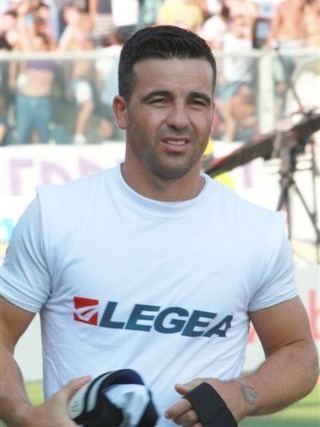
Antonio Di Natale, born on October 13, 1977, in Naples, Italy, is one of the most prolific and respected footballers in Italian history. Known for his incredible goal-scoring ability, leadership on and off the pitch, and unwavering loyalty to Udinese Calcio, Di Natale’s career is a testament to talent, perseverance, and dedication to the sport. Over the years, he has become a symbol of consistency and excellence in Italian football, leaving a legacy that continues to inspire players and fans alike.
Early Life and Football Beginnings
Antonio Di Natale was born in the bustling city of Naples, a region renowned for its deep passion for football. From a young age, Di Natale exhibited a natural talent for the sport, which quickly caught the attention of local clubs. He began his football journey with San Nicola, a local club in Castello di Cisterna, a town in the metropolitan area of Naples. His early years were marked by a relentless drive to improve and a keen sense of positioning on the field, which would later become one of his most defining traits.
By the early 1990s, Di Natale had moved on to Empoli, a club known for its strong youth development program. His time at Empoli was crucial in shaping his career, as it provided him with the platform to develop his skills and gain valuable experience in competitive football. During his time with Empoli, Di Natale was loaned out to several lower-division clubs, including Iperzola, Varese, and Viareggio, where he honed his craft and began to make a name for himself as a goal-scorer.
Rise to Prominence at Empoli
After impressing during his loan spells, Di Natale returned to Empoli, where he spent five seasons from 1999 to 2004. During this period, he played a pivotal role in helping the club achieve promotion to Serie A, Italy’s top football division. His performances in Serie B were particularly noteworthy, as he established himself as one of the league’s top talents. Di Natale’s ability to find the back of the net with regularity, combined with his technical skills and football intelligence, made him an indispensable player for Empoli.
In Serie A, Di Natale continued to impress, showcasing his ability to compete at the highest level of Italian football. His time at Empoli was characterized by consistent performances and an ever-growing reputation as a reliable forward. By the end of his tenure with the club, Di Natale had firmly established himself as one of the most promising Italian forwards of his generation.
The Udinese Years: Loyalty and Legacy
In the summer of 2004, Antonio Di Natale made a significant move to Udinese Calcio, a club based in Udine, where he would spend the remainder of his professional career. It was here that Di Natale truly flourished, becoming one of the most lethal strikers in Serie A and an iconic figure for the club.
At Udinese, Di Natale formed a formidable attacking trio alongside David Di Michele and Vincenzo Iaquinta, helping the club secure a fourth-place finish in the 2004-2005 Serie A season. This achievement earned Udinese a spot in the UEFA Champions League qualifiers, a historic moment for the club. Di Natale’s ability to perform in crucial matches was on full display, as he scored important goals that propelled Udinese to new heights.
The following season, Di Natale became the only Italian player to score in the Champions League, Coppa Italia, Serie A, and UEFA Cup in the same season, highlighting his versatility and goal-scoring prowess. His performances earned him widespread acclaim, and he quickly became a fan favorite at Udinese.
Record-Breaking Achievements
One of the most remarkable aspects of Antonio Di Natale’s career is his consistency in front of goal. Over the years, he shattered numerous records, becoming Udinese’s all-time leading goal scorer. In the 2009-2010 season, Di Natale reached new heights, scoring his 100th goal for Udinese against Cagliari. He finished the season with 28 goals, becoming the top scorer in Serie A and setting a new club record for most goals in a single season, surpassing the previous record held by Oliver Bierhoff.
Di Natale’s goal-scoring exploits continued in the 2010-2011 season, where he once again won the Capocannoniere (Serie A top scorer) title with 28 goals. His leadership and influence on the pitch were undeniable, as he captained Udinese to a third-place finish in Serie A, securing another Champions League qualification. His contributions were recognized when he was awarded the Oscar del Calcio for Best Italian Player and Best Serie A Top Scorer in 2011.
The Later Years: Continuing to Shine
As Di Natale entered the later stages of his career, he showed no signs of slowing down. Despite Udinese selling several key players, including Alexis Sanchez to Barcelona, Di Natale remained the cornerstone of the team. In the 2011-2012 season, he continued to break records, including reaching 150 Serie A goals and making his 300th appearance in the league.
His performances did not go unnoticed by the national team selectors, and Di Natale was called up by coach Cesare Prandelli for the 2012 UEFA European Championship. Although he often started from the bench, Di Natale made a significant impact, most notably scoring a crucial goal against Spain in the group stage. His contributions helped Italy reach the final, where they finished as runners-up to Spain.
International Career: A Mixed Bag of Success and Heartbreak
Antonio Di Natale’s international career with the Italian national team was marked by moments of brilliance and heartbreak. He made his debut for Italy on November 20, 2002, in a friendly match against Turkey, under the management of Giovanni Trapattoni. Di Natale’s first goal for the national team came a year and a half later, on February 18, 2004, in a friendly against the Czech Republic.
Despite his undeniable talent, Di Natale often found himself in and out of the national team setup, particularly during the tenure of Roberto Donadoni as head coach. However, he was included in the squad for the 2008 UEFA European Championship, where Italy was eliminated by Spain in the quarter-finals after a penalty shootout, in which Di Natale missed a crucial spot-kick.
In 2010, Di Natale was selected by coach Marcello Lippi for the FIFA World Cup in South Africa. Although Italy’s campaign was disappointing, with the team exiting in the group stage, Di Natale managed to score in their final match against Slovakia. His performances for the national team, though not as decorated as his club career, showcased his ability to compete at the highest level.
Under Cesare Prandelli’s management, Di Natale enjoyed a resurgence with the national team. He was part of the squad for Euro 2012, where Italy reached the final. Although used primarily as a substitute, Di Natale made a memorable contribution by scoring against Spain in the group stage, demonstrating his enduring quality and instinct for goal.
Retirement and Post-Playing Career
After an illustrious career, Antonio Di Natale announced his retirement from professional football at the end of the 2015-2016 season. His decision to retire marked the end of an era for Udinese and Serie A, as one of the league’s most prolific goal scorers hung up his boots. Di Natale finished his career with 209 Serie A goals, making him one of the top scorers in the history of Italian football.
Following his retirement, Di Natale did not stray far from the game he loves. He has since taken on various roles, including coaching and mentoring young players. His vast experience and knowledge of the game make him a valuable asset to any football organization. Di Natale’s commitment to football continues, as he aims to give back to the sport that gave him so much.
Legacy and Impact on Italian Football
Antonio Di Natale’s legacy in Italian football is one of loyalty, excellence, and relentless pursuit of goals. Throughout his career, he remained dedicated to Udinese, despite offers from bigger clubs. This loyalty endeared him to fans and made him a beloved figure not just in Udine, but across Italy.
Di Natale’s impact on Italian football extends beyond his goal-scoring records. He is remembered for his sportsmanship, humility, and professionalism, qualities that made him a role model for young players. His ability to consistently perform at a high level, even as he aged, is a testament to his talent and work ethic.
Moreover, Di Natale’s story is one of inspiration. Coming from humble beginnings in Naples, he rose to become one of the most feared strikers in Serie A. His journey is a reminder that hard work, dedication, and passion can lead to extraordinary achievements, even in the face of adversity.
The Influence of Di Natale’s Style of Play
Antonio Di Natale’s style of play was characterized by his exceptional positioning, quick decision-making, and clinical finishing. He was known for his ability to score from almost any position on the pitch, whether with his feet or head. Di Natale’s technical skills, combined with his intelligence and vision, made him a constant threat to opposing defenses.
One of the most remarkable aspects of Di Natale’s game was his adaptability. He could play as a central striker, a second forward, or even out wide, making him a versatile asset to any team. His ability to read the game and anticipate plays allowed him to exploit spaces and create opportunities for himself and his teammates.
Di Natale’s influence on younger players is evident in the way many modern strikers approach the game. His emphasis on positioning, timing, and finishing has been emulated by many aspiring forwards. Di Natale’s legacy as a player who could consistently deliver in crucial moments is a standard that many strikers aim to achieve.
Conclusion: A Career Worth Celebrating
Antonio Di Natale’s career is a shining example of what can be achieved through talent, hard work, and loyalty. From his early days in Naples to his record-breaking years at Udinese, Di Natale consistently demonstrated his ability to perform at the highest level. His contributions to Italian football, both at the club and international levels, have left an indelible mark on the sport.
As a player, Di Natale will be remembered not just for his goals, but for his character, leadership, and dedication to his craft. His story is one of perseverance, overcoming challenges, and ultimately, achieving greatness. Antonio Di Natale is not just a football legend; he is an inspiration to all who love the game.


