
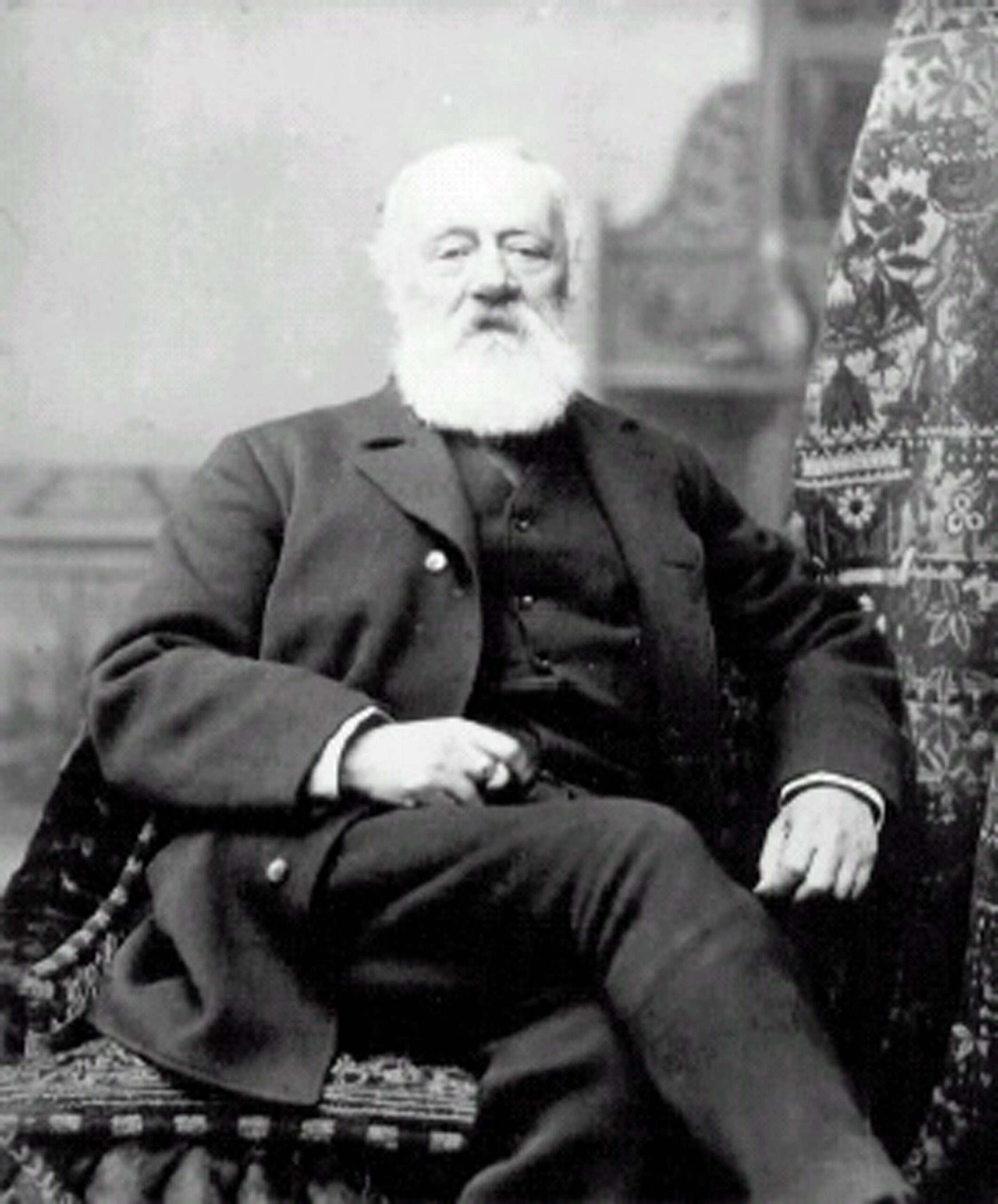
Antonio Meucci, born on April 13, 1808, in San Frediano, a modest district in Florence, Italy, was an innovative thinker whose contributions to the field of telecommunications were groundbreaking yet tragically underappreciated during his lifetime. Though often overshadowed by Alexander Graham Bell, Meucci’s work on the invention of the telephone has earned him posthumous recognition as a pivotal figure in the history of communication. This article delves into the life of Antonio Meucci, his struggles, his inventions, and the long-overdue acknowledgment of his role in the development of the telephone.
Early Life and Struggles
Antonio Meucci was born into a poor family in Florence. His early life was marked by financial hardship, which prevented him from completing his formal education at the Accademia di Belle Arti. Despite these challenges, Meucci’s inquisitive nature and passion for science, particularly in the areas of physiological and animal electricity, propelled him forward. His early career was diverse, involving roles as a customs clerk and a theater mechanic. It was in the theater environment that Meucci met Ester Mochi, a seamstress who would later become his wife.
During his youth, Meucci was also involved in the political upheavals of the time, participating in the revolutionary movements of 1831. His liberal and republican ideals led to political persecution, forcing him to leave the Grand Duchy of Tuscany. After wandering through the Papal States and the Kingdom of the Two Sicilies, Meucci eventually emigrated to Cuba, where he continued his work as a theater mechanic.
Emigration to the United States and Early Inventions
In 1850, Antonio Meucci relocated to New York City, where he established a candle factory. It was during this time that he met Giuseppe Garibaldi, the famed Italian revolutionary, who briefly worked for him. Their friendship is commemorated today at the Garibaldi-Meucci Museum in New York.
Meucci had been experimenting with telecommunication devices for several years, but it wasn’t until 1856 that he successfully developed the first version of his telephone, which he called the “teletrofono.” The invention arose from a practical need to communicate with his bedridden wife, Ester, from his office. Meucci’s description of his invention, documented in 1857, reads as follows: “It consists of a vibrating diaphragm and a magnet electrified by a spiral wire that surrounds it. As the diaphragm vibrates, it alters the current of the magnet. These alterations in current, transmitted to the other end of the wire, impart analogous vibrations to the receiving diaphragm and reproduce the word.”
Despite his scientific clarity, Meucci faced significant financial difficulties that hindered the development and protection of his invention. His candle factory eventually went bankrupt, and attempts to secure funding from wealthy Italian families were unsuccessful. As a result, Meucci struggled to support himself and his family, relying on the help of fellow Italian immigrants in New York.
A particularly devastating setback occurred when Meucci was severely injured in an accident aboard a ship. During his long recovery, his wife, Ester, was forced to sell all of his telephone equipment to a second-hand dealer for a mere six dollars. Despite these hardships, Meucci remained determined to advance his invention.
The Quest for Patent Protection
In 1871, Antonio Meucci took the first step toward protecting his invention by filing a “caveat,” a type of provisional patent, for his “teletrofono.” However, due to financial constraints, Meucci could only afford the $20 fee for the caveat, which needed to be renewed annually at a cost of $10. Unfortunately, Meucci was only able to maintain the caveat until 1873, after which he could no longer afford the renewal fees.
During this period, Meucci approached the American District Telegraph Company of New York, seeking to use their telegraph lines for his experiments. However, the company failed to recognize the commercial potential of Meucci’s invention, leading to yet another disappointment for the Italian inventor.
In 1876, Alexander Graham Bell filed a patent for his telephone device, an event that marked the beginning of a long and bitter legal battle for Meucci. Meucci, who had documented his work extensively, claimed that Bell had infringed on his invention. He found support from the Globe Company, which took up his cause and initiated a lawsuit against Bell’s company for patent infringement.
The Legal Battle and Posthumous Recognition
The legal proceedings between Antonio Meucci and Alexander Graham Bell culminated in a ruling on July 19, 1887. While the court acknowledged some of Meucci’s contributions, it ultimately sided with Bell, stating, “Nothing demonstrates that Meucci achieved any practical result other than mechanically conveying the word through a cable. He undoubtedly employed a mechanical conductor and assumed that by electrifying the device, he would obtain better results.” In essence, the court’s decision suggested that while Meucci had conceived the idea of the telephone, he had not invented the electric telephone as understood by the patent laws of the time.
Tragically, Antonio Meucci passed away on October 18, 1889, at the age of 81, just before the Globe Company could file an appeal against the ruling. The case was eventually dismissed by the U.S. Supreme Court, and for more than a century, Alexander Graham Bell was celebrated worldwide as the inventor of the telephone.
It wasn’t until June 11, 2002, that the United States Congress officially recognized Antonio Meucci as the first inventor of the telephone, a historic decision that corrected the record and honored Meucci’s pioneering work.
Beyond the Telephone: Meucci’s Other Inventions
While Antonio Meucci is most famous for his work on the telephone, his inventive genius extended far beyond this single achievement. Recent discoveries have revealed that Meucci anticipated several key developments in telecommunications, many of which were not adopted until decades later.
For instance, Meucci discovered the inductive loading of telephone lines thirty years before it was patented and implemented by the Bell Telephone Company. This technique, which involves placing coils at regular intervals along a telephone line to improve signal quality, became a standard practice in telecommunications.
Meucci also made early advancements in several other areas of telephone technology, including:
- Anti-Sidetone Device: A mechanism that reduces the feedback loop of the user’s own voice in the receiver, improving call clarity.
- Call Signalization: Innovations related to alerting users to incoming calls, a precursor to modern ringtones and call notifications.
- Reduction of Skin Effect: Techniques to minimize the loss of signal strength in conductors, enhancing the efficiency of telephone lines.
- Privacy and Noise Reduction: Concepts aimed at ensuring confidentiality and minimizing background noise during telephone conversations.
These innovations demonstrate Meucci’s profound understanding of the challenges and possibilities within the realm of electrical communication. His work laid the groundwork for many of the advancements that would follow in the decades after his death.
The Legacy of Antonio Meucci
Antonio Meucci’s life is a story of resilience, creativity, and the relentless pursuit of innovation in the face of adversity. Despite the financial difficulties, legal battles, and personal tragedies he endured, Meucci’s contributions to the field of telecommunications have had a lasting impact on the world.
The belated recognition of Meucci as the true inventor of the telephone is a testament to his enduring legacy. It highlights the importance of giving credit where it is due and correcting historical oversights. Meucci’s story also serves as a reminder of the challenges faced by inventors and pioneers who often work in obscurity, only to have their contributions overshadowed by more prominent figures.
In the years since his death, Antonio Meucci has been honored in various ways, both in Italy and abroad. His name is now synonymous with the invention of the telephone, and his life’s work is celebrated as a key chapter in the history of technology.
As we reflect on Antonio Meucci’s life, it is clear that his contributions to science and technology extend far beyond the invention of the telephone. His innovative spirit and dedication to improving communication continue to inspire new generations of inventors and engineers. Meucci’s story is not just one of invention, but of perseverance, passion, and the enduring quest for knowledge and progress.


