
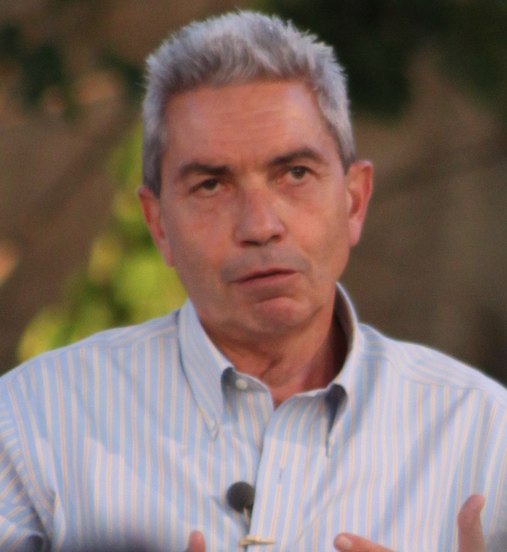
Antonio Padellaro, born on June 29, 1946, in Rome, Italy, is one of the most prominent figures in Italian journalism. With a career spanning over five decades, Padellaro has made a significant impact on the media landscape in Italy through his work with some of the country’s most influential newspapers and his role as a television personality. This article delves into the life and career of Antonio Padellaro, exploring his journey from a young journalist to one of the most respected voices in Italian media.
Early Life and Beginnings in Journalism
Antonio Padellaro’s passion for journalism was evident from a young age. Born and raised in Rome, he displayed a keen interest in current events and the written word, which eventually led him to pursue a career in journalism. At just 22 years old, in 1968, Padellaro became a professional journalist, a remarkable achievement in a time when the media landscape was rapidly evolving due to the social and political upheavals of the late 1960s.
Padellaro began his career at ANSA, Italy’s leading news agency, where he spent three formative years learning the ropes of journalism. This early experience at ANSA provided him with a solid foundation in reporting and news gathering, skills that would serve him well throughout his career. The late 1960s and early 1970s were a turbulent time in Italy, with widespread protests, political unrest, and social change, and Padellaro’s work at ANSA put him at the center of these events.
Rise to Prominence at Corriere della Sera
In 1971, Padellaro made a significant career move by joining Corriere della Sera, one of Italy’s most prestigious newspapers. His arrival at Corriere marked the beginning of a long and distinguished career in mainstream media. At Corriere della Sera, Padellaro quickly rose through the ranks, thanks to his sharp editorial skills and deep understanding of the political landscape in Italy. He was appointed as a redattore (editor) and later became responsible for the newspaper’s Rome bureau, a crucial role given the city’s importance as the center of Italian politics.
During his nearly two-decade tenure at Corriere della Sera, Padellaro covered some of the most significant events in Italian and global politics. His work during this period not only solidified his reputation as a top-tier journalist but also gave him a unique perspective on the political and social dynamics of Italy. In addition to his reporting, Padellaro also explored other forms of writing. In 1977, he co-wrote the screenplay for the docu-film Forza Italia!, which examined the political situation in Italy in the post-war years and during the Italian economic miracle. This project showcased his versatility as a writer and his ability to engage with complex historical narratives.
Challenges and Transition to L’Espresso
In 1990, after nearly 20 years at Corriere della Sera, Padellaro decided to leave the newspaper. His departure was prompted by increasing tensions with the management, particularly due to the influence of the Italian Socialist Party, which was one of the most powerful political forces in the country at the time. The clash between Padellaro’s journalistic integrity and the pressures from political entities highlighted the challenges journalists often face in maintaining independence in a highly politicized environment.
Following his departure from Corriere della Sera, Padellaro joined L’Espresso, a highly respected weekly magazine known for its in-depth investigative journalism and critical approach to political and social issues. At L’Espresso, Padellaro served as vice director, a role that allowed him more freedom to delve into long-form journalism and editorial writing. This period marked a significant shift in his career, as he began to focus more on writing books and exploring broader themes in Italian and global politics.
During his time at L’Espresso, Padellaro authored several books that provided incisive critiques of the political landscape in Italy. His works from this period include Non aprite agli assassini (1995) and Senza cuore (2000), both of which examined the political and social dynamics of the time. These publications solidified Padellaro’s reputation as a critical thinker and a sharp observer of Italian politics, making him a respected voice in the intellectual and journalistic community.
Leadership at L’Unità
In 2001, Padellaro took on a new challenge by joining L’Unità, a historic newspaper that had recently resumed publication under the direction of Furio Colombo. L’Unità had long been associated with the Italian left, particularly the Italian Communist Party, and had a storied history as a voice for progressive causes. Padellaro’s arrival at L’Unità coincided with a period of significant political change in Italy, as the country grappled with the rise of Silvio Berlusconi and the challenges to democratic norms.
In 2002, Padellaro co-authored Il libro nero della democrazia with Furio Colombo, a scathing critique of Berlusconi’s influence on Italian politics and the media. The book was a bold indictment of what the authors saw as the erosion of democratic principles under Berlusconi’s leadership. This work resonated with many Italians who were concerned about the direction of the country and reinforced Padellaro’s role as a defender of press freedom and democratic values.
Padellaro’s commitment to these principles was further demonstrated when he was appointed director of L’Unità in 2005. Under his leadership, the newspaper continued its tradition of investigative journalism and critical analysis of Italian politics. However, his tenure at L’Unità was not without challenges. In 2008, following a change in ownership and political pressures from the Democratic Party, Padellaro was replaced as director by Concita De Gregorio. This event highlighted the ongoing struggle between journalistic independence and political influence in Italy’s media landscape.
Founding Il Fatto Quotidiano and Television Career
Undeterred by his departure from L’Unità, Padellaro embarked on a new venture that would redefine his career. In 2009, together with Marco Travaglio and other like-minded journalists, Padellaro co-founded Il Fatto Quotidiano, a newspaper that quickly became known for its fierce independence and willingness to challenge the status quo. Il Fatto Quotidiano was launched with a commitment to investigative journalism, transparency, and a refusal to accept government subsidies, which allowed it to maintain editorial independence.
Under Padellaro’s leadership, Il Fatto Quotidiano gained a reputation for hard-hitting journalism and became a trusted source of news for readers who were disillusioned with the mainstream media. The newspaper’s success was a testament to Padellaro’s vision and his ability to adapt to the changing media landscape. In 2015, after six years as director, Padellaro stepped down from his role, passing the torch to Marco Travaglio. However, he continued to contribute as a columnist, remaining an influential voice in Italian journalism.
In addition to his work in print journalism, Padellaro expanded his presence in television. He became a regular guest on Otto e mezzo, a prime-time talk show on La7 hosted by Lilli Gruber, where he provided analysis and commentary on current events. His transition to television allowed him to reach a broader audience and further solidified his status as a leading public intellectual in Italy.
In 2019, Padellaro also took on the role of television host with the show C’ero una volta, which he co-hosted with Silvia Truzzi. The program focused on historical and political analysis, offering viewers insights into key events and figures in Italian history. This move into television underscored Padellaro’s versatility as a communicator and his ability to engage with audiences across different media platforms.
Personal Life and Interests
Despite his busy professional life, Antonio Padellaro has also maintained a rich personal life. He is the father of two sons, Matteo and Giacomo, and has expressed a deep love for cinema, particularly the works of Quentin Tarantino. His interests extend to music, where he has a passion for Russian symphonic composers, and literature, especially American novels of the 20th century.
Padellaro’s views on life and relationships reflect his broad-minded and tolerant nature. He has described himself as indulgent when it comes to matters of love and fidelity, advocating for a “live and let live” approach. This philosophy underscores his broader worldview, which emphasizes personal freedom, intellectual curiosity, and a commitment to social justice.
Legacy and Continuing Influence
As of today, Antonio Padellaro remains a significant figure in Italian journalism. His contributions to the field have been marked by a steadfast commitment to truth, transparency, and the defense of democratic values. Throughout his career, he has navigated the challenges of political pressure, media ownership, and changing public attitudes, all while maintaining his integrity and dedication to the craft of journalism.
Padellaro’s legacy is not just in the stories he has written or the newspapers he has led, but also in the impact he has had on the broader media landscape in Italy. By co-founding Il Fatto Quotidiano, he helped create a platform for independent journalism at a time when many feared that such a platform was no longer possible. His work continues to inspire both seasoned journalists and newcomers to the field who seek to uphold the principles of a free and independent press.
As he continues to appear on television and contribute to public discourse, Antonio Padellaro’s influence shows no signs of waning. His voice remains a critical one in the ongoing dialogue about the role of media in society, the challenges facing democracy, and the importance of holding power to account. For anyone interested in the intersection of media, politics, and society, Padellaro’s life and work offer valuable insights and lessons.


