
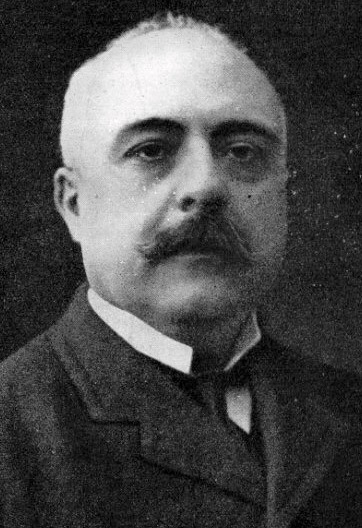
Antonio Salandra was a prominent Italian statesman and lawyer who played a critical role in shaping Italy’s political landscape during the early 20th century. Best known for his tenure as Prime Minister during World War I, Salandra’s decisions had far-reaching implications for Italy’s future. This article provides an in-depth look at the life of Antonio Salandra, exploring his age, the fame he achieved through his political career, and the key highlights that define his legacy. Through detailed insights and historical context, we aim to understand the complexities of his political decisions and the impact they had on Italy and the world.
Early Life and Education: The Foundations of a Political Career
Antonio Salandra was born on August 13, 1853, in Troia, a small town in the Apulia region of southern Italy. Born into a family of modest means, Salandra’s early life was marked by a strong emphasis on education and intellectual development. His father, a lawyer, instilled in him the values of discipline and hard work, which would later define his career.
Salandra’s early education took place in Naples, where he attended secondary school before enrolling at the University of Naples Federico II. It was here that he studied law, earning a degree that would serve as the foundation for his future political career. Salandra was an exceptional student, known for his analytical mind and his ability to articulate complex legal and political ideas.
The Influence of Early Intellectual Pursuits
During his time at university, Salandra was heavily influenced by the intellectual and political currents of the time. Italy had recently undergone unification, and the country was grappling with the challenges of integrating its diverse regions into a cohesive nation-state. The debates surrounding the role of the state, the balance of power, and the importance of national unity deeply influenced Salandra’s thinking.
After completing his education, Salandra began his career as a lawyer and academic. He became a professor of administrative law at the University of Rome, where he gained a reputation as a leading expert in his field. His academic work, which focused on the legal and administrative structures of the state, laid the groundwork for his later involvement in politics.
The Entry into Politics: Salandra’s Rise to Power
Antonio Salandra’s entry into politics was marked by his election to the Italian Parliament in 1886 as a member of the Historical Right, a conservative political faction that supported a strong centralized government. His legal background and academic reputation made him a respected figure within the party, and he quickly rose through the ranks.
Ministerial Roles and Political Influence
Throughout the late 19th and early 20th centuries, Salandra held several important ministerial positions, including Minister of Agriculture, Minister of Finance, and Minister of the Interior. These roles allowed him to shape key aspects of Italian policy, particularly in the areas of economic development and public administration.
As Minister of Finance, Salandra was instrumental in implementing fiscal reforms that stabilized Italy’s economy during a period of significant social and political upheaval. His policies were characterized by a commitment to fiscal conservatism and a belief in the importance of maintaining a balanced budget. These principles would later guide his decisions as Prime Minister.
Salandra’s tenure as Minister of the Interior was marked by his efforts to strengthen the authority of the central government. He believed that a strong, centralized state was essential for maintaining order and ensuring the stability of the newly unified Italy. This belief in the importance of state power would become a defining feature of his political philosophy.
Prime Minister of Italy: Leadership During World War I
Antonio Salandra’s most significant contribution to Italian history came during his time as Prime Minister from 1914 to 1916. His tenure coincided with one of the most tumultuous periods in modern history—the outbreak of World War I. Salandra’s leadership during this time was marked by difficult decisions, strategic maneuvering, and a complex balancing act between domestic and international pressures.
The Decision to Enter World War I: Neutrality vs. Intervention
When World War I broke out in 1914, Italy initially declared neutrality despite being part of the Triple Alliance with Germany and Austria-Hungary. Salandra, who had become Prime Minister shortly before the war began, faced the enormous challenge of deciding whether to maintain Italy’s neutrality or to intervene on one side or the other.
Salandra’s decision-making process was influenced by a range of factors, including Italy’s military readiness, the potential territorial gains that could be achieved, and the political pressures from both domestic factions and foreign allies. He was particularly concerned with the possibility of securing territories that were ethnically Italian but remained under Austrian control, such as Trentino and South Tyrol.
In 1915, after months of secret negotiations with both the Allied and Central Powers, Salandra decided to enter the war on the side of the Allies. This decision was formalized in the Treaty of London, which promised Italy significant territorial gains in exchange for its participation in the war against Austria-Hungary and Germany. Salandra justified the decision to intervene with his doctrine of “sacred egoism,” arguing that Italy’s involvement in the war was necessary to secure its national interests and achieve its long-standing territorial ambitions.
The Consequences of War: Military Challenges and Political Fallout
Italy’s entry into World War I under Salandra’s leadership was met with mixed reactions at home. While many Italians supported the decision, believing that it would lead to the fulfillment of Italy’s irredentist goals, others were deeply opposed, fearing the human and economic costs of war. Salandra’s government faced significant challenges in mobilizing the country for war, including widespread public skepticism and logistical difficulties.
The early years of Italy’s involvement in the war were marked by military setbacks and high casualties, particularly on the mountainous frontlines against Austria-Hungary. The Italian army, under the command of General Luigi Cadorna, struggled to achieve significant breakthroughs, leading to a protracted and costly conflict. As the war dragged on, public discontent grew, and Salandra’s government came under increasing pressure.
In 1916, following a series of military failures and growing unrest at home, Salandra resigned as Prime Minister. His departure marked the end of a crucial chapter in Italy’s involvement in World War I, but the decisions he made during his tenure would have lasting repercussions for the country.
Fame and Legacy: The Impact of Salandra’s Leadership
Antonio Salandra’s legacy is a complex one, shaped by his role in leading Italy into World War I and the long-term consequences of his decisions. While his tenure as Prime Minister was relatively brief, the impact of his leadership continues to be the subject of historical debate.
A Controversial Figure: Evaluating Salandra’s Decisions
Salandra’s decision to enter World War I on the side of the Allies is perhaps the most controversial aspect of his legacy. Critics argue that the decision was driven more by a desire for territorial expansion than by a genuine concern for Italy’s national security. The human cost of the war, which resulted in hundreds of thousands of Italian casualties and widespread devastation, has led some historians to view Salandra’s leadership in a negative light.
However, others defend Salandra’s actions, arguing that he was acting in what he believed were Italy’s best interests. The territorial gains promised in the Treaty of London were seen by many as a crucial step in completing the process of Italian unification, and Salandra’s decision to enter the war was consistent with his belief in the importance of a strong, centralized state.
The Long-Term Impact: Post-War Italy and the Treaty of Versailles
The end of World War I brought significant changes to Italy and the broader European landscape. Although Italy emerged from the war on the side of the victors, the post-war period was marked by political instability, economic hardship, and social unrest. The territorial gains promised to Italy in the Treaty of London were only partially realized, leading to widespread disillusionment and the rise of nationalist and fascist movements.
Salandra’s role in these developments is often seen as a precursor to the rise of Benito Mussolini and the establishment of a fascist regime in Italy. The sense of betrayal and dissatisfaction that followed the war created a fertile ground for Mussolini’s rhetoric of national renewal and strong leadership, ideas that were rooted in the same belief in state power that had characterized Salandra’s political philosophy.
Personal Life and Beliefs: The Man Behind the Politics
Despite his prominent public role, Antonio Salandra was a private individual who kept much of his personal life out of the spotlight. However, his beliefs and values were deeply intertwined with his political actions, providing insight into the motivations behind his decisions.
A Devotion to the State: Salandra’s Political Philosophy
Salandra’s political philosophy was heavily influenced by his belief in the importance of a strong, centralized state. He viewed the state as the guarantor of national unity and stability, a perspective that shaped his approach to governance throughout his career. This belief was evident in his efforts to strengthen the authority of the central government during his time as Minister of the Interior and in his decision to enter World War I.
Salandra was also a pragmatist, willing to make difficult decisions in the pursuit of what he believed were Italy’s national interests. His doctrine of “sacred egoism” encapsulated this pragmatic approach, emphasizing the need to prioritize the nation’s needs above all else, even if it meant making controversial or unpopular choices.
Later Years and Death
After resigning as Prime Minister in 1916, Salandra continued to be involved in Italian politics, albeit in a less prominent role. He remained a member of the Italian Senate and was an active participant in debates on Italy’s post-war future. However, his influence waned as the political landscape in Italy shifted dramatically in the aftermath of the war.
Antonio Salandra passed away on December 9, 1931, at the age of 78. By the time of his death, Italy had undergone significant changes, including the rise of Mussolini’s fascist regime. While Salandra did not live to see the full impact of his decisions during World War I, his legacy continues to be a subject of discussion among historians and political analysts.
Historical Context: Italy’s Political Landscape During Salandra’s Era
To fully understand Antonio Salandra’s impact on Italian history, it is essential to consider the broader historical context in which he operated. The late 19th and early 20th centuries were a period of significant transformation for Italy, as the country sought to establish itself as a unified and modern nation-state.
The Challenges of Italian Unification
Italy’s unification in 1861 was a complex and often contentious process, involving the integration of diverse regions with distinct cultures, economies, and political traditions. The newly unified Italy faced numerous challenges, including economic disparities between the industrialized north and the agrarian south, political instability, and social unrest.
Salandra’s political career was shaped by these challenges, and his efforts to strengthen the central government were aimed at addressing the fragmentation and division that continued to plague Italy. His belief in the importance of a strong state was a response to the perceived weaknesses of the Italian political system, which he saw as a threat to national unity and stability.
The Global Context: World War I and the Changing European Order
Salandra’s tenure as Prime Minister occurred at a time of profound change in the global political order. The outbreak of World War I marked the beginning of a new era in international relations, as the old European empires were challenged by the rise of nationalism, militarism, and new political ideologies.
Italy’s decision to enter the war on the side of the Allies was influenced by these broader geopolitical shifts. Salandra’s calculations were based not only on Italy’s immediate national interests but also on the potential long-term implications of the war for the European balance of power. His decision to align Italy with the Allies was a reflection of his desire to position Italy as a major player in the post-war order, a goal that would have significant consequences for the country’s future.
Conclusion: Antonio Salandra’s Enduring Legacy
Antonio Salandra’s life and career represent a critical chapter in Italian history, marked by his leadership during one of the most challenging periods in the country’s modern history. As Prime Minister, Salandra made decisions that would have lasting implications for Italy and the world, shaping the course of World War I and influencing the post-war political landscape.
Salandra’s legacy is a complex one, characterized by both achievements and controversies. His decision to enter World War I on the side of the Allies is perhaps his most significant and debated action, with historians continuing to assess its impact on Italy’s national identity, political stability, and future trajectory.
Beyond his role in World War I, Salandra’s contributions to Italian politics, particularly his efforts to strengthen the authority of the state, have had a lasting influence on the country’s governance. His belief in the importance of a strong, centralized state remains relevant in discussions about the challenges facing modern Italy.
Antonio Salandra’s story is a reminder of the difficult choices that leaders must make in times of crisis and the enduring impact of those decisions on the course of history. His life and career offer valuable insights into the complexities of political leadership, the challenges of nation-building, and the interplay between domestic and international forces in shaping a nation’s destiny.


