
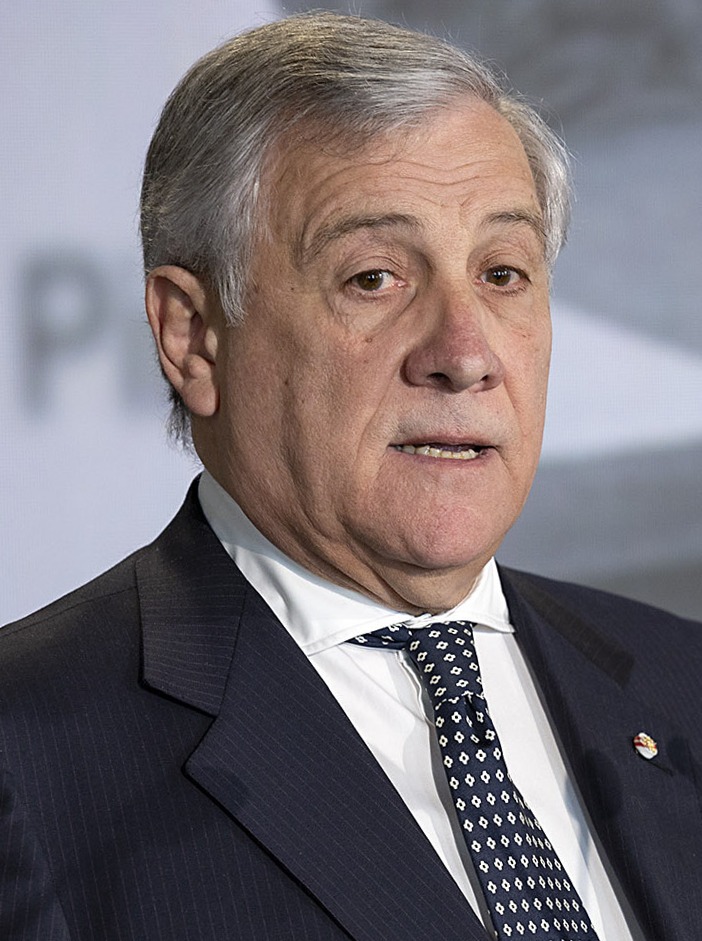
Antonio Tajani, born on August 4, 1953, in Rome, Italy, is a prominent Italian politician, journalist, and diplomat. Over the decades, he has risen through the ranks of European and Italian politics, establishing himself as a key figure in both arenas. His career spans various roles, including serving as President of the European Parliament, a member of the European Commission, and most recently, Italy’s Minister of Foreign Affairs. Tajani’s influence on European and Italian politics has been significant, and his life story offers valuable insights into the workings of political power in Europe.
Early Life and Education
Antonio Tajani was born and raised in Rome, where he developed a strong interest in politics and public service from a young age. He attended the prestigious Torquato Tasso High School, one of the most renowned secondary schools in the Italian capital, before enrolling at the Sapienza University of Rome. There, he earned a degree in Law, which laid the foundation for his later career in both journalism and politics.
Military Service and Early Political Involvement
Before fully embarking on his political journey, Tajani served as an officer in the Italian Air Force. He trained at the Air Defense Specialization School in Borgo Piave, Latina, and became an air defense controller at the San Giovanni Teatino radar base. This period of military service not only provided him with valuable leadership experience but also instilled in him a strong sense of duty and discipline.
During this time, Tajani also began to involve himself in politics. He joined the youth wing of the Italian Monarchist Union, where he quickly rose to the position of deputy secretary. This early political involvement reflected his conservative leanings and his advocacy for the return of the Italian royal family, the House of Savoy, from exile.
Journalism Career
Tajani’s political ambitions were complemented by a successful career in journalism. He became a professional journalist and took on various roles that furthered his understanding of Italian and European politics. He started as a parliamentary journalist for “Il Settimanale,” a political weekly, where he covered the Italian parliament and gained firsthand experience of the legislative process.
Later, Tajani worked as a news presenter for “GR1,” the main news program of Italy’s state broadcaster RAI. His skills as a communicator and his deep understanding of politics earned him a reputation as a trusted voice in Italian journalism. He eventually became the head of the Rome office for “Il Giornale,” a leading Italian newspaper founded by the renowned journalist and writer Indro Montanelli. His work at “Il Giornale” solidified his status as an influential figure in the Italian media landscape and further expanded his network within political circles.
Founding of Forza Italia
In 1994, Tajani took a significant step in his political career by becoming one of the founding members of Forza Italia, the political party established by media magnate Silvio Berlusconi. Forza Italia quickly became a dominant force in Italian politics, and Tajani played a crucial role in its development. As the regional coordinator for Lazio, he was responsible for organizing the party’s activities in one of Italy’s most important regions.
Tajani’s close relationship with Berlusconi led to his appointment as the party’s spokesperson and as the official spokesperson for the Italian Prime Minister during Berlusconi’s first term in office. This position put Tajani at the forefront of Italian politics and allowed him to shape the public image of both the party and the Prime Minister. Despite the challenges and controversies that often surrounded Berlusconi’s leadership, Tajani remained a loyal and effective advocate for the party’s policies and vision.
Early Electoral Challenges
Despite his early successes within Forza Italia, Tajani faced several electoral challenges. In 1996, he ran for a seat in the Italian Chamber of Deputies representing the Alatri district, but he was defeated by the candidate from the center-left coalition, garnering 45.3% of the vote. This setback, however, did not deter him from pursuing a career in politics.
In 2001, Tajani ran for mayor of Rome as the candidate for the center-right coalition, Casa delle Libertà, which included Forza Italia. The election was highly competitive, and Tajani made it to the second round of voting, but he was ultimately defeated by Walter Veltroni, a prominent figure in the center-left Democratic Party. Despite these electoral defeats, Tajani’s political career continued to advance, particularly at the European level.
Rise in European Politics
Antonio Tajani’s most significant achievements came in the realm of European politics. In 1994, the same year he helped found Forza Italia, Tajani was elected as a Member of the European Parliament (MEP). His election marked the beginning of a long and distinguished career in European institutions. Tajani was re-elected to the European Parliament in 1999, 2004, and 2009, consistently proving his ability to garner widespread support among voters.
In 2002, during the European People’s Party (EPP) congress in Estoril, Portugal, Tajani was elected as one of the party’s vice-presidents. The EPP is the largest political group in the European Parliament, and Tajani’s election to a leadership position within the party reflected his growing influence in European politics.
European Commission and Transportation Policy
In 2008, Tajani’s European career took a significant leap forward when he was appointed as European Commissioner for Transport in the first Barroso Commission. In this role, he was also one of the Commission’s Vice-Presidents. As Commissioner, Tajani was responsible for overseeing the EU’s transportation policy, a critical area that affects the daily lives of millions of Europeans.
One of Tajani’s key achievements as Commissioner was his support for the rescue of Alitalia, Italy’s national airline, which was facing bankruptcy. Tajani advocated for the involvement of private capital in the rescue plan, which ultimately helped save the airline and secure thousands of jobs. His work on transportation policy also included the introduction of new EU regulations to protect the rights of air passengers, ensuring that travelers would receive assistance and compensation in cases of flight delays, cancellations, or denied boarding.
Industrial and Entrepreneurial Policy
In 2010, with the formation of the second Barroso Commission, Tajani was reappointed as a Commissioner, this time for Industry and Entrepreneurship. He continued to serve as a Vice-President of the European Commission. In this role, Tajani focused on revitalizing European industry and promoting entrepreneurship, particularly in the wake of the global financial crisis.
One of his notable initiatives was the “50,000 Tourists” project, launched in 2011, aimed at boosting off-season tourism between South America and Europe. Tajani also introduced the “Traveler’s Decalogue” in 2012, a set of guidelines to enhance travel safety and security for European citizens. Additionally, he advocated for a new industrial revolution in Europe, emphasizing the need for industrial activities to contribute more significantly to the EU’s GDP.
Return to National Politics and Continued European Influence
After his tenure as a European Commissioner, Tajani returned to the Italian political scene while maintaining his influence in Europe. In 2014, he was re-elected to the European Parliament and became the Vice-President of the European People’s Party once again. His leadership within the EPP continued to shape the party’s policies and strategies in the European Parliament.
In January 2017, Tajani reached the pinnacle of his European career when he was elected President of the European Parliament. In this role, Tajani was responsible for overseeing the activities of the Parliament, presiding over plenary sessions, and representing the Parliament in its relations with other European institutions and the wider world. His election as President was a testament to his experience, diplomacy, and the respect he had earned from his colleagues across the political spectrum.
Italian Politics and Ministerial Role
During the 2018 Italian general elections, Tajani was frequently mentioned as a potential candidate for the Prime Minister’s position by Silvio Berlusconi. Although the political landscape in Italy eventually led to a different outcome, Tajani’s standing within Forza Italia and his influence on Italian politics remained strong.
In October 2022, following the general elections, Tajani was appointed as Italy’s Minister of Foreign Affairs in the government led by Prime Minister Giorgia Meloni. He also took on the role of Deputy Prime Minister, underscoring his importance in the new government. Tajani’s experience in European politics and his extensive network of international contacts made him a key figure in shaping Italy’s foreign policy during a time of significant global challenges.
Leadership of Forza Italia
In June 2023, following the death of Silvio Berlusconi, Antonio Tajani assumed the leadership of Forza Italia. His elevation to the party’s top position marked a new chapter in his political career and in the history of Forza Italia. Tajani’s leadership came at a critical time for the party, which faced the challenge of redefining its identity and role in Italian politics without its charismatic founder. Tajani’s task was to steer the party through this transition while maintaining its influence on the national and European stages.
Honors and Recognition
Throughout his career, Antonio Tajani has received numerous honors and recognitions for his contributions to politics and public service. In January 2015, he was awarded the Grand Cross of the Order of Bernardo O’Higgins, one of Chile’s highest honors, in recognition of his efforts to strengthen relations between Europe and Latin America.
In April 2015, a street was named after Tajani in the Spanish city of Gijón, located in the principality of Asturias. This rare honor was a tribute to his successful mediation efforts that kept an American company’s plant open in the region, saving hundreds of jobs. These recognitions are a testament to Tajani’s impact not only in Italy and Europe but also internationally.
Conclusion
Antonio Tajani’s life and career are a reflection of his dedication to public service, his deep commitment to European integration, and his unwavering belief in the importance of industry and entrepreneurship for economic growth. From his early days as a journalist and political activist to his rise as one of Europe’s most influential politicians, Tajani has played a pivotal role in shaping the direction of both Italian and European politics.
As the current leader of Forza Italia and Italy’s Minister of Foreign Affairs, Tajani continues to influence the future of his country and the broader European project. His story is one of perseverance, leadership, and a profound understanding of the complexities of both national and international politics. Antonio Tajani’s contributions will likely continue to shape the political landscape for years to come, making him a key figure in the ongoing narrative of European and Italian history.


