
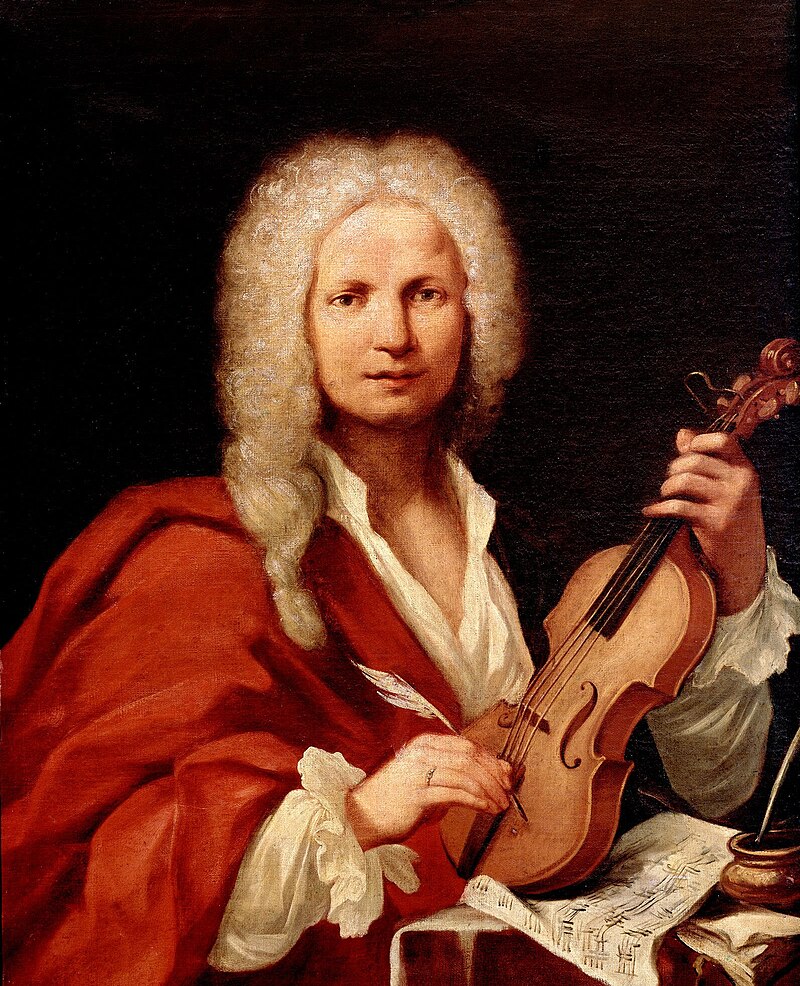
Antonio Vivaldi, one of the most celebrated composers of the Baroque era, was born on March 4, 1678, in Venice, Italy. His life and work have left an indelible mark on the world of classical music, influencing generations of composers and musicians. Despite the scarcity of details about his early life, Vivaldi’s legacy is defined by his prodigious talent and the profound impact he had on the evolution of musical forms, particularly the concerto. This article delves into the life of Antonio Vivaldi, exploring his age, rise to fame, and the significant highlights that shaped his extraordinary career.
Early Life and Musical Beginnings
Antonio Vivaldi was born into a musical family, with his father, Giovanni Battista Vivaldi, serving as a violinist in the chapel of San Marco in Venice. It is widely believed that Vivaldi’s father was his first music teacher, introducing him to the violin and nurturing his early talent. However, Vivaldi’s formal education likely extended beyond his father’s tutelage, as he may have also studied under Giovanni Legrenzi, a prominent composer and maestro di cappella at San Marco from 1685 to 1690.
By the age of 15, Vivaldi was preparing for a career in the clergy, a common path for young men of his time. He received minor orders in 1693 and was ordained as a priest in 1703. This ordination earned him the nickname “Il Prete Rosso” or “The Red Priest,” a reference to his red hair, which was a distinctive feature of his appearance.
The Red Priest and His Mysterious Ailment
Despite his ordination, Vivaldi’s career as a priest was short-lived. He suffered from a mysterious illness, which he described as “strettezza di petto” or tightness of the chest. This condition, likely a form of asthma, hindered his ability to perform his priestly duties, leading him to focus more on his musical career. Vivaldi eventually ceased saying Mass, devoting himself entirely to music.
Vivaldi’s Role at the Ospedale della Pietà
In 1703, the same year he was ordained, Vivaldi was appointed as a violin teacher at the Ospedale della Pietà, a renowned institution in Venice that provided care and musical education to orphaned, illegitimate, or abandoned girls. The Ospedale was one of four such institutions in Venice and was famed for its all-female musical ensembles. Vivaldi’s role at the Ospedale evolved over time, and he eventually became the “maestro dei concerti” (master of concerts) and “maestro di coro” (choirmaster).
Under Vivaldi’s guidance, the girls at the Ospedale achieved widespread acclaim for their musical performances, attracting visitors from across Europe. The institution’s success was largely due to Vivaldi’s innovative compositions, which showcased the talents of the young musicians and pushed the boundaries of instrumental music.
The Rise to Fame: Operas and Concertos
Vivaldi’s reputation as a composer grew steadily during his time at the Ospedale. His works, particularly his concertos, gained popularity throughout Europe. Among his most famous compositions are “Le Quattro Stagioni” (The Four Seasons), a set of four violin concertos that vividly depict the changing seasons of the year. These concertos remain some of the most frequently performed and recorded works in the classical repertoire.
In addition to his instrumental music, Vivaldi was also a prolific opera composer. He composed over 50 operas during his lifetime, many of which were performed in Venice’s theaters, including the Teatro Sant’Angelo and the more prestigious Teatro San Moisè. Vivaldi’s involvement in the opera world extended beyond composition; he often served as the impresario for his productions, recruiting singers, overseeing rehearsals, and managing finances.
Vivaldi’s operatic ventures were not without controversy. His multiple roles as composer, conductor, and impresario drew criticism from some quarters, most notably from Benedetto Marcello, a Venetian nobleman and composer. Marcello’s satirical pamphlet, “Il teatro alla moda” (The Fashionable Theater), is believed to be a thinly veiled critique of Vivaldi’s activities in the opera scene.
Travels and International Acclaim
Throughout his career, Vivaldi traveled extensively, both within Italy and abroad. From 1718 to 1722, he served as the maestro di cappella at the court of Prince Philip of Hesse-Darmstadt in Mantua. During this period, he composed some of his most famous works, including the “Four Seasons.” Vivaldi also visited Rome, where he performed for Pope Benedict XIII, and traveled to other European cities such as Amsterdam and Vienna.
Vivaldi’s music was particularly well-received in Germany and the Netherlands, where his instrumental works were widely published and performed. His fame reached its peak during the 1720s and 1730s, when he was one of the most celebrated composers in Europe. His concertos, characterized by their brilliant virtuosity and inventive melodies, set new standards for the genre and influenced many composers, including Johann Sebastian Bach.
The Decline and Rediscovery
Despite his success, Vivaldi’s fortunes began to decline in the late 1730s. The changing tastes in music, coupled with financial difficulties, led to a decrease in demand for his works. In 1740, Vivaldi left Venice for Vienna, hoping to secure a position at the court of Emperor Charles VI, who had been an admirer of his music. However, the emperor’s death in October 1740 dashed Vivaldi’s hopes, leaving him without patronage or income.
Vivaldi died in Vienna on July 28, 1741, at the age of 63. He was buried in a simple grave, largely forgotten by the musical world. For nearly two centuries, his music languished in obscurity, overshadowed by the works of his contemporaries.
The Rapprochement of Vivaldi’s Genius
The 20th century saw a revival of interest in Vivaldi’s music, thanks in part to the efforts of musicologists such as Marc Pincherle and Arnold Schering. The rediscovery of Vivaldi’s manuscripts, including hundreds of works previously unknown, revealed the full extent of his genius. The acquisition of these manuscripts by the Biblioteca Nazionale in Turin in 1919 was a turning point in the reassessment of Vivaldi’s place in music history.
Vivaldi’s influence on the development of the concerto form cannot be overstated. He perfected the three-movement structure of the concerto, with its characteristic contrast between the “tutti” (full orchestra) and “soli” (soloists) sections. His emphasis on melodic expressiveness and the virtuosity of soloists set the stage for the later evolution of the classical concerto, inspiring composers such as Bach, Handel, and Leclair.
Bach, in particular, held Vivaldi in high regard, transcribing several of his concertos for keyboard instruments. These transcriptions, including adaptations for the harpsichord and organ, are a testament to the admiration Bach had for Vivaldi’s innovative approach to composition.
Vivaldi’s Legacy and Enduring Appeal
Today, Antonio Vivaldi is recognized as one of the greatest composers of all time, and his music continues to captivate audiences around the world. His works, especially “The Four Seasons,” have become synonymous with the Baroque era, embodying the exuberance and inventiveness of the period.
Vivaldi’s contribution to the evolution of instrumental music, particularly the concerto, has secured his place in the pantheon of classical music giants. His ability to combine technical brilliance with emotional depth has ensured that his music remains as relevant and beloved today as it was during his lifetime.
The resurgence of interest in Vivaldi’s music in the 20th century has led to numerous recordings, performances, and scholarly studies, further cementing his status as a master of the Baroque. His influence can be heard in the works of countless composers who followed in his footsteps, and his legacy continues to inspire musicians and listeners alike.
In conclusion, Antonio Vivaldi’s life and work are a testament to the enduring power of music to transcend time and place. From his humble beginnings in Venice to his rise as one of Europe’s most celebrated composers, Vivaldi’s story is one of talent, perseverance, and a passion for music that continues to resonate across the centuries.


