
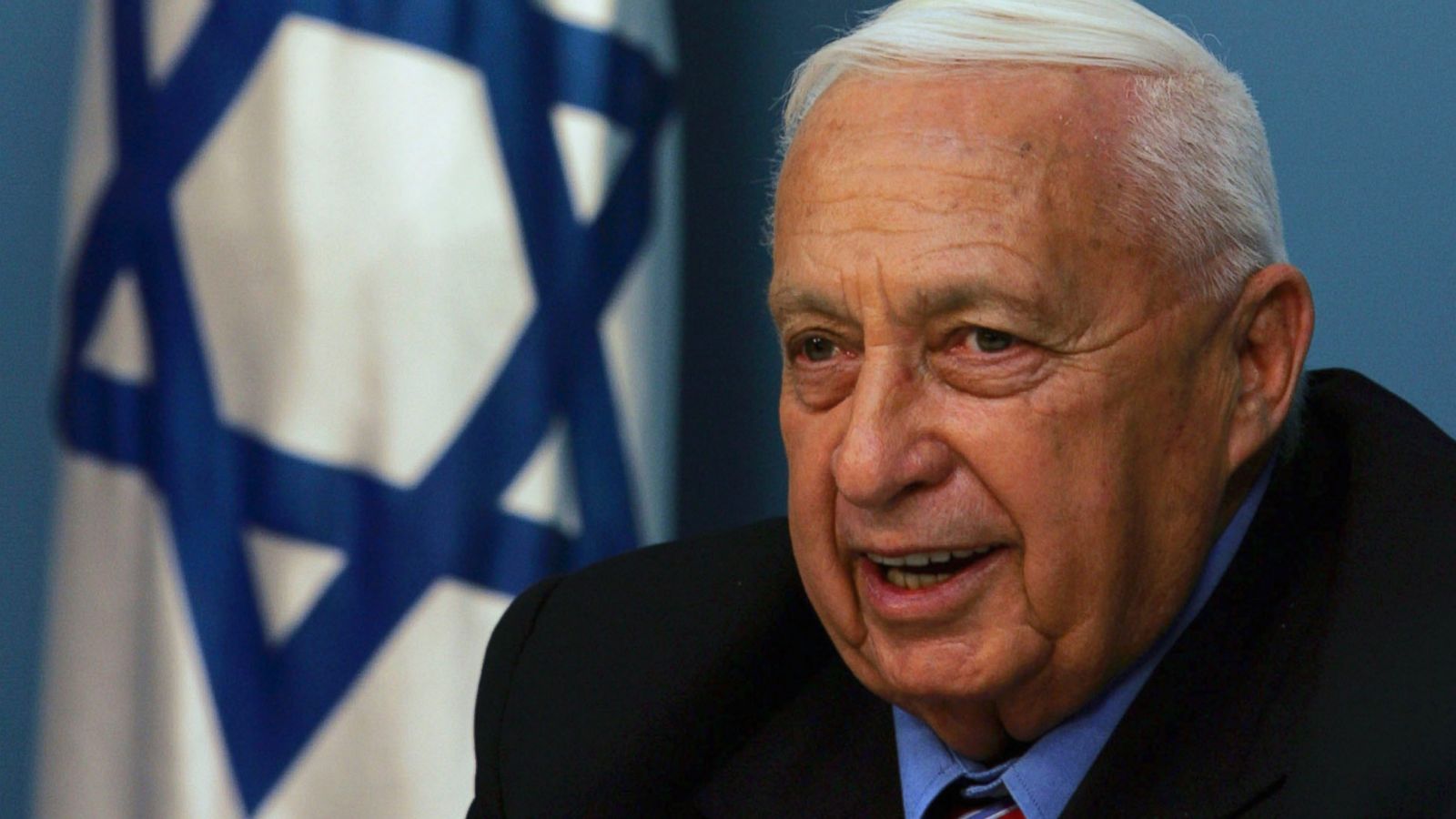
Ariel Sharon, born Ariel Scheinermann on February 26, 1928, in Kfar Malal, Mandatory Palestine (now Israel), was a towering figure in Israeli politics and military history. His life was marked by significant achievements and controversies that shaped the Middle East’s modern landscape. Known by his nickname “Arik,” Sharon’s journey from a young soldier to Prime Minister of Israel encapsulates a career filled with both military prowess and political maneuvering.
Early Life and Military Beginnings
Ariel Sharon was born to Russian immigrant parents in what would later become the State of Israel. His early life was steeped in the values of Zionism and a strong commitment to the Jewish homeland. From a young age, Sharon was involved in the defense of Jewish settlements, joining the paramilitary youth battalion, Gadna, at just 14 years old. This was followed by his enrollment in the Haganah, the underground Jewish defense force that later became the core of the Israel Defense Forces (IDF).
Sharon’s military career began in earnest during Israel’s War of Independence in 1948, where he served as a platoon commander in the Alexandroni Brigade. His leadership skills quickly became evident, and he participated in several key battles that helped secure the nascent state’s survival.
Rise through Military Ranks
Following the War of Independence, Sharon remained in the IDF, where he became involved in intelligence operations and led numerous retaliatory raids against neighboring Arab countries. In 1953, he established Unit 101, an elite commando unit tasked with executing retaliatory strikes. While the unit was effective in its missions, it was also criticized for its harsh tactics, particularly the Qibya massacre, which resulted in significant civilian casualties.
Sharon’s military career, however, did not follow a straight path. His aggressive approach sometimes put him at odds with his superiors, leading to a temporary stall in his progression through the ranks. Nevertheless, he continued to serve in various capacities, including as a student at the prestigious Camberley Staff College in England.
In the 1960s, Sharon’s career regained momentum. He held several key positions, including commander of the Northern Command and head of the IDF’s training department. His role in the Six-Day War of 1967 was pivotal; as a Major General, he led a division that achieved significant victories in the Sinai Peninsula, which greatly bolstered his reputation as a military strategist.
Political Career and Controversies
Sharon retired from the IDF in 1973 but was quickly recalled during the Yom Kippur War, where he again demonstrated his military acumen by leading a bold crossing of the Suez Canal, a move that turned the tide in Israel’s favor.
After retiring from military service, Sharon transitioned into politics, where his influence continued to grow. He founded the Shlomzion party in 1977, which won two seats in the Knesset, Israel’s parliament. Shortly thereafter, Sharon merged Shlomzion with the Likud party, led by Menachem Begin, marking the beginning of his long political career.
As Minister of Agriculture in the early 1980s, Sharon played a key role in promoting Israeli settlements in the occupied territories, a policy that would have lasting implications for the Israeli-Palestinian conflict.
In 1981, Sharon was appointed Minister of Defense, a role that would define much of his legacy. He was the architect of the 1982 invasion of Lebanon, an operation intended to eliminate the Palestine Liberation Organization (PLO) as a military threat. The invasion, however, led to widespread destruction and culminated in the massacre of Palestinian refugees in the Sabra and Shatila camps by Christian Phalangist militias allied with Israel. Although Sharon denied direct responsibility, an Israeli commission of inquiry found him indirectly responsible for failing to prevent the massacres. This led to his resignation as Defense Minister in 1983, though he remained a polarizing figure in Israeli politics.
Return to Power and the Path to the Prime Ministership
Despite the setbacks, Sharon’s political career was far from over. He continued to hold various ministerial positions throughout the 1980s and 1990s, including Minister of Industry and Trade, Minister of Construction and Housing, and Minister of Foreign Affairs. His tenure as Housing Minister was particularly controversial due to his aggressive promotion of settlements in the West Bank and Gaza Strip, which further complicated efforts toward peace with the Palestinians.
In 1999, Sharon became the leader of the Likud party, and in 2001, he was elected Prime Minister of Israel, succeeding Ehud Barak. His election came at a time of intense violence between Israelis and Palestinians, known as the Second Intifada. Sharon’s hardline approach and his reputation as a “bulldozer” appealed to an Israeli public seeking security and strong leadership.
Prime Ministership: A Complex Legacy
Sharon’s time as Prime Minister was marked by both aggressive military actions and significant political shifts. Initially, he pursued a policy of suppression against Palestinian militants, which included military incursions into Palestinian territories and the construction of the West Bank barrier, a controversial project aimed at preventing terrorist attacks.
However, in a surprising move, Sharon also initiated a policy of unilateral disengagement from Gaza. In 2005, under his leadership, Israel evacuated all Jewish settlements from the Gaza Strip and four settlements in the northern West Bank. This decision was highly controversial within Israel, particularly among his traditional right-wing supporters. Sharon justified the move as a necessary step to preserve Israel as a Jewish and democratic state, reducing friction with Palestinians and allowing for a more defensible border.
The disengagement from Gaza was a significant moment in Sharon’s career, symbolizing a shift from his earlier staunch support for settlements to a more pragmatic approach to Israel’s security and demographic challenges. This move alienated many in the Likud party, leading Sharon to break away and form a new centrist party, Kadima, in late 2005.
Final Years and Health Decline
Sharon’s political career was abruptly cut short in January 2006 when he suffered a severe stroke that left him in a coma. Despite initial hopes for recovery, Sharon remained in a persistent vegetative state until his death on January 11, 2014.
During his incapacitation, his newly formed party, Kadima, won the 2006 elections under the leadership of Ehud Olmert, reflecting the broad public support for Sharon’s policies at the time of his stroke. Sharon’s death marked the end of an era in Israeli politics, leaving behind a complex legacy of both military achievement and political controversy.
Legacy and Historical Context
Ariel Sharon’s legacy is one of complexity and contradiction. On one hand, he is remembered as a brilliant military strategist who played a crucial role in shaping Israel’s security policies. His leadership during pivotal moments, such as the Six-Day War and the Yom Kippur War, solidified his reputation as a formidable commander.
On the other hand, Sharon’s political decisions, particularly his role in the Lebanon War and the promotion of settlements, have left a lasting impact on the Israeli-Palestinian conflict. The Sabra and Shatila massacre remains a dark chapter in his career, and his policies of settlement expansion continue to be a point of contention in peace negotiations.
Sharon’s shift towards disengagement from Gaza in his later years reflects a pragmatic recognition of the limits of military power and the need for political solutions. This move, while controversial, demonstrated his willingness to adapt his approach in response to changing realities, even at the cost of alienating his political base.
Conclusion
Ariel Sharon was a man of contrasts—both a hawk and a pragmatist, a military hero, and a divisive political figure. His life story is deeply intertwined with the history of Israel, from its early struggles for survival to its ongoing quest for peace and security. Sharon’s legacy, like the man himself, is complex, marked by both triumphs and tragedies that continue to shape the Middle East.
Sharon’s impact on Israeli society and the broader region cannot be overstated. Whether revered or reviled, he remains a central figure in the narrative of modern Israel, a testament to the turbulent and often contradictory nature of leadership in times of conflict.


