
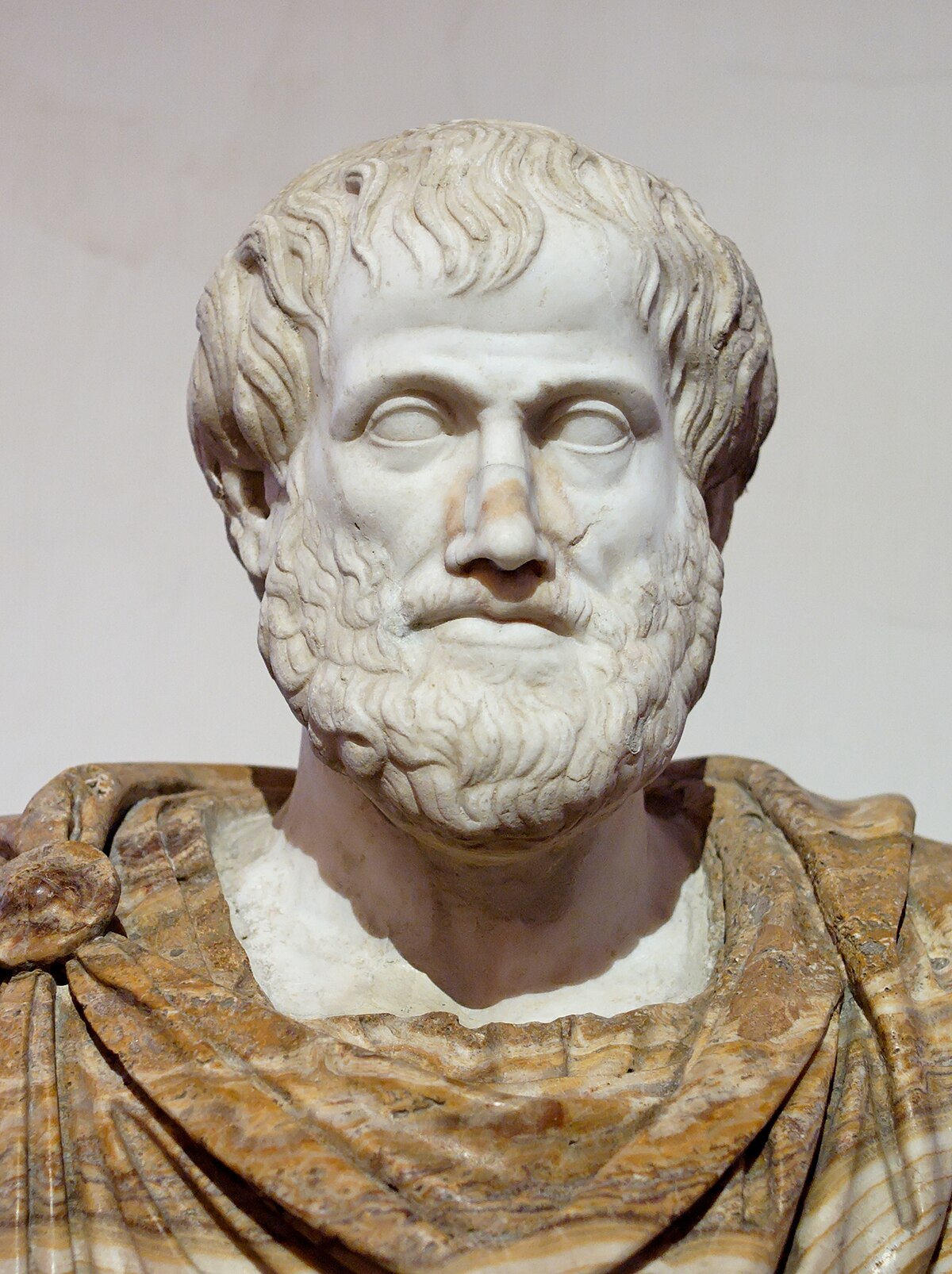
Aristotle, born in 384 BCE in the small city of Stagira, located in the northern regions of ancient Greece, is widely regarded as one of the most influential figures in Western philosophy. His contributions to a vast array of fields, including metaphysics, ethics, logic, politics, and natural sciences, have shaped the intellectual landscape for centuries. This article explores the life of Aristotle, his rise to fame, key achievements, and the lasting impact he has had on philosophy and science.
Early Life and Education
Aristotle was born into a well-connected family; his father, Nicomachus, served as a court physician to King Amyntas III of Macedonia. This connection to the Macedonian court would later play a significant role in Aristotle’s life. When Aristotle was around seventeen or eighteen, he moved to Athens, the intellectual hub of the ancient world, to pursue his education.
In Athens, Aristotle joined Plato’s Academy, where he spent the next twenty years of his life. Initially a student and later a teacher, Aristotle’s time at the Academy profoundly influenced his thinking. However, despite the deep respect he had for his teacher, Aristotle began to develop ideas that diverged from Plato’s teachings. While Plato emphasized the realm of forms, Aristotle focused on empirical observation and the study of the natural world, laying the groundwork for what would later become the scientific method.
Establishing His Own Path: The Lyceum
After Plato’s death in 347 BCE, Aristotle left Athens and spent time traveling and studying in various places, including Assos and Lesbos. During this period, he conducted extensive research in biology and the natural sciences, which would later form the basis of his scientific writings.
In 343 BCE, Aristotle was invited by King Philip II of Macedonia to tutor his son, Alexander, who would later become known as Alexander the Great. Aristotle’s influence on the young prince is a subject of much historical speculation, but it is clear that his teachings left a lasting impact on Alexander, particularly in his appreciation of Greek culture and philosophy.
When Alexander ascended to the throne in 336 BCE, Aristotle returned to Athens and founded his own school, the Lyceum. Unlike Plato’s Academy, the Lyceum was a more empirical and observational institution, reflecting Aristotle’s belief in the importance of studying the natural world. The Lyceum became a leading center of research and learning, attracting students from across the Greek world.
The Aristotelian Corpus: A Legacy of Knowledge
Aristotle’s body of work is vast and covers a wide range of subjects. His writings can be categorized into several key areas: logic, metaphysics, ethics, politics, natural sciences, and poetics. Each of these areas has left a profound impact on the development of Western thought.
Logic: Aristotle is often credited with being the “father of logic.” His work in this field, particularly in “Organon,” laid the foundations for deductive reasoning and the study of syllogisms. For centuries, Aristotelian logic was synonymous with logic itself, shaping the way people approached reasoning and argumentation.
Metaphysics: In his work “Metaphysics,” Aristotle explores the nature of being and reality. He introduces the concept of “substance” as the underlying reality of all things and examines the causes of change and motion. His idea of the “unmoved mover,” a primary cause of all motion in the universe, has had a lasting influence on both philosophy and theology.
Ethics: Aristotle’s “Nicomachean Ethics” remains one of the most important works in moral philosophy. In it, he argues that the highest human good is “eudaimonia,” often translated as “happiness” or “flourishing.” Aristotle believed that achieving eudaimonia requires living a life of virtue, which involves finding a balance between excess and deficiency—a concept known as the “Golden Mean.”
Politics: In his treatise “Politics,” Aristotle examines the nature of political communities and the role of citizens within them. He discusses various forms of government, including monarchy, aristocracy, and democracy, and argues that the best government is one that promotes the common good. Aristotle’s ideas on politics have influenced political theory for centuries and continue to be studied today.
Natural Sciences: Aristotle’s contributions to the natural sciences are vast. He conducted extensive studies in biology, zoology, and physics, laying the groundwork for future scientific inquiry. His classification of living organisms, although not entirely accurate by modern standards, was a significant step forward in the study of biology. Aristotle’s approach to science was empirical, emphasizing observation and classification, which contrasted with the more abstract methods of his predecessors.
Poetics: Aristotle’s “Poetics” is one of the earliest surviving works of literary theory. In it, he analyzes the elements of tragedy and epic poetry, introducing concepts such as catharsis and the three unities (time, place, and action). His ideas on drama and storytelling have had a lasting influence on literary criticism and the arts.
Aristotle’s Influence on Western Thought
The influence of Aristotle’s work cannot be overstated. His ideas have shaped the intellectual traditions of both the Western and Islamic worlds. In the Middle Ages, Aristotle’s works were preserved and studied by Islamic scholars such as Averroes, who played a crucial role in transmitting Aristotelian thought to Europe. The reintroduction of Aristotle’s works to the Latin West in the 12th century sparked a revival of interest in his philosophy, particularly in the works of Thomas Aquinas, who sought to reconcile Aristotelian philosophy with Christian theology.
Aristotle’s impact extends far beyond philosophy. His work in logic laid the foundation for the development of formal systems of reasoning, which are essential in fields ranging from mathematics to computer science. His contributions to biology and the natural sciences influenced the development of scientific inquiry, emphasizing the importance of observation and empirical evidence.
In political theory, Aristotle’s ideas about the role of the state and the importance of promoting the common good continue to resonate. His concept of the “Golden Mean” in ethics remains a powerful tool for understanding moral behavior, advocating for moderation and balance in all aspects of life.
The Relevance of Aristotle Today
Aristotle’s philosophy remains relevant in contemporary discussions across various disciplines. In ethics, his concept of virtue ethics, which emphasizes character and the cultivation of virtuous habits, is still widely studied and applied. In political science, his analysis of different forms of government and the nature of citizenship continues to inform debates about governance and democracy.
Aristotle’s contributions to logic and the philosophy of science are particularly significant in an era where empirical evidence and rational argumentation are crucial. His emphasis on observation and classification in the natural sciences laid the groundwork for the scientific method, which remains the cornerstone of scientific inquiry today.
Moreover, Aristotle’s ideas about metaphysics and the nature of reality continue to influence philosophical discussions. His exploration of causality, substance, and the nature of being has had a lasting impact on metaphysical thought, providing a framework for understanding the fundamental nature of existence.
The End of Aristotle’s Life and His Legacy
In 323 BCE, following the death of Alexander the Great, anti-Macedonian sentiment grew in Athens. Given his close association with the Macedonian court, Aristotle found himself in a precarious position. To avoid persecution, he left Athens and retreated to his family estate in Chalcis, where he passed away the following year in 322 BCE at the age of 62.
Aristotle’s death marked the end of an era, but his ideas lived on, profoundly shaping the course of Western thought. His students, most notably Theophrastus, continued his work at the Lyceum, ensuring that his teachings would endure. Over the centuries, Aristotle’s works were preserved, studied, and expanded upon, influencing countless scholars and thinkers.
In the modern era, Aristotle’s contributions continue to be recognized and revered. His works are a staple in the study of philosophy, and his ideas have permeated many aspects of contemporary thought. Aristotle’s emphasis on empirical observation and logical reasoning has had a lasting impact on the development of science, ethics, politics, and education.
Conclusion
Aristotle’s life and work represent a monumental achievement in the history of human thought. From his early years as a student of Plato to his founding of the Lyceum and his contributions to a wide range of disciplines, Aristotle’s influence is vast and enduring. His ideas have shaped the intellectual traditions of the Western world, and his legacy continues to inspire scholars, scientists, and thinkers today.
Aristotle’s commitment to understanding the natural world, his development of logical reasoning, and his exploration of ethical and political principles have left an indelible mark on philosophy and science. As we continue to grapple with the complexities of the modern world, Aristotle’s teachings remain a vital source of wisdom and guidance, reminding us of the importance of reason, observation, and the pursuit of knowledge.


