
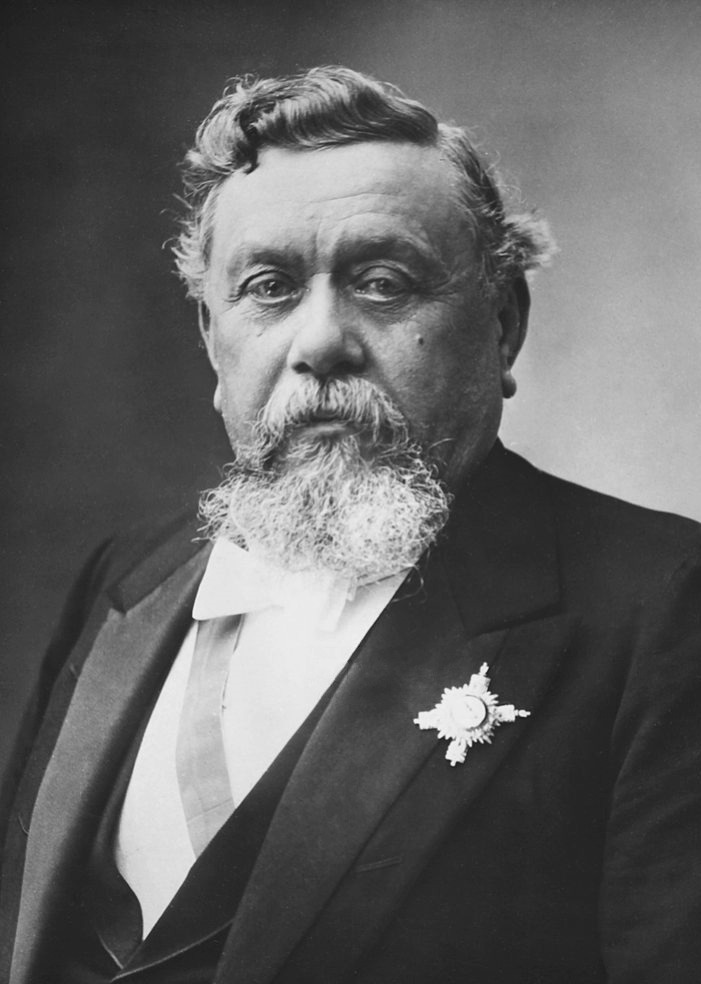
Armand Fallières was a notable French politician who served as the President of France from 1906 to 1913. Born on November 6, 1841, in Mézin, a small town in the Lot-et-Garonne department of France, Fallières had a long and distinguished career in public service that spanned several decades. Known for his moderate and conciliatory approach to politics, he played a crucial role during a period of significant change and challenge in French history.
Early Life and Education
Armand Fallières was born into a modest family in the rural town of Mézin, in the region of Aquitaine. His early education took place in local schools, where he showed an aptitude for studies, particularly in the humanities. Encouraged by his family and teachers, Fallières pursued higher education in law, eventually earning a degree in jurisprudence.
After completing his law degree, Fallières began practicing as a lawyer in the nearby town of Nérac. His legal career provided him with a solid foundation in understanding the intricacies of the French legal and political systems, which would later prove invaluable in his political career.
Entry into Politics
Fallières’ political career began in 1868 when he was elected to the municipal council of Nérac as a member of the Left Republican Party. His commitment to republican ideals and his ability to navigate the complexities of local politics quickly earned him a reputation as a capable and principled leader. In 1871, he was elected mayor of Nérac, a position he held with distinction, using it as a platform to advocate for the values of the French Republic.
In 1876, Fallières was elected to the French Chamber of Deputies, representing the Lot-et-Garonne department. His entry into national politics marked the beginning of a long and influential career. As a deputy, he was known for his advocacy of moderate republicanism, promoting policies that balanced progress with stability.
Rise to Prominence
Fallières’ political acumen did not go unnoticed, and in 1882, he was appointed as Under-Secretary of the Interior in the government of Jules Ferry. His tenure in this role was short but impactful, as he quickly demonstrated his ability to manage complex administrative tasks and navigate the turbulent political environment of the time.
In 1883, Fallières briefly served as the Minister of the Interior, where he was responsible for maintaining public order and managing France’s internal affairs. Although his time as Interior Minister was brief, it established him as a capable leader who could be trusted with high-level responsibilities.
Fallières continued to rise through the ranks of French politics, holding several key ministerial positions over the next two decades. Notably, he served as Minister of Public Instruction, where he implemented important educational reforms aimed at improving access to education and modernizing the French school system. He also served as Minister of Justice, where he became a staunch opponent of the death penalty, a stance that would define much of his political career.
Presidency of France
Armand Fallières’ crowning achievement came in 1906 when he was elected as the President of France. His election came at a time of significant social and political tension in France, particularly regarding the separation of church and state. The French government had recently passed laws that severely restricted the influence of the Catholic Church in public life, leading to a major conflict with religious authorities.
Fallières’ presidency was marked by his commitment to upholding the secular principles of the French Republic while also seeking to moderate the tensions between the state and the Catholic Church. He believed in a government that was both firm in its principles and compassionate in its application of those principles.
One of the most significant acts of his presidency was his consistent opposition to the death penalty. Throughout his term, Fallières used his presidential prerogative to commute numerous death sentences to life imprisonment, reflecting his deep conviction that the state should not take life as a form of punishment.
Under Fallières’ leadership, France also navigated several international challenges, including colonial disputes with Germany over territories in Africa, particularly Morocco. His diplomatic efforts helped to avoid open conflict and maintained France’s colonial interests while promoting a cautious approach to international relations.
Domestic Challenges and Achievements
During Fallières’ presidency, France faced numerous domestic challenges, including widespread labor strikes and social unrest. The early 20th century was a period of significant industrialization in France, which brought about major changes in the workforce. The rise of socialist and labor movements led to increased demands for better working conditions, higher wages, and greater political representation for workers.
Fallières approached these challenges with a moderate and conciliatory attitude. He believed in the importance of dialogue between the government, employers, and workers to resolve disputes peacefully. His administration worked to implement social reforms that addressed some of the concerns of the labor movement, while also maintaining public order.
One of the key reforms during his presidency was the expansion of social welfare programs, including the introduction of old-age pensions and improvements in workers’ rights. These reforms were part of a broader effort to modernize France’s social policies and create a more equitable society.
Foreign Policy and Colonial Issues
On the international stage, Fallières was involved in managing France’s colonial empire, which was at its height during his presidency. The most significant colonial issue of his presidency was the Moroccan Crisis, a series of diplomatic disputes between France and Germany over control of Morocco.
The crisis reached its peak in 1911, when German forces were sent to Morocco in a show of force against French influence in the region. Fallières, along with his government, worked to defuse the situation through diplomatic channels. The resulting negotiations led to the Treaty of Fez in 1912, which established Morocco as a French protectorate, while Germany was compensated with territory in central Africa.
Fallières’ handling of the Moroccan Crisis was seen as a diplomatic success, as it prevented a potential war with Germany and secured France’s colonial interests in North Africa. His approach to foreign policy was characterized by a preference for diplomacy and negotiation over military confrontation, which helped to maintain peace in Europe during his presidency.
The End of His Presidency and Legacy
Armand Fallières’ term as president ended in 1913, at which point he chose not to seek re-election. He was succeeded by Raymond Poincaré, a more conservative figure who would lead France through the challenging years of World War I. Fallières’ decision to step down was in keeping with his belief in the republican tradition of peaceful transitions of power and his desire to retire from public life after decades of service.
After leaving office, Fallières retired to his hometown of Mézin, where he lived a quiet life away from the political spotlight. He remained respected and admired for his contributions to the French Republic, particularly his efforts to moderate the tensions between church and state and his humanitarian stance against the death penalty.
Fallières passed away on June 22, 1931, at the age of 89. His death marked the end of an era in French politics, but his legacy as a moderate and principled leader who navigated his country through a period of significant change and challenge endures.
Reflection on Fallières’ Impact
Armand Fallières’ impact on French politics and society was significant, particularly in the areas of education, justice, and secularism. His commitment to republican values, his opposition to the death penalty, and his efforts to moderate the conflicts of his time reflect a leadership style that prioritized stability, justice, and the well-being of the French people.
Fallières is remembered as a president who guided France through a complex period in its history with wisdom and restraint. His presidency set the tone for the French Third Republic, emphasizing the importance of secularism, social reform, and diplomacy in both domestic and international affairs.
In today’s context, Fallières’ approach to governance—marked by moderation, a commitment to human rights, and a focus on dialogue—serves as a model for contemporary leaders facing the challenges of political polarization, social unrest, and international conflict.
Conclusion
Armand Fallières was a statesman of considerable influence whose career spanned some of the most critical periods in French history. From his early days as a lawyer and local politician to his presidency during a time of profound change, Fallières demonstrated a consistent commitment to the principles of the French Republic. His legacy is one of moderation, reform, and a deep respect for human rights, which continues to resonate in the annals of French political history.
As we reflect on Fallières’ life and achievements, it is clear that his contributions to French society extended far beyond his time in office. His leadership during a period of great transformation set a standard for future generations of politicians and remains a testament to the enduring values of the French Republic.


