
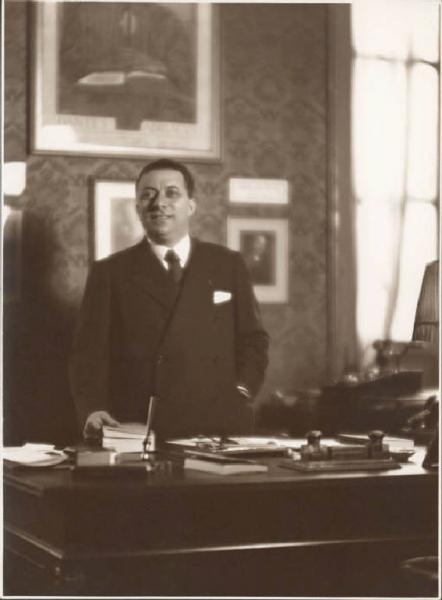
Arnoldo Mondadori, a name synonymous with the evolution of Italian publishing, stands out as a monumental figure in the world of literature and media. Born on November 2, 1889, in Poggio Rusco, Mantova, Italy, Mondadori’s life and career offer a fascinating glimpse into the growth of one of Italy’s most influential publishing houses. This detailed exploration covers his early life, career milestones, the impact of historical events on his work, and his enduring legacy.
Early Life and Beginnings
Arnoldo Mondadori was born into modest circumstances. His father, a wandering shoemaker with limited education, provided little financial support for his son’s schooling. As a result, Mondadori’s formal education was cut short after the fourth grade. Despite this, his early experiences were rich with learning opportunities. He began working in a local grocery store, where his charisma earned him the nickname “Incantabiss,” which translates to “snake charmer” in dialect, reflecting his persuasive abilities and engaging personality.
In 1907, at the age of sixteen, Mondadori started working in a printing shop. This early exposure to the world of print media was crucial for his future career. He took the initiative to publish his first newspaper, “Luce,” which focused on socialist propaganda. This early venture marked the beginning of his journey into the publishing industry, setting the stage for what would become a transformative career.
Founding of the Mondadori Publishing House
In 1911, Mondadori met Tomaso Monicelli, who was pivotal in the founding of “La Sociale,” the precursor to Mondadori’s future publishing empire. Mondadori’s personal life took a significant turn when he married Andreina Monicelli in 1913, further intertwining his life with influential figures in the literary and cultural spheres.
By 1919, after World War I, Mondadori had established a new publishing business in Milan, which quickly became a major player in the Italian publishing industry. His innovative approach led to the creation of successful series and magazines, including “Il Milione” and “Il Secolo Illustrato,” which helped broaden his appeal to a wider audience.
Mondadori’s career was deeply impacted by the political climate of Italy during the Fascist regime. Initially receptive to some of the fascist ideals, he adapted his business strategies to align with the changing political landscape. His publishing house was among the first to implement a direct sales network and produce popular literature, including detective stories and encyclopedias, to cater to the tastes of the masses.
During World War II, Mondadori faced significant challenges. His company’s facilities were damaged, and he had to relocate to Switzerland with his family. However, post-war, Mondadori’s resilience shone through. He revamped his business, focusing on new journalism and launching influential publications like “Epoca,” a magazine featuring prominent journalists such as Enzo Biagi and Cesare Zavattini.
The Era of Innovation
The post-war era marked a period of significant innovation for Mondadori. He invested heavily in technological advancements, notably through the modernization of printing facilities with funds from the Marshall Plan. This period also saw the introduction of the “Oscar Mondadori” series in 1965, a groundbreaking venture in affordable, accessible literature. This series revolutionized the book market by making high-quality literature available to the general public, selling over eight million copies in its first year alone.
Mondadori’s commitment to technological advancement and quality publishing ensured that his company continued to thrive. The acquisition of the Ascoli Piceno paper mill and the expansion of operations to print for international clients solidified Mondadori’s reputation as a leading global publisher.
Legacy and Final Years
Arnoldo Mondadori’s final years were marked by personal and professional challenges. In 1967, his eldest son, Alberto, distanced himself from the company, leaving Giorgio Mondadori to take over as president. Despite these difficulties, Mondadori’s impact on the publishing world remained substantial. His company continued to be a significant force in Italian literature and media.
Arnoldo Mondadori passed away on June 8, 1971, in Milan. His legacy endures through the continued success of his publishing house and the influential works that remain a testament to his vision and dedication. The “Meridiani” series, launched before his death, stands as a symbol of the high standards and cultural aspirations that Mondadori championed throughout his career.
Conclusion
Arnoldo Mondadori’s life story is a testament to the power of innovation, resilience, and dedication. From his humble beginnings to the establishment of a publishing empire, Mondadori’s journey is a remarkable example of how vision and perseverance can shape industries and influence cultural landscapes. His contributions to literature and media continue to resonate, making him a central figure in the history of publishing.
For those interested in exploring the broader implications of Mondadori’s work and his role in shaping modern media, delving into the history of his publishing house offers a window into the evolution of Italian and global literature.


