
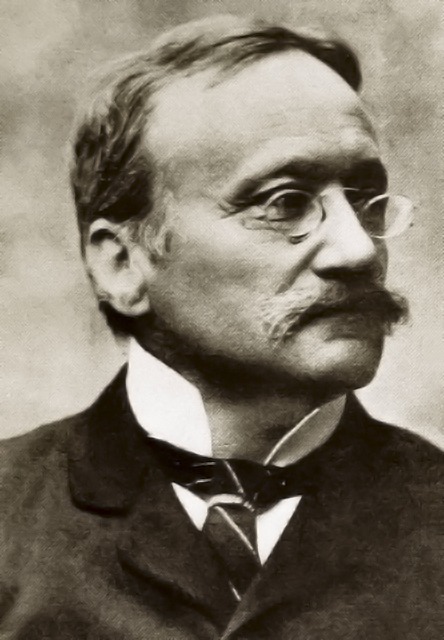
Arrigo Boito, a prominent figure in the 19th-century Italian literary and musical scenes, is best known for his contributions as a poet, librettist, and composer. Born on February 24, 1842, in Padua, Italy, Boito’s work has left an enduring legacy, particularly in the realm of opera. This article delves into his life, career, and significant achievements, providing detailed insights and exploring the nuances of his contributions to the arts.
Early Life and Education
Arrigo Boito was born into an intellectually stimulating environment. His father, Silvestro Boito, was an Italian painter, and his mother, Giuseppina Radoli, was a Polish countess and talented amateur musician. This diverse cultural background undoubtedly influenced Boito’s artistic inclinations.
Boito’s formal education in music began at the Milan Conservatory in 1854, where he studied violin, piano, and composition. His early exposure to the works of classical composers and his rigorous training at the conservatory laid the foundation for his future endeavors in the arts. During his time at the conservatory, he formed a close friendship with Franco Faccio, a fellow student who would later become a significant collaborator.
Early Career and Influences
After completing his studies, Boito traveled extensively across Europe. In Paris, he had the opportunity to meet Gioachino Rossini, one of the most influential composers of the time. This encounter, along with his travels through Poland, Germany, Belgium, and England, exposed Boito to a variety of musical styles and literary influences, which would later be reflected in his work.
Boito’s early career was marked by a blend of literary and musical pursuits. In 1862, he wrote the verses for “Inno delle Nazioni” (Hymn of the Nations), which Giuseppe Verdi set to music for the London International Exhibition. This collaboration marked the beginning of Boito’s long and fruitful association with Verdi.
The Creation of “Mefistofele”
One of Boito’s most significant achievements as a composer was his opera “Mefistofele,” based on Johann Wolfgang von Goethe’s “Faust.” Premiered at La Scala in Milan in 1868, the opera initially met with controversy and was poorly received. The audience’s reaction was so negative that it led to riots and disturbances, resulting in the police halting the performances after just two shows. Critics and the public accused Boito of Wagnerian influences, which were not well accepted at the time.
Undeterred, Boito extensively revised “Mefistofele,” making significant changes, including rewriting the role of Faust for a tenor instead of a baritone. The revised version premiered in 1876 at the Teatro Comunale in Bologna and was met with great success. This version of “Mefistofele” has since become a staple in the operatic repertoire and is frequently performed and recorded.
Librettist for Verdi
Boito’s talents as a librettist were particularly noteworthy. His collaboration with Giuseppe Verdi resulted in some of the most celebrated operas of the 19th century. Boito wrote the librettos for Verdi’s “Otello” (1887) and “Falstaff” (1893), both of which are considered masterpieces. Boito’s libretti are characterized by their poetic quality and dramatic intensity, perfectly complementing Verdi’s music.
In addition to his work with Verdi, Boito wrote librettos for other composers under the pseudonym Tobia Gorrio, an anagram of his name. Notable works include the libretto for Amilcare Ponchielli’s “La Gioconda,” which remains a popular opera today. Boito also revised the libretto for Verdi’s “Simon Boccanegra” in 1881, contributing to the opera’s success.
Literary Contributions and Themes
Boito was not only a composer and librettist but also a poet and novelist. His literary works often explored themes of good and evil, reflecting the romantic and sometimes pessimistic view of life that characterized much of 19th-century literature. His poetry, novellas, and critical essays were well-regarded, especially those published in the “Gazzetta musicale.”
The theme of the conflict between good and evil is most prominently displayed in “Mefistofele.” This opera, based on Goethe’s “Faust,” delves into the eternal struggle between divine and diabolical forces. Boito’s deep philosophical reflections and his ability to convey complex emotions through his characters have made “Mefistofele” a profound and thought-provoking work.
Later Works and Unfinished Projects
Despite his successes, Boito was known for his perfectionism, which often led to incomplete projects. One such project was the opera “Ero e Leandro,” which he ultimately destroyed out of dissatisfaction. Another ambitious work was “Nerone,” an opera he labored on for many years. Boito published the libretto for “Nerone” in 1901, but he never completed the music.
After Boito’s death, Arturo Toscanini and Vincenzo Tommasini took on the task of completing “Nerone.” The opera premiered at La Scala on May 1, 1924, several years after Boito’s passing. Although “Nerone” did not achieve the same level of acclaim as “Mefistofele,” it remains a testament to Boito’s creative vision and ambition.
Role as an Educator and Cultural Influence
In addition to his work as a composer and librettist, Boito made significant contributions as an educator. From 1889 to 1897, he served as the director of the Parma Conservatory, where he influenced a new generation of musicians and composers. His leadership and dedication to musical education helped elevate the standards of the institution and left a lasting impact on Italian music education.
Boito’s influence extended beyond the world of music. He was a prominent figure in the cultural and intellectual life of Italy, often engaging in discussions and debates on literature, philosophy, and the arts. His interdisciplinary approach and his ability to bridge the worlds of music and literature made him a unique and influential figure in the cultural landscape of his time.
Personal Life and Death
Arrigo Boito led a life marked by artistic dedication and intellectual curiosity. Despite his fame, he maintained a relatively private personal life. His friendships with other notable figures of his time, including Giuseppe Verdi and Arturo Toscanini, were based on mutual respect and shared artistic ideals.
Boito passed away on June 10, 1918, in Milan. He was buried in the Cimitero Monumentale di Milano, where his grave remains a site of homage for admirers of his work.
Legacy and Lasting Impact
Arrigo Boito’s contributions to the arts, particularly in opera and literature, have left a lasting legacy. His works continue to be performed and studied, reflecting his enduring influence on both music and literary criticism. Boito’s ability to weave profound philosophical themes into his operas and his mastery of the libretto have cemented his place in the pantheon of great 19th-century artists.
Boito’s perfectionism and his commitment to artistic integrity often meant that he produced fewer works than some of his contemporaries, but the quality and depth of his creations have ensured their lasting relevance. His collaborations with Verdi, especially, have left an indelible mark on the operatic canon.
Historical Context and Significance
Understanding Boito’s impact requires a consideration of the historical and cultural context in which he lived and worked. The 19th century was a period of significant political, social, and cultural upheaval in Italy. The Risorgimento movement, which sought the unification of Italy, was a backdrop to much of Boito’s early life and influenced the themes of nationalism and identity in his work.
Boito’s contributions to the Italian opera scene came at a time when opera was a dominant form of entertainment and cultural expression. His innovative approaches to libretto writing and his willingness to explore complex psychological and philosophical themes set him apart from many of his contemporaries and helped shape the future of opera.
Conclusion: Arrigo Boito’s Enduring Legacy
Arrigo Boito’s life and work exemplify the profound impact that a dedicated and multifaceted artist can have on the cultural landscape. His contributions to opera, both as a composer and librettist, have left an enduring legacy that continues to influence and inspire. Boito’s commitment to artistic excellence, his intellectual rigor, and his ability to blend literary and musical disciplines make him a towering figure in the history of Italian arts.
As we continue to explore and appreciate his works, Boito’s legacy serves as a reminder of the power of art to explore the depths of human experience and to bridge the gap between different forms of creative expression. His operas and literary works remain a testament to his genius and his unwavering pursuit of artistic truth.


