
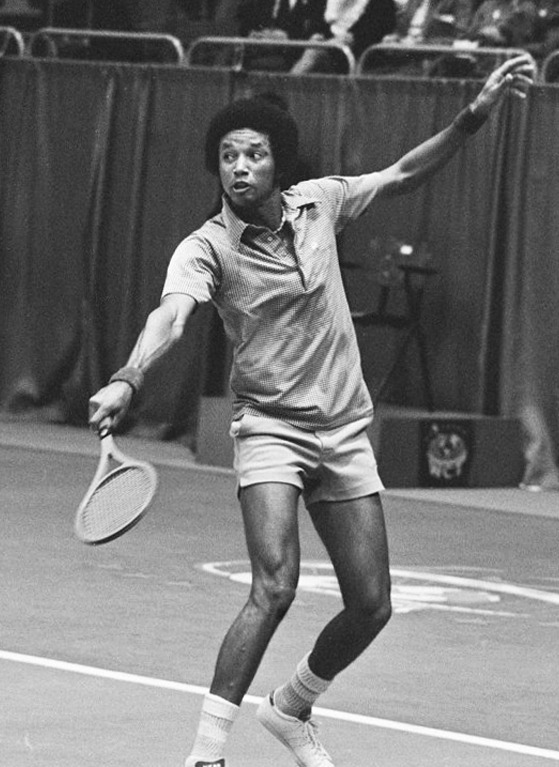
Arthur Ashe, born Arthur Robert Ashe Jr. on July 10, 1943, in Richmond, Virginia, is remembered as a pioneering figure in tennis and an influential advocate for social justice. Ashe’s life, marked by groundbreaking achievements on the tennis court and significant contributions off it, remains an inspiring story of perseverance, talent, and advocacy. This article provides a comprehensive look at Ashe’s life, exploring his age, rise to fame, key life highlights, and the historical context that shaped his journey.
Early Life and Background
Arthur Ashe was born to Arthur Sr. and Mattie Ashe. Tragically, his mother passed away when he was just six years old, leaving his father to raise him and his younger brother, Johnnie. Arthur Sr. was a strict disciplinarian, emphasizing the importance of education and sports to keep his sons focused and out of trouble.
As a child, Ashe was prevented from playing American football due to his slight build. Instead, he took up tennis, a sport less common among African American children at the time. Ashe’s natural talent was evident early on, and he was soon noticed by Ron Charity, a student and part-time tennis instructor. Charity introduced Ashe to the fundamentals of the sport and encouraged him to participate in local tournaments.
The Path to Tennis Stardom
Ashe’s journey in tennis began in earnest when he met Dr. Robert Walter Johnson, a pivotal figure in the development of African American tennis players. Dr. Johnson ran the Junior Development Program of the American Tennis Association (ATA) and provided young black players with training opportunities and access to tournaments. Under Johnson’s mentorship, Ashe honed his skills and learned the importance of discipline and sportsmanship.
In 1958, Arthur Ashe made history by becoming the first African American to compete in the Maryland boys’ championships. His talent and dedication earned him a scholarship to Summer High School in St. Louis, where he trained under Richard Hudlin. Living with Hudlin and his family, Ashe had the chance to strengthen his physical and mental game. His hard work paid off when he won the national junior indoor title, a significant milestone in his burgeoning career.
Ashe’s success at the junior level caught the attention of UCLA, which offered him a full scholarship. At UCLA, he continued to excel, winning the NCAA singles title in 1965. During his time at the university, Ashe was coached by J.D. Morgan and had the opportunity to practice with his idol, Pancho Gonzales.
Professional Career and Major Achievements
Arthur Ashe graduated from UCLA with a degree in business administration in 1966 and shortly afterward joined the U.S. Army, where he served for two years. Upon leaving the army in 1968, Ashe embarked on his professional tennis career, a path that would see him break numerous racial barriers and achieve significant milestones.
US Open Victory and Rise to Prominence
In 1968, Ashe won the inaugural US Open of the Open Era, becoming the first African American man to win a Grand Slam title. This victory was a landmark moment, not only in his career but also in the history of tennis. Ashe’s success on the court helped to challenge the racial segregation that still existed in many areas of American life.
Advocacy and Activism
Throughout his career, Ashe was an outspoken advocate for civil rights and social justice. In 1969, he applied for a visa to play in the South African Open but was denied due to the apartheid regime’s policies. This incident spurred Ashe to become a vocal critic of apartheid and a prominent supporter of the anti-apartheid movement. He called for the expulsion of South Africa from international tennis and used his platform to raise awareness about the injustices occurring in the country.
Wimbledon Triumph and Other Major Wins
Ashe’s career continued to flourish in the 1970s. In 1970, he won his first Australian Open title. However, it was his victory at Wimbledon in 1975 that cemented his place among the tennis greats. In an unexpected and masterful performance, Ashe defeated the heavily favored Jimmy Connors in the final, becoming the first African American man to win Wimbledon. This victory was the pinnacle of his career and highlighted his strategic brilliance and exceptional skill.
Marriage and Personal Life
On February 20, 1977, Ashe married Jeanne Moutoussamy, a photographer and artist. The couple had met the previous year at a United Negro College Fund event. Their wedding was officiated by Andrew Young, the U.S. Ambassador to the United Nations, and took place in a chapel at the UN headquarters in New York City.
Retirement and Post-Tennis Career
Ashe’s professional tennis career was cut short by health issues. In 1979, he suffered a heart attack while teaching a tennis clinic in New York. This incident revealed a hereditary heart condition that ran in his family. Despite undergoing bypass surgery, Ashe experienced a second heart attack in 1983, which forced him to retire from competitive tennis.
After retiring, Ashe remained actively involved in tennis and broader social issues. He worked as a commentator for ABC Sports, wrote articles for Time magazine, and served as captain of the U.S. Davis Cup team. Ashe also founded the National Junior Tennis League to promote tennis among underprivileged youth.
The Battle with AIDS
In 1988, Ashe received devastating news: he had contracted HIV from a blood transfusion during one of his heart surgeries. Ashe kept his diagnosis private until 1992, when he went public in response to a newspaper article about his condition. Following this disclosure, Ashe became an advocate for AIDS awareness, working tirelessly to educate the public and fight the stigma associated with the disease.
In 1992, he established the Arthur Ashe Institute for Urban Health to address issues of inadequate healthcare in urban communities. His efforts earned him the recognition of Sports Illustrated, which named him Sportsman of the Year.
Legacy and Impact
Arthur Ashe’s legacy extends far beyond his achievements on the tennis court. He was a trailblazer in the sport, breaking down racial barriers and setting a precedent for future generations of African American athletes. Ashe’s advocacy for civil rights, his fight against apartheid, and his efforts to raise awareness about HIV/AIDS have left an indelible mark on society.
Ashe’s autobiography, “Days of Grace,” published shortly before his death, offers a poignant reflection on his life, struggles, and triumphs. He passed away on February 6, 1993, at the age of 49, due to complications from AIDS. In his honor, the main stadium at the U.S. Open in Flushing Meadows, New York, was named Arthur Ashe Stadium.
Conclusion
Arthur Ashe’s life is a testament to the power of resilience, courage, and advocacy. From his groundbreaking achievements in tennis to his tireless work for social justice and health awareness, Ashe’s impact is profound and lasting. His story serves as an inspiration to athletes, activists, and anyone striving to make a difference in the world.
Ashe’s journey, marked by triumphs and trials, underscores the importance of using one’s platform for the greater good. His contributions to tennis and society continue to resonate, reminding us of the enduring power of perseverance and the importance of standing up for what is right.
Arthur Ashe’s legacy lives on, not only through the stadium that bears his name but also through the countless lives he touched and the positive changes he championed. His life story is a powerful reminder of the impact one individual can have on the world.


