
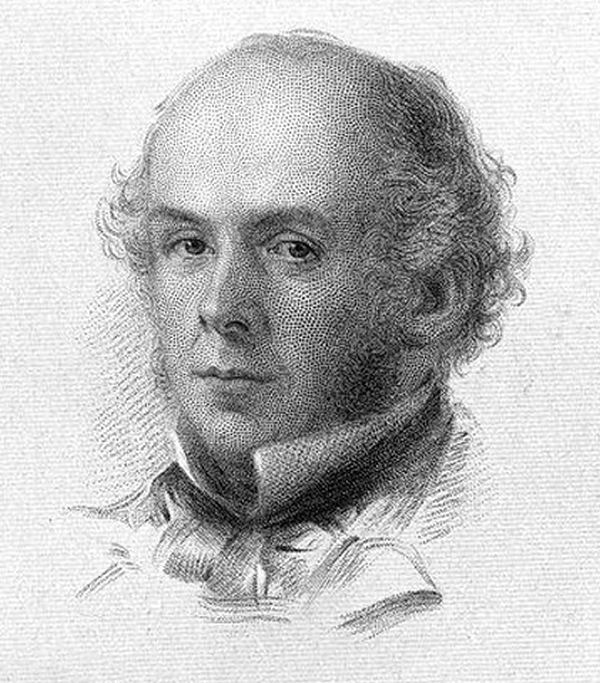
Arthur Hugh Clough, born on January 1, 1819, in Liverpool, England, is a figure of significant historical and literary importance, whose life and work offer rich insights into the cultural and intellectual currents of the 19th century. His life was marked by both personal and intellectual struggles, reflecting the broader tensions of his time. In this detailed exploration, we delve into the life of Arthur Hugh Clough, examining his age, fame, and the key highlights that defined his journey.
Early Life and Education
Arthur Hugh Clough was born into a family of merchants; his father was an importer of cotton from America, a business that connected the Clough family to the global trade networks of the time. His early years were spent in Liverpool, a city that was rapidly growing due to its status as a major port during the Industrial Revolution. This environment, surrounded by both the burgeoning industry and the literary traditions of England, played a crucial role in shaping Clough’s future as a poet and intellectual.
At a young age, Clough was sent to Rugby School, one of England’s most prestigious boarding schools, where he became a favored student of Thomas Arnold. Arnold was a significant figure in the educational reform movement in England, and his influence on Clough was profound. Arnold’s emphasis on moral and intellectual rigor deeply impacted Clough, shaping his approach to literature and life.
Clough’s time at Rugby was formative, not only in terms of his education but also in exposing him to the intense religious and moral debates that were prevalent at the time. These debates would later influence much of his poetic work, as he grappled with issues of faith, doubt, and the role of religion in a rapidly changing world.
Academic Achievements and Intellectual Struggles
After his time at Rugby, Clough went on to study at Balliol College, Oxford, where he continued to excel academically. However, his time at Oxford was also marked by a deepening of the intellectual and spiritual struggles that had begun at Rugby. The Victorian era, during which Clough lived, was a time of great religious uncertainty. The rise of scientific thought, particularly the theories of evolution proposed by Charles Darwin, challenged traditional religious beliefs, leading many, including Clough, to question long-held doctrines.
Clough’s own religious doubts were compounded by his exposure to the works of philosophers and writers who were critical of orthodox Christianity. These experiences led him to a crisis of faith that would significantly influence his poetry. Clough’s work often reflects his inner turmoil and the conflict between his religious upbringing and the increasingly secular world he found himself in.
Despite his struggles, Clough managed to secure a fellowship at Oriel College, Oxford, one of the most esteemed academic positions of the time. However, his tenure there was short-lived. His growing dissatisfaction with the religious conservatism of the college and his increasing disillusionment with the church led him to resign his fellowship, a decision that shocked many of his contemporaries.
Poetry and the Italian Cause
Clough’s departure from Oxford marked a turning point in his life. Free from the constraints of academia, he began to focus more on his poetry, which increasingly reflected his social and political concerns. Clough was deeply influenced by the revolutionary movements sweeping across Europe at the time, particularly the struggle for Italian independence, known as the Risorgimento.
Clough’s sympathies with the Italian cause are evident in his poetry, where he often expresses support for the fight for freedom and self-determination. His verses resonate with the idealism of the time, reflecting his belief in the importance of liberty and justice. This alignment with revolutionary causes also set him apart from many of his contemporaries, who were more conservative in their views.
In addition to his political poetry, Clough is known for his explorations of personal and existential themes. His work often grapples with the nature of love, faith, and the human condition, making him a precursor to the modernist poets who would emerge in the early 20th century. His innovative use of language and form also marks him as a significant figure in the transition from Victorian to modernist literature.
Personal Life and Legacy
Clough’s personal life was as complex and turbulent as his intellectual journey. He was deeply affected by the illness that plagued him throughout his life, which, along with his religious doubts, contributed to a sense of melancholy that is evident in much of his work. Despite these challenges, Clough remained committed to his craft, continuing to write and publish poetry until his untimely death.
Clough passed away on November 13, 1861, in Florence, Italy, after returning from a trip to Greece. His death at the age of 42 cut short a promising literary career, but his work has continued to influence poets and writers to this day.
One of the lesser-known aspects of Clough’s life is his relationship with his sister, Anne Clough, who was a pioneering figure in the women’s suffrage movement and a strong advocate for women’s education. Anne Clough’s commitment to social reform and education is a testament to the intellectual environment in which Arthur Hugh Clough was raised, and her achievements add another layer of significance to his legacy.
Historical Context and Influence
To fully appreciate Arthur Hugh Clough’s contributions, it is essential to understand the historical context in which he lived. The 19th century was a period of profound change in England and across Europe. The Industrial Revolution was transforming societies, creating new economic and social dynamics that challenged traditional structures. At the same time, the rise of nationalism and revolutionary movements, such as those in Italy, were reshaping the political landscape.
Clough’s poetry captures the spirit of this era, reflecting both the excitement and the uncertainty of a world in transition. His work is characterized by a deep engagement with the social, political, and religious issues of his time, making him a unique voice in Victorian literature. Unlike many of his contemporaries, Clough was not content to simply reflect the dominant views of his age. Instead, he used his poetry to question and critique the status quo, making him a precursor to the modernist movement that would emerge later.
Literary Style and Themes
Arthur Hugh Clough’s literary style is distinctive for its combination of traditional forms with innovative techniques. He was a master of the dramatic monologue, a form that allowed him to explore complex psychological and philosophical themes. Clough’s use of this form was pioneering, and it paved the way for later poets such as Robert Browning and T.S. Eliot, who would further develop the dramatic monologue in their own work.
One of the central themes in Clough’s poetry is the conflict between faith and doubt. This theme is particularly evident in his longer works, such as Dipsychus, a philosophical dialogue that explores the struggles of a soul torn between religious belief and secular doubt. Clough’s exploration of this theme reflects the broader intellectual climate of his time, as Victorian society grappled with the implications of scientific discoveries and the decline of traditional religious authority.
Another important theme in Clough’s work is the tension between individualism and social responsibility. In poems such as The Bothie of Tober-na-Vuolich, Clough examines the conflict between personal desires and the demands of society, a theme that resonates with the broader debates about the role of the individual in a rapidly changing world.
Clough’s work also reflects his deep concern with the nature of love and human relationships. His poetry often explores the complexities of love, not as an idealized emotion, but as a force that can be both uplifting and destructive. This nuanced portrayal of love sets Clough apart from many of his contemporaries, who tended to depict love in more simplistic terms.
Conclusion: The Enduring Legacy of Arthur Hugh Clough
Arthur Hugh Clough’s life and work offer a unique window into the intellectual and cultural currents of the 19th century. His poetry, characterized by its intellectual rigor and emotional depth, continues to resonate with readers today. Clough’s willingness to confront the complexities of his time, both in his personal life and in his poetry, marks him as a significant figure in the history of English literature.
Despite his relatively short life, Clough’s contributions to literature and his influence on subsequent generations of poets cannot be overstated. His work paved the way for the modernist movement, and his exploration of themes such as faith, doubt, and the nature of love continue to be relevant in contemporary discussions of literature and philosophy.
In examining Clough’s life and work, we gain not only a deeper understanding of the man himself but also a richer appreciation of the historical and cultural forces that shaped the Victorian era. Arthur Hugh Clough’s legacy is one of intellectual courage and artistic innovation, making him a poet whose work deserves continued study and recognition.


