
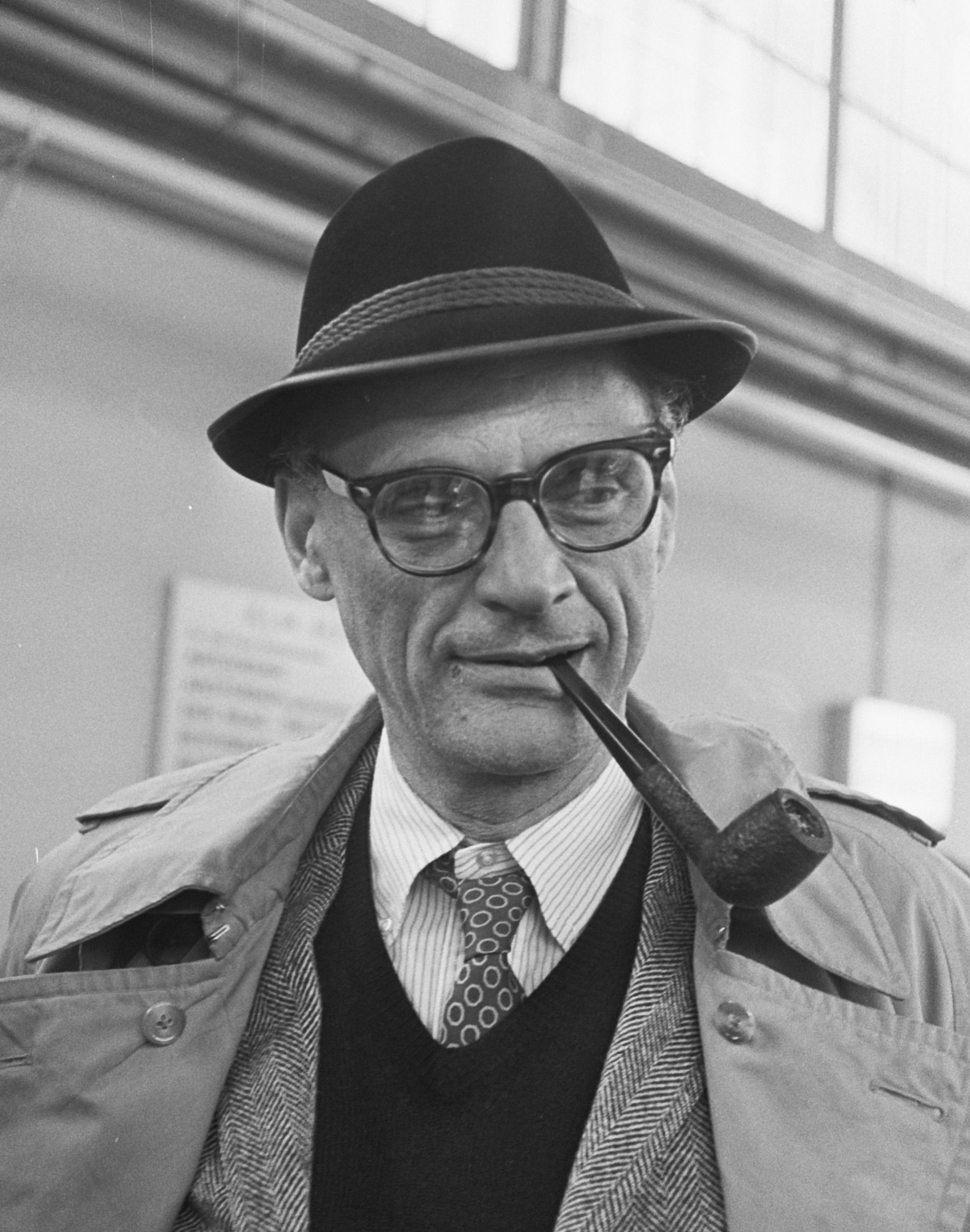
Arthur Miller, born on October 17, 1915, in Manhattan, New York, is one of the most celebrated playwrights in American history. His work has left an indelible mark on both American theater and global literature. Miller’s life was a tapestry woven with the threads of personal and historical struggle, societal critique, and an enduring commitment to exploring the human condition. From his humble beginnings to his rise to fame, Miller’s journey is as compelling as the stories he crafted.
Early Life and Education
Arthur Miller was born into a well-off Jewish family. His father, Isidore Miller, was a successful manufacturer, and his mother, Augusta Barnett, was a homemaker and teacher. However, the family’s fortunes changed dramatically with the stock market crash of 1929, which plunged them into financial hardship. This early exposure to the harsh realities of the American economic system profoundly influenced Miller’s worldview and later became a recurring theme in his work.
Miller attended Abraham Lincoln High School in Brooklyn before enrolling at the University of Michigan, where he studied journalism. His time at Michigan was formative, as it was here that he began to take an interest in playwriting. His first attempts at drama, while not immediately successful, laid the groundwork for what would become a legendary career.
The Road to Success: Early Works and Breakthroughs
After graduating in 1938, Miller moved back to New York City and began writing for the theater. His early work included writing scripts for radio programs, a common entry point for writers of his era. His first play, The Man Who Had All the Luck, debuted on Broadway in 1944. Although it was not a commercial success, closing after just four performances, it garnered enough critical attention to keep Miller’s hopes alive.
In 1947, Miller achieved his first major success with All My Sons. The play, which explored themes of moral responsibility and the consequences of one’s actions, resonated with audiences and critics alike. It won the New York Drama Critics’ Circle Award and established Miller as a significant new voice in American theater. The play’s success marked the beginning of Miller’s long-standing exploration of the American Dream, a theme that would become central to his most famous works.
“Death of a Salesman” and the Critique of the American Dream
Arthur Miller’s most iconic play, Death of a Salesman, premiered in 1949. The play’s protagonist, Willy Loman, embodies the disillusionment of the American Dream. Through Loman’s tragic downfall, Miller critiques the relentless pursuit of success and the moral compromises it demands. The play was an immediate hit, winning the Pulitzer Prize for Drama and the Tony Award for Best Play. It ran for 742 performances on Broadway and has since become a staple of American literature and theater.
Death of a Salesman is not merely a critique of the economic system but also an exploration of family dynamics, individual responsibility, and the existential despair that can arise from the gap between dreams and reality. The play’s enduring relevance lies in its universal themes and its unflinching examination of the human condition.
The Crucible and Political Allegory
In 1953, Miller’s The Crucible debuted on Broadway. The play, set during the Salem witch trials of 1692, was a powerful allegory for the McCarthy era’s anti-communist hysteria. During this time, Senator Joseph McCarthy led a campaign to root out alleged communists in the United States, leading to widespread fear, paranoia, and the persecution of many innocent people.
The Crucible drew direct parallels between the witch hunts of the 17th century and the “Red Scare” of the 1950s. It served as a critique of the dangers of mass hysteria and the breakdown of social order under the pressure of fear and suspicion. The play was initially met with mixed reviews, as its political implications were controversial during the tense atmosphere of the Cold War. However, it has since become one of Miller’s most frequently performed plays and is widely regarded as one of the greatest American dramas.
Personal Life and Marriage to Marilyn Monroe
Arthur Miller’s personal life was as dramatic as his plays. In 1956, he married the legendary actress Marilyn Monroe, a union that thrust him into the global spotlight. Their marriage was a union of two very different worlds—Miller, the serious, intellectual playwright, and Monroe, the glamorous Hollywood icon.
The marriage was short-lived, ending in divorce in 1961, but it had a profound impact on both individuals. Monroe’s struggles with fame, mental health, and the pressures of the film industry influenced Miller’s later works. His play After the Fall (1964), though Miller denied it was autobiographical, is widely interpreted as a reflection on his marriage to Monroe and the emotional turmoil that accompanied it.
Miller’s exploration of complex human relationships, the interplay of love, guilt, and betrayal, and the challenges of personal integrity were undoubtedly influenced by his experiences with Monroe. Despite the difficulties in their relationship, Miller remained protective of Monroe’s legacy and avoided exploiting their marriage for public or literary gain.
Later Works and Continued Influence
After his marriage to Monroe ended, Miller continued to write plays that explored the themes of morality, identity, and societal responsibility. His later works, such as The Price (1968), The Creation of the World and Other Business (1972), and The American Clock (1980), though not as commercially successful as his earlier works, demonstrated his continued engagement with the social and ethical issues of his time.
Miller also wrote extensively on his experiences as a writer and the role of the artist in society. His essays and autobiographical works, including Timebends: A Life (1987), offer valuable insights into his thoughts on the intersection of art, politics, and personal integrity.
Miller’s influence extended beyond the theater. He was an outspoken advocate for human rights, free speech, and social justice. His work with PEN International, an organization dedicated to promoting literature and defending freedom of expression, was a testament to his belief in the power of words to effect change.
Legacy and Impact on American Theater
Arthur Miller passed away on February 10, 2005, at the age of 89. His death marked the end of an era in American theater, but his legacy continues to resonate. Miller’s plays are regularly performed around the world, and his influence on modern drama is immeasurable. He is often cited alongside contemporaries like Tennessee Williams and Eugene O’Neill as one of the greatest American playwrights of the 20th century.
Miller’s work is characterized by its deep moral seriousness, its exploration of the individual’s relationship to society, and its commitment to truth and justice. His plays challenge audiences to confront uncomfortable truths about themselves and the world they live in, making them as relevant today as they were when they were first written.
Conclusion
Arthur Miller’s life and career are a testament to the enduring power of theater to reflect and critique society. His exploration of the American Dream, the moral dilemmas of the individual, and the social and political issues of his time have left an indelible mark on American culture. Miller’s work transcends the boundaries of time and place, offering timeless insights into the human condition. As we continue to grapple with the same issues Miller explored—economic inequality, political repression, and the struggle for personal integrity—his plays remain essential reading and viewing for anyone seeking to understand the complexities of modern life.
Miller’s legacy is not just in the plays he wrote but in the questions he raised and the truths he dared to confront. He challenged us to look beyond the surface of our lives, to examine the values that underpin our society, and to consider the cost of our aspirations. In doing so, Arthur Miller has ensured that his work will continue to inspire and provoke for generations to come.


