
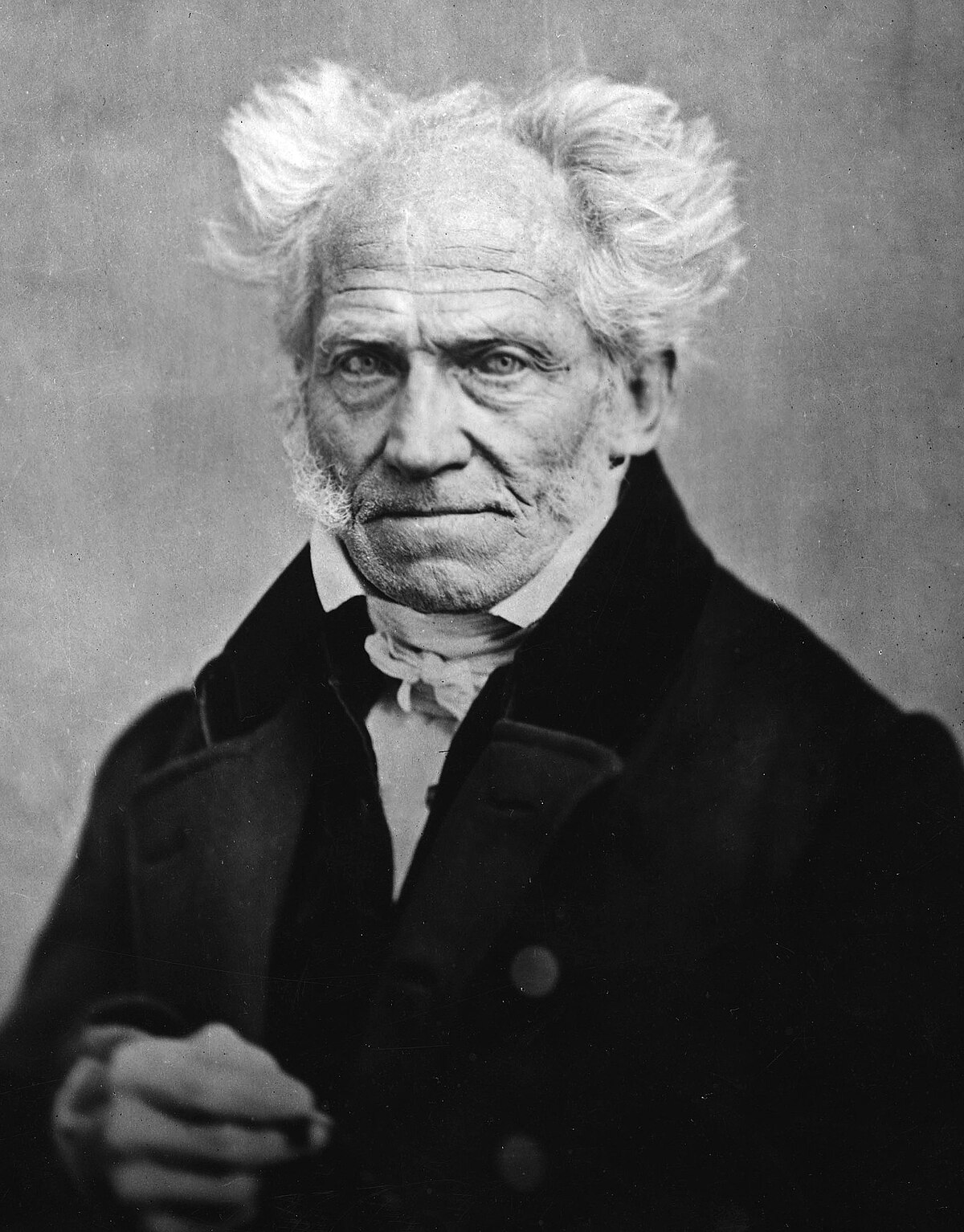
Arthur Schopenhauer, born on February 22, 1788, in Danzig (now Gdańsk, Poland), is a pivotal figure in the history of Western philosophy. Schopenhauer’s life was marked by his relentless pursuit of knowledge and his contributions to metaphysics, ethics, and aesthetics. Known for his profound pessimism and the concept of “will,” Schopenhauer’s work has influenced a wide array of thinkers, artists, and intellectuals, from Friedrich Nietzsche to Sigmund Freud. This article explores the life, fame, and key highlights of Arthur Schopenhauer, shedding light on his intellectual journey and the impact of his philosophical ideas.
Early Life and Education
Arthur Schopenhauer was born into a prosperous family, the son of Heinrich Floris Schopenhauer, a successful merchant, and Johanna Henriette Trosiener, a talented writer. His early life was marked by a blend of intellectual stimulation and personal tragedy. In 1805, the death of his father, under circumstances still debated by historians—some suspecting suicide—deeply affected young Arthur. Following his father’s death, Schopenhauer moved with his mother to Weimar, a cultural hub at the time, where he was exposed to a variety of intellectual influences.
Schopenhauer’s education was extensive and eclectic. After traveling through France and England, he enrolled at the University of Göttingen in 1809, where he studied under the renowned philosopher Gottlob Ernst Schulze. He later moved to Berlin to attend lectures by prominent philosophers, including Johann Gottlieb Fichte, though he soon became disillusioned with the academic philosophy of his time.
Key Works and Philosophical Contributions
Schopenhauer’s intellectual journey culminated in the publication of his magnum opus, “The World as Will and Representation” (Die Welt als Wille und Vorstellung) in 1818. In this work, Schopenhauer introduces his central thesis that the will—a blind, irrational force—underlies all reality. He posits that human suffering arises from the unrelenting and insatiable nature of the will. This pessimistic view of existence contrasted sharply with the prevailing optimism of German idealism, particularly the philosophy of Georg Wilhelm Friedrich Hegel, whom Schopenhauer vehemently opposed.
Despite the profound insights in “The World as Will and Representation,” the work initially garnered little attention. Schopenhauer’s disdain for academic philosophy, particularly his antagonism toward Hegel, left him marginalized within the philosophical community. His lectures at the University of Berlin were sparsely attended, often overshadowed by Hegel’s popularity.
Undeterred, Schopenhauer continued to write and expand on his ideas. His later works, including “On the Will in Nature” (1836), “On the Freedom of the Will” (1839), and “On the Basis of Morality” (1840), further developed his philosophical system. However, it wasn’t until the publication of “Parerga and Paralipomena” in 1851 that Schopenhauer began to receive the recognition he had long sought. This collection of essays and aphorisms, intended as supplementary material to his earlier work, proved to be more accessible and popular, significantly enhancing his reputation.
Schopenhauer’s Influence and Legacy
Schopenhauer’s philosophy, though initially overlooked, eventually gained a substantial following, influencing a diverse group of thinkers and artists. Friedrich Nietzsche, often considered Schopenhauer’s intellectual heir, was deeply influenced by his mentor’s pessimistic worldview and critique of modern culture. Nietzsche’s concept of the “will to power” can be seen as a reimagining of Schopenhauer’s “will.”
In addition to Nietzsche, Schopenhauer’s ideas left an indelible mark on the development of psychoanalysis. Sigmund Freud, the father of psychoanalysis, drew upon Schopenhauer’s notion of the will, interpreting it as an early precursor to his concept of the unconscious mind. Freud’s theories of the id, ego, and superego bear a striking resemblance to Schopenhauer’s ideas about the interplay between rationality and irrational drives.
Schopenhauer also had a significant impact on the arts, particularly music and literature. Richard Wagner, the famous German composer, was among Schopenhauer’s most devoted admirers. Wagner’s operas, which explore themes of love, death, and redemption, are often seen as musical expressions of Schopenhauer’s philosophy. The composer’s later works, including the epic “Ring Cycle,” reflect the influence of Schopenhauer’s ideas about the will and the inevitability of suffering.
In literature, Schopenhauer’s influence can be seen in the works of writers such as Leo Tolstoy, Thomas Mann, and Marcel Proust. His bleak view of human existence resonated with the existentialist movement, which emerged in the 20th century. Philosophers like Jean-Paul Sartre and Albert Camus grappled with Schopenhauer’s ideas about the absurdity of life and the futility of human desires.
Personal Life and Character
Schopenhauer’s personal life was as complex and often contradictory as his philosophical ideas. Known for his misanthropy and solitary nature, he preferred the company of his poodles to that of other people. His relationships with women were particularly strained; despite his admiration for female intellect, Schopenhauer harbored deeply misogynistic views, which he expressed in both his writings and personal correspondence.
Schopenhauer’s later years were marked by increasing isolation. He settled in Frankfurt, where he lived alone, with only his poodles for company. Despite his reclusive lifestyle, he continued to write prolifically, producing essays and philosophical treatises until his death. His health began to deteriorate in the late 1850s, and he passed away on September 21, 1860, at the age of 72, from complications related to pneumonia.
Historical Context and Reception
Schopenhauer’s work emerged during a time of great intellectual ferment in Europe. The early 19th century was marked by the rise of German idealism, a philosophical movement that sought to reconcile the insights of Immanuel Kant with a broader metaphysical system. Schopenhauer, however, was deeply critical of this movement, particularly the work of Hegel, whom he famously described as a “charlatan.”
Schopenhauer’s pessimism was in stark contrast to the prevailing intellectual currents of his time. While Hegel and other German idealists emphasized the potential for human progress and the unfolding of reason in history, Schopenhauer focused on the darker aspects of existence. His philosophy was informed by his reading of Eastern texts, particularly Buddhism and Hinduism, which he admired for their recognition of suffering as a fundamental aspect of life.
Despite his initial obscurity, Schopenhauer’s work eventually gained a wider audience, particularly in the latter half of the 19th century. His philosophy resonated with the disillusionment and existential anxiety that characterized the late 19th and early 20th centuries, as Europe grappled with the consequences of industrialization, colonialism, and the decline of traditional religious beliefs.
Schopenhauer’s Relevance Today
Arthur Schopenhauer’s philosophy remains relevant today, particularly in an age marked by existential crises and a renewed interest in questions of meaning and purpose. His insights into the nature of desire, suffering, and the will continue to resonate with those who grapple with the darker aspects of human existence. Moreover, his influence on psychology, literature, and the arts ensures that Schopenhauer’s legacy endures.
In contemporary culture, Schopenhauer’s ideas have found new life in discussions about the human condition, mental health, and the search for meaning in an increasingly complex and uncertain world. His work serves as a reminder that, while human existence may be fraught with suffering and uncertainty, the pursuit of knowledge and understanding can provide a measure of solace and purpose.
Conclusion
Arthur Schopenhauer’s life and work are a testament to the enduring power of philosophical inquiry. Despite facing significant obstacles and enduring years of obscurity, Schopenhauer remained committed to his vision of the world as driven by the irrational will. His philosophy, characterized by its profound pessimism and deep insights into the nature of human existence, continues to influence and inspire thinkers, artists, and scholars across a wide range of disciplines.
Schopenhauer’s legacy is one of intellectual rigor and unflinching honesty. In an era where optimism and progress often overshadow the complexities of human life, Schopenhauer’s work serves as a crucial counterbalance, reminding us of the importance of confronting the darker aspects of our existence. His contributions to philosophy, psychology, and the arts ensure that Arthur Schopenhauer will be remembered as one of the most important and influential thinkers of the modern era.


