
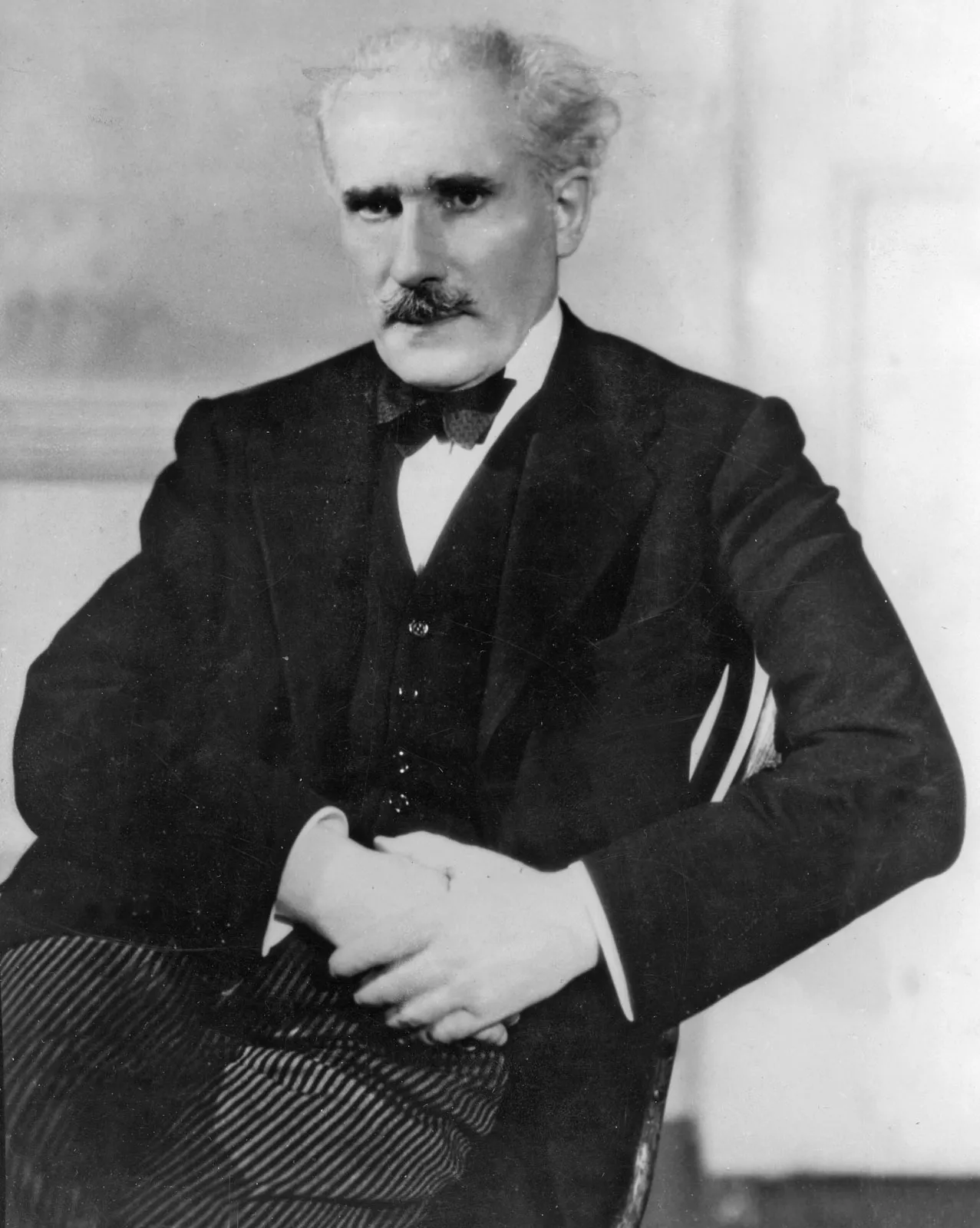
Arturo Toscanini, born on March 25, 1867, in Parma, Italy, is widely regarded as one of the greatest conductors of all time. His name is synonymous with musical excellence, discipline, and an uncompromising commitment to artistic integrity. Toscanini’s career spanned over six decades, during which he revolutionized the world of classical music with his rigorous approach and electrifying performances. This article explores the life, fame, and enduring legacy of Arturo Toscanini, delving into his early years, rise to prominence, and the impact he left on the world of music.
Early Life and Musical Beginnings
Arturo Toscanini was born into a modest family in Parma, a city with a rich musical tradition. His father, Claudio Toscanini, had fought alongside Giuseppe Garibaldi at the famous Battle of Aspromonte, an event that had profound implications for the family. Claudio was sentenced to death for his participation, although the sentence was later commuted to three years in prison. Arturo’s mother, Paola, worked as a seamstress, struggling to make ends meet while her husband spent more time socializing with friends than supporting the family financially.
Despite these challenges, Toscanini developed a deep passion for music from an early age. His love for music was first recognized by his teacher, Vernoni, who provided him with free lessons in solfeggio and piano. By the age of nine, Toscanini had won a scholarship to study cello at the Conservatory of Parma under Professor Carini. Although he excelled in his cello studies, his true passion lay with the piano, an instrument he would play whenever he had the chance, despite frequent punishments for neglecting his official studies.
Toscanini’s talent quickly became apparent, earning him the nickname “genius” among his peers. His exceptional skills as a musician were evident, even at this early stage, and it was clear that he was destined for greatness.
The Unlikely Conductor: Toscanini’s Rise to Prominence
In 1885, at the age of 18, Toscanini graduated from the conservatory and embarked on a tour of South America as a cellist. It was during this tour that fate intervened and set him on the path to becoming one of the most celebrated conductors in history. During a performance, the orchestra’s conductor, Leopoldo Miguez, walked off the podium in protest due to the unruly behavior of the Italian musicians. The substitute conductor, Carlo Superti, was also unable to control the orchestra, leading to chaos on stage.
In a moment of desperation, Toscanini, just 19 years old, was handed the conductor’s baton and asked to lead the performance. Despite having no formal training as a conductor, Toscanini’s innate musicality and leadership qualities shone through. The performance was a resounding success, and Toscanini was hailed as a prodigious talent.
Upon returning to Italy, Toscanini was hired as a second cellist for the La Scala production of Giuseppe Verdi’s Otello. While Verdi himself admired the young musician, the conductor of the orchestra frequently fined Toscanini for minor infractions. These fines were so frequent that Toscanini feared they might exceed his wages, leading him to avoid collecting his pay altogether.
Despite these challenges, Toscanini’s reputation as a conductor continued to grow. In 1892, he conducted the premiere of Ruggero Leoncavallo’s Pagliacci at the Teatro Dal Verme in Milan, marking the beginning of his illustrious career as a conductor.
Revolutionizing the Opera: Toscanini’s Time at La Scala
Toscanini’s breakthrough came in 1898 when he was appointed the principal conductor of La Scala in Milan at the age of 31. His tenure at La Scala would become legendary, as he introduced a series of reforms that forever changed the world of opera. Toscanini was a strict disciplinarian, insisting on absolute precision and adherence to the composer’s intentions. He banned the practice of calling for encores, prohibited latecomers from entering the theater during performances, and forbade women from wearing hats that obstructed the view of others.
These changes were initially met with resistance from the conservative Milanese audience, who labeled him as a “campagnolo” (country bumpkin). However, Toscanini’s commitment to artistic integrity won out, and his innovations became standard practice in opera houses worldwide. His belief that the music, rather than the audience’s whims, should be the focal point of a performance, fundamentally altered the experience of attending an opera.
During his time at La Scala, Toscanini also championed the works of Richard Wagner, conducting the Italian premieres of Götterdämmerung and Tristan und Isolde. His interpretation of Wagner’s music was groundbreaking, setting new standards for orchestral performance and dramatically influencing the reception of German opera in Italy.
International Acclaim and the Metropolitan Opera
Toscanini’s reputation soon spread beyond Italy, leading to invitations from some of the world’s most prestigious musical institutions. From 1908 to 1914, he served as the principal conductor of the Metropolitan Opera in New York. During his tenure, he conducted a wide repertoire, including Verdi’s Falstaff and La Traviata as well as Puccini’s La Fanciulla del West, which featured the legendary tenor Enrico Caruso.
Toscanini’s time at the Metropolitan Opera was marked by his exacting standards and his relentless pursuit of perfection. He demanded the highest levels of discipline from his musicians and singers, earning both admiration and fear from those who worked with him. His performances were noted for their precision, intensity, and emotional depth, qualities that made him a favorite among both critics and audiences.
Political Turmoil and Artistic Integrity
The outbreak of World War I in 1914 saw Toscanini take a strong interventionist stance, even going so far as to volunteer for the Italian army. His deep sense of patriotism was matched by his opposition to fascism, which would become a defining aspect of his later life. Toscanini was an early and vocal critic of Benito Mussolini’s regime, refusing to conduct in Italy as long as the fascists remained in power.
This principled stand reached its peak in 1931 when Toscanini was scheduled to conduct a concert at the Teatro Comunale in Bologna. Despite the presence of fascist officials, including the Minister of Communications Costanzo Ciano, Toscanini refused to perform the fascist anthem Giovinezza. This act of defiance led to him being physically assaulted by a fascist outside the theater. In response, Toscanini refused to conduct in Italy until the fall of Mussolini’s government.
In 1936, Toscanini left Italy for the United States, where he continued to build his international legacy. He became the founding conductor of the NBC Symphony Orchestra, a position he held until 1954. The orchestra was created specifically for Toscanini, and under his direction, it became one of the most renowned ensembles in the world. Toscanini’s broadcasts with the NBC Symphony Orchestra brought classical music to millions of Americans, further solidifying his status as a cultural icon.
Return to Italy and Post-War Years
After World War II, Toscanini returned to Italy, where he was hailed as a hero for his unwavering opposition to fascism. He resumed his role as the director of La Scala, which had been rebuilt after suffering damage during the war. One of his most memorable post-war performances was his 1946 concert at La Scala, where he conducted Verdi’s Nabucco and the Te Deum. This performance was seen as a symbolic rebirth for Italy and its cultural institutions.
Despite his return to Italy, Toscanini continued to reside primarily in the United States, where he lived with his wife, Carla De Martini. Throughout his later years, he remained active in the world of music, turning his attention increasingly towards symphonic repertoire. However, his first love remained opera, as evidenced by his landmark recording of Verdi’s Falstaff in 1950, when he was 83 years old.
Legacy and Impact
Arturo Toscanini’s influence on the world of music is immeasurable. His rigorous approach to conducting set new standards for musical performance, and his insistence on fidelity to the composer’s intent has had a lasting impact on the interpretation of classical music. Toscanini was not only a conductor but also a symbol of artistic integrity and resistance to political oppression.
In recognition of his contributions to the arts, Toscanini was nominated for a lifetime senatorial appointment by the President of the Italian Republic, Luigi Einaudi, in 1949. However, true to his humble nature, Toscanini declined the honor the day after it was bestowed.
Toscanini’s legacy lives on through his recordings, many of which are still regarded as definitive interpretations of the works he conducted. His influence can be seen in the generations of conductors who followed him, many of whom view Toscanini as the gold standard against which all others are measured.
Personal Life and Final Years
Toscanini and his wife, Carla De Martini, had four children: Walter, Wally, Giorgio, and Wanda. His family life was marked by both joy and tragedy. Their son Giorgio died at the age of five from diphtheria, a loss that deeply affected Toscanini. His daughter Wanda became well-known for her marriage to the celebrated Russian-Ukrainian pianist Vladimir Horowitz, further intertwining the Toscanini legacy with the world of classical music.
Arturo Toscanini retired from conducting at the age of 87 after a final concert dedicated to the music of Richard Wagner. He spent his remaining years in the United States, where he passed away on January 16, 1957, in his home in Riverdale, Bronx, New York City. Toscanini’s death marked the end of an era, but his contributions to music continue to be celebrated worldwide.
Conclusion: The Maestro’s Enduring Influence
Arturo Toscanini’s life was a testament to the power of music and the importance of artistic integrity. His unwavering commitment to excellence set a new standard for conductors, and his influence is still felt in concert halls and opera houses around the world. Toscanini was more than just a conductor; he was a cultural figure whose legacy transcends the world of classical music.
As we look back on Toscanini’s extraordinary career, it is clear that his contributions have left an indelible mark on the arts. His recordings continue to inspire musicians and audiences alike, and his story serves as a reminder of the enduring power of music to bring people together, even in the face of adversity.
Arturo Toscanini remains a towering figure in the history of music, a maestro whose life and work continue to resonate with new generations of musicians and music lovers.


