
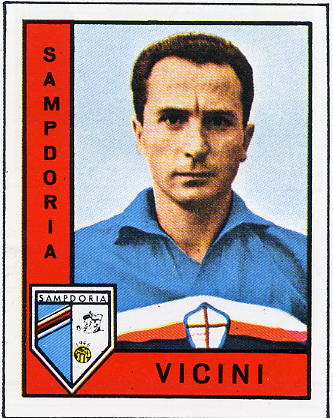
Azeglio Vicini, born on March 20, 1933, in Cesena, Italy, is a name that resonates deeply within the world of Italian football. A former professional footballer turned coach, Vicini’s career is highlighted by his significant contributions to Italian football, especially during his tenure as the manager of the Italian national team. This article provides a comprehensive look into the life, achievements, and lasting legacy of Azeglio Vicini, focusing on his rise to fame, his impact on the footballing world, and the nuances of his career that made him a beloved figure in Italian sports.
Early Life and Football Career
Azeglio Vicini’s journey into the world of football began in his hometown of Cesena, a city in the Emilia-Romagna region of Italy. Born into a modest family, Vicini developed a passion for football at an early age, which eventually led him to pursue a career as a professional player. His early playing career was marked by his time at Lanerossi Vicenza, a club that would become instrumental in his rise in the footballing world.
Vicini played as a midfielder, known for his tactical intelligence and leadership on the field. His contributions to Lanerossi Vicenza were significant, helping the club gain promotion to Serie A, the top tier of Italian football. However, despite a promising start, Vicini’s playing career was relatively short-lived, as he soon transitioned into coaching—a move that would define his legacy in Italian football.
Transition to Coaching
After retiring from professional play, Vicini did not stray far from the football field. In 1967, at the age of 34, he began his coaching career as an assistant coach at Brescia. This role marked the beginning of a long and successful career in football management. His first significant breakthrough came in 1968 when he joined the technical staff of the Italian national football team.
Vicini’s first major responsibility came in 1975 when he was appointed as the head coach of Italy’s Under-23 team. His success with this team, particularly in the European Under-23 Championship, demonstrated his potential as a manager and set the stage for his future roles within the national setup.
Success with Italy’s Under-21 Team
Vicini’s most notable success in the early stages of his coaching career came with Italy’s Under-21 team. Appointed as head coach in 1976, he spent a decade in charge, during which he established himself as one of the most respected youth coaches in Europe. Under his guidance, the Under-21 team reached the quarterfinals of the UEFA European Under-21 Championship in 1978, 1980, and 1982, and they made it to the semifinals in 1984.
Vicini’s ability to nurture young talent and his tactical acumen earned him widespread recognition. Many of the players he coached during this period went on to become key figures in the Italian senior national team, including future stars like Gianluca Vialli and Roberto Mancini. His work with the Under-21s not only solidified his reputation but also laid the foundation for his eventual promotion to the senior team.
The Italian National Team: A New Era
Following the 1986 FIFA World Cup, where Italy underperformed and exited in the Round of 16, the Italian Football Federation decided to make a change at the top. Vicini was appointed as the head coach of the Italian national team, succeeding Enzo Bearzot, the man who had led Italy to World Cup glory in 1982.
Vicini’s appointment marked the beginning of a new era for Italian football. He immediately set about integrating the young talents he had nurtured in the Under-21s into the senior squad. This new-look team was built around players like Walter Zenga, Roberto Donadoni, Gianluca Vialli, and Roberto Mancini—players who would become household names under Vicini’s guidance.
Euro 1988: A Promising Start
Vicini’s first major test as Italy’s head coach came at the UEFA European Championship in 1988, held in West Germany. The tournament was seen as an opportunity for Vicini to showcase the progress of his new team on the international stage. Italy performed admirably, advancing to the semifinals, where they were narrowly defeated by the Soviet Union.
Despite the disappointment of not reaching the final, Italy’s performance at Euro 1988 was seen as a sign of better things to come. The team played with flair and discipline, earning praise for their tactical organization and the emergence of new stars. Vicini’s reputation as a top-level coach was further enhanced, and expectations began to build for the upcoming World Cup.
The 1990 World Cup: Italy on Home Soil
The pinnacle of Azeglio Vicini’s career came with the 1990 FIFA World Cup, which was hosted by Italy. The tournament was not just a sporting event but a national celebration, and the pressure on Vicini and his team was immense. Italy was one of the favorites to win the tournament, and the hopes of an entire nation rested on their shoulders.
Vicini’s team did not disappoint in the early stages. Italy cruised through the group stage, winning all their matches without conceding a single goal. The team continued their impressive form in the knockout rounds, defeating Uruguay in the Round of 16 and Ireland in the quarterfinals, again without conceding a goal.
The semifinal against Argentina, led by Diego Maradona, was one of the most anticipated matches of the tournament. Played in Naples, the match ended in a 1-1 draw after extra time, with Italy’s perfect defensive record finally broken. The match went to penalties, where Argentina emerged victorious, leaving Italy devastated.
Despite the heartbreak, Italy rallied to win the third-place match against England, with Salvatore Schillaci, the tournament’s top scorer and breakout star, scoring the decisive goal. The 1990 World Cup is still remembered fondly in Italy, not just for the team’s performance but also for the way Vicini managed to unite the country through football.
The End of the National Team Journey
Following the 1990 World Cup, Azeglio Vicini continued as Italy’s head coach, but the team’s fortunes began to decline. The failure to qualify for the 1992 UEFA European Championship marked the end of Vicini’s tenure as head coach. In 1991, he was replaced by Arrigo Sacchi, another legendary figure in Italian football.
Vicini’s time as Italy’s head coach spanned 54 matches, of which the team won 32, drew 15, and lost just 7. His tenure is remembered for the exciting brand of football he brought to the national team and for the way he integrated young talent into the senior squad, leaving a lasting legacy for his successors.
Later Years and Legacy
After stepping down as the national team coach, Vicini remained involved in football. He had brief coaching stints with Cesena and Udinese and later served as a technical advisor for Brescia in the mid-1990s. In 1997, he became the president of the Italian Football Coaches Association, a role in which he advocated for the development of coaching in Italy.
Vicini passed away on January 30, 2018, in Brescia, just weeks before his 85th birthday. His death marked the end of an era in Italian football, but his influence on the game lives on. He is remembered not only for his tactical brilliance and leadership but also for his integrity and dedication to the sport.
Conclusion
Azeglio Vicini’s life and career offer a compelling narrative of passion, perseverance, and success in the world of football. From his early days as a player to his rise as one of Italy’s most respected coaches, Vicini’s impact on Italian football is undeniable. His ability to nurture young talent and build cohesive teams made him a beloved figure in Italian sports, and his achievements, particularly during the 1990 World Cup, continue to be celebrated.
Vicini’s legacy is not just about the matches won or the trophies contested but about the way he shaped Italian football during a transformative period. His contributions to the game, both on and off the field, have left an indelible mark, ensuring that his name will be remembered by football fans for generations to come.


