
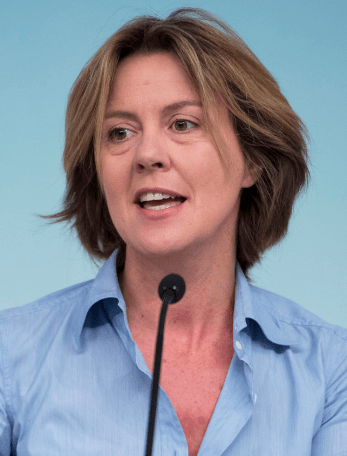
Beatrice Lorenzin, born on October 14, 1971, in Rome, Italy, is a prominent Italian politician whose career spans several decades and is marked by significant contributions to Italian politics, particularly in the areas of health and welfare. Her journey from a budding journalist to a key figure in the Italian government is a testament to her resilience, strategic acumen, and deep commitment to public service.
Early Life and Education
Beatrice Lorenzin was born and raised in Rome, where she completed her early education at a classical high school, a rigorous curriculum focused on Latin, Greek, and philosophy. She later enrolled in the University of Rome to study law but did not complete her degree. Despite not finishing her formal education, Lorenzin’s intellectual curiosity and drive led her to pursue a career in journalism. She began her career with “Il Giornale di Ostia,” a local newspaper that allowed her to develop a deep understanding of Rome’s political and social landscape.
Entry into Politics
Lorenzin’s political career began in 1996 when she joined the youth movement of Forza Italia, a center-right political party founded by Silvio Berlusconi. Her involvement in the party’s regional youth wing in Lazio quickly earned her a reputation as a dedicated and capable leader. By 1997, she was elected to the Council of the XIII Municipality of Rome, marking her first official foray into public office.
Her rapid rise within the party continued as she was appointed the regional coordinator of the youth movement in April 1999. In this role, Lorenzin oversaw the activities of more than 15,000 members and managed over a hundred elected officials in local governments. Her leadership abilities and commitment to the party’s ideals soon led to her election as a city councilor in Rome in May 2001, where she served as the vice president of the Forza Italia group and the vice president of the Commission of Elected Women.
National Recognition and Ministerial Roles
Lorenzin’s political career took a significant leap forward when she was appointed the head of the Technical Secretariat of Paolo Bonaiuti, a prominent figure in Berlusconi’s government, from late 2004 to 2006. This position gave her a closer look at the intricacies of government operations, particularly in the fields of information and publishing.
In 2008, Lorenzin was elected to the Italian Chamber of Deputies on the People of Freedom (PdL) party list, a major center-right political force in Italy. During the 16th Legislature, she served on several important commissions, including the Constitutional Affairs Commission, the Parliamentary Commission for Childhood and Adolescence, and the Bicameral Commission for the Implementation of Fiscal Federalism. These roles allowed her to contribute significantly to the legislative process, particularly in areas related to social welfare and constitutional reform.
Her growing influence in Italian politics was further solidified when, in 2012, she was appointed Secretary of the Committee for Legislation. Although her name was considered for the presidency of the Lazio Region for the center-right coalition in early 2013, the position ultimately went to Francesco Storace.
Minister of Health
Beatrice Lorenzin’s most notable contribution to Italian politics came with her appointment as Minister of Health in the government of Enrico Letta on April 28, 2013. This appointment marked a significant milestone in her career, as she became responsible for one of the most critical sectors of the Italian government.
During her tenure as Minister of Health, Lorenzin implemented several important initiatives aimed at improving public health and healthcare services in Italy. She was a strong advocate for preventive healthcare measures, public health campaigns, and the modernization of the Italian healthcare system. Her efforts were recognized across the political spectrum, and she continued to serve as Minister of Health in the subsequent governments of Matteo Renzi and Paolo Gentiloni.
One of her most notable achievements as Minister was her role in the introduction of the “Lorenzin Law,” a comprehensive set of health measures that included mandatory vaccinations for children, which was a significant and sometimes controversial move aimed at increasing public health and safety. Her strong stance on vaccination and public health earned her both praise and criticism, but it underscored her commitment to evidence-based policymaking.
Later Political Career and Shift in Alliances
In November 2013, Lorenzin distanced herself from Forza Italia, the party where she had spent most of her political career, to co-found the “New Centre-Right” (Nuovo Centrodestra) with Angelino Alfano. This move was part of a broader realignment of center-right politics in Italy, reflecting Lorenzin’s evolving political views and her desire to influence Italian politics from a more centrist position.
As the political landscape in Italy continued to shift, Lorenzin and her colleagues in the New Centre-Right found themselves at a crossroads. In March 2017, the party dissolved, and Lorenzin joined the “Popular Alternative” (Alternativa Popolare), a new centrist political formation aimed at providing an alternative to the traditional center-right and center-left parties.
By the end of 2017, Lorenzin had further repositioned herself politically by forming the “Civic Popular” (Civica Popolare) list to support the Democratic Party (Partito Democratico) led by Matteo Renzi. This move marked her full transition from the center-right to the center-left of the Italian political spectrum, highlighting her pragmatic approach to politics and her willingness to adapt to changing political realities.
In 2019, when Matteo Renzi left the Democratic Party to form his own political movement, Lorenzin chose not to follow him, instead reaffirming her commitment to the Democratic Party. This decision underscored her belief in the importance of stable, mainstream political forces in Italy and her dedication to public service over partisan loyalty.
Personal Life and Legacy
Throughout her career, Beatrice Lorenzin has been known for her work ethic, dedication to public service, and ability to navigate the complexities of Italian politics. She has often been described as a pragmatic and strategic thinker, able to balance the demands of her political career with her personal life.
Lorenzin has been affectionately nicknamed “the Meg Ryan of Rome” due to her resemblance to the American actress. Despite her high-profile political career, she has managed to maintain a relatively private personal life, though it is known that she is a music enthusiast, with a particular fondness for bands like The Police and Pink Floyd.
Her tenure as Minister of Health, particularly her role in the introduction of mandatory vaccinations, will likely be remembered as a significant chapter in Italy’s public health history. Her efforts to modernize and improve the Italian healthcare system have had a lasting impact, contributing to the overall well-being of the Italian population.
Conclusion
Beatrice Lorenzin’s journey from a young journalist in Rome to one of Italy’s most influential politicians is a remarkable story of perseverance, dedication, and strategic acumen. Her ability to adapt to the changing political landscape, her commitment to public health, and her willingness to take bold stances on controversial issues have solidified her place in Italian political history.
As she continues to play an active role in Italian politics, Lorenzin’s legacy will be defined by her contributions to public health, her advocacy for preventive care, and her efforts to navigate the complexities of Italy’s political landscape. Whether as a trailblazer for women in politics or as a steadfast advocate for public health, Beatrice Lorenzin’s story is one of enduring influence and commitment to the greater good.


