
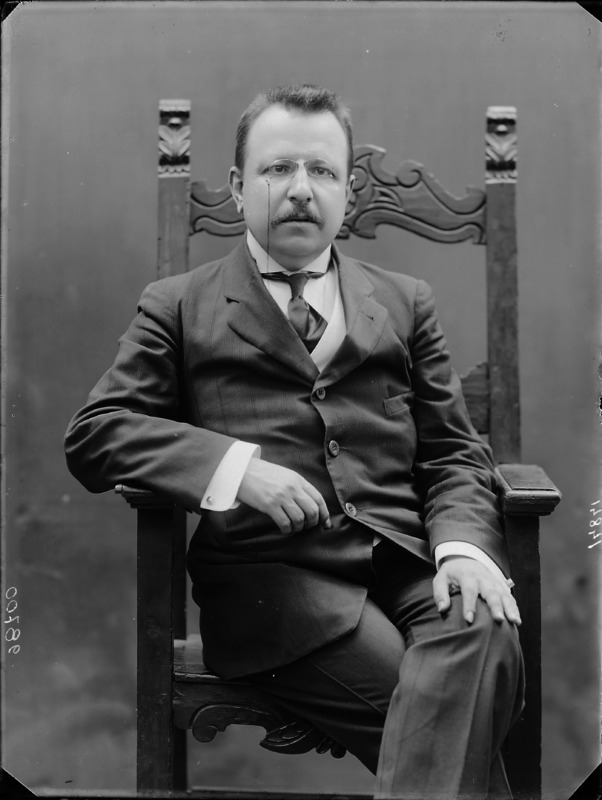
Benedetto Croce, a name synonymous with Italian intellectualism and philosophy, was born on February 25, 1866, in Pescasseroli, a small town in the province of L’Aquila, Italy. His life was a complex tapestry of philosophical thought, literary contributions, and political engagement, making him one of the most influential thinkers of his time. Croce’s life and work reflect a deep engagement with the historical, cultural, and intellectual currents of his era, and his legacy continues to resonate in contemporary discussions on philosophy, history, and politics.
Early Life and Tragedy
Born into a wealthy and conservative family, Croce’s early life was marked by privilege, but also by tragedy. In 1883, at the age of seventeen, Croce experienced the most traumatic event of his life. While on a family vacation on the island of Ischia, a devastating earthquake struck, killing over 2,000 people, including his parents, Pasquale Croce and Luisa Sipari, and his sister, Maria. Croce, who was buried under the rubble but survived, was deeply affected by this event. It not only shaped his philosophical outlook but also led him to relocate to Rome, where he lived with his uncle, Senator Silvio Spaventa.
Intellectual Development and Philosophical Contributions
In Rome, Croce was exposed to a vibrant intellectual environment. He became acquainted with prominent political figures and scholars, including the Italian philosopher Antonio Labriola, whose lectures on moral philosophy left a lasting impression on Croce. Initially enrolled in the Faculty of Law at the University of Naples, Croce soon abandoned his formal studies, choosing instead to pursue his intellectual interests independently. This decision marked the beginning of a lifelong journey into the realms of history, philosophy, and literature.
Croce’s intellectual development was heavily influenced by his travels across Europe, where he immersed himself in the works of great thinkers like Giosuè Carducci, Francesco De Sanctis, Karl Marx, and Friedrich Hegel. While he drew heavily on Hegel’s rationalistic and dialectical approach, Croce also critiqued Hegel’s view of reality as a synthesis of opposites. Instead, Croce proposed that reality is constituted by four distinct categories—fantasy, intellect, economic activity, and moral activity—each of which operates independently. These categories, according to Croce, are manifestations of two fundamental activities of the human spirit: the theoretical (knowledge) and the practical (will).
Literary and Political Career
In 1903, Croce founded the influential journal “La Critica,” which became a platform for his philosophical and literary ideas. The journal, initially funded by Croce himself, was co-edited with Giovanni Gentile, another prominent Italian philosopher. “La Critica” played a crucial role in shaping Italian intellectual life and continued to be published for 41 years.
Croce’s foray into politics began in 1910 when he was appointed a senator by virtue of his wealth. His political career, however, was characterized by a deep commitment to cultural and moral issues rather than partisan politics. Between 1920 and 1921, he served as the Minister of Public Education in Giovanni Giolitti’s fifth government. During his tenure, Croce worked to promote cultural and educational reforms, reflecting his belief in the importance of moral and intellectual development.
One of Croce’s most significant political actions was his opposition to fascism. On May 1, 1925, he published the “Manifesto of the Anti-Fascist Intellectuals,” a bold statement against the rise of fascism in Italy. This manifesto, which stood in stark contrast to the “Manifesto of the Fascist Intellectuals” authored by Giovanni Gentile, was endorsed by many leading figures in literature and science, including Eugenio Montale, Aldo Palazzeschi, and Vito Volterra.
Despite his opposition to the fascist regime, Croce initially supported the Lateran Pacts of 1929, which established relations between the Italian state and the Catholic Church. However, his disillusionment with the increasingly repressive nature of Mussolini’s government led him to withdraw from active politics in 1930. Croce returned to the political scene in 1943, following the fall of Mussolini’s regime. As a leader of the Liberal Party, he played a key role in post-war Italian politics, serving in the governments of Pietro Badoglio and Ivanoe Bonomi.
The Later Years and Philosophical Legacy
The later years of Croce’s life were marked by continued intellectual activity, despite the physical limitations imposed by a stroke in 1949 that left him partially paralyzed. In 1946, he founded the Italian Institute for Historical Studies in Naples, housed in the Palazzo Filomarino. This institute was dedicated to fostering the study of history in relation to philosophy, logic, ethics, law, economics, politics, art, and religion. Croce’s commitment to the integration of these disciplines reflected his belief in the interconnectedness of human knowledge and experience.
One of Croce’s most significant philosophical works during this period was his 1942 essay “Why We Cannot Help Calling Ourselves Christians.” In this brief but profound text, Croce argued that Christianity represented the greatest revolution in human history, as it had instilled a set of moral values that were central to the development of Western civilization. Although not a devout Christian himself, Croce recognized the profound cultural and moral impact of Christianity on European history and thought.
In 1946, Croce was elected to the Constituent Assembly, where he played a key role in shaping the future of the Italian Republic. He famously opposed the Treaty of Peace, which he viewed as a dishonorable act for the newly established Republic. Despite being offered the positions of provisional President of the Republic and potentially a lifetime Senator, Croce declined these honors, preferring to focus on his intellectual pursuits.
Benedetto Croce passed away on November 20, 1952, at the age of 86, in his library chair, surrounded by the books and ideas that had defined his life. His death marked the end of an era in Italian intellectual history, but his ideas and contributions continue to influence scholars and thinkers around the world.
Croce’s Enduring Influence
Benedetto Croce’s influence extends far beyond the confines of Italian philosophy. His work has been instrumental in shaping modern historical and philosophical thought, particularly through his emphasis on the role of the human spirit in the construction of knowledge and reality. Croce’s distinction between the theoretical and practical aspects of human activity has provided a framework for understanding the complex interplay between thought and action, knowledge and will.
Moreover, Croce’s critique of Hegelian dialectics and his development of a philosophy of distinct categories have had a lasting impact on subsequent philosophical debates. His work has also been pivotal in the development of Italian liberalism, particularly through his opposition to fascism and his advocacy for cultural and moral values in politics.
Croce’s legacy is also evident in his contributions to literary criticism and historiography. His insistence on the importance of historical context in the interpretation of literary works has influenced generations of scholars and critics. Additionally, his philosophical approach to history, which emphasizes the subjective nature of historical knowledge, has contributed to the development of modern historiography.
In conclusion, Benedetto Croce was a towering figure in the intellectual history of Italy and the world. His life and work reflect a deep commitment to the pursuit of knowledge, the defense of moral and cultural values, and the belief in the power of the human spirit. As we continue to grapple with the challenges of the modern world, Croce’s ideas remain as relevant and thought-provoking as ever, offering insights into the complexities of human experience and the ongoing quest for understanding and meaning.


