
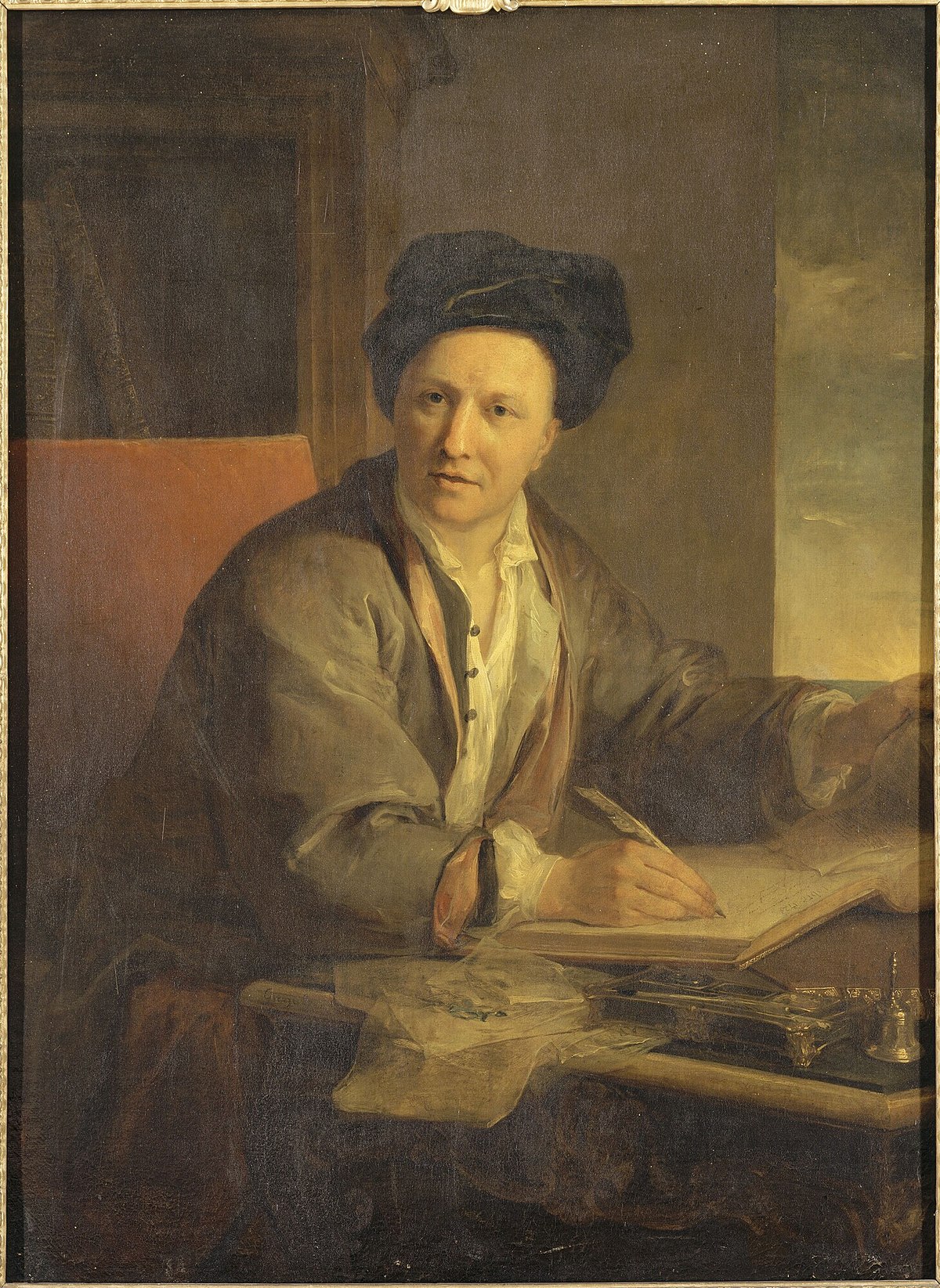
Bernard le Bovier de Fontenelle (1657-1757) was a French writer, philosopher, and polymath, best known for his work in the fields of literature and science. Born on February 11, 1657, in Rouen, France, Fontenelle lived a long and influential life, spanning nearly a century, during which he contributed significantly to the intellectual and cultural landscape of his time.
Early Life and Education
Fontenelle was born into a family with strong intellectual ties. His mother was the sister of the famous playwright Pierre Corneille, which placed Fontenelle in an environment rich with literary and artistic influences. His father was a lawyer at the Parliament of Normandy, and it was expected that young Bernard would follow in his footsteps. He was educated at the Jesuit College of Bourbon in Rouen, where he received a comprehensive education that included studies in philosophy, rhetoric, and the sciences.
Despite his father’s wishes, Fontenelle quickly realized that law was not his true calling. After losing his first and only case, he decided to pursue his passion for literature, a decision that would shape the rest of his life.
Early Literary Works
Fontenelle’s first foray into literature was marked by his association with his uncle, Thomas Corneille, who was also a well-known writer. Thomas Corneille was the editor of the Mercure Galant, a Parisian literary journal. Fontenelle contributed his first poems to this publication in his early twenties, showcasing his talent for writing on a variety of topics with ease.
His early works included the poems Histoire de mes Conquetes and L’amour Noyé, which demonstrated his literary prowess. However, Fontenelle soon transitioned to writing plays, producing his first two tragedies, Bellérophon and Psyché, in the late 1670s. These plays were performed under his uncle’s name, highlighting Fontenelle’s early struggles with gaining recognition in the literary world.
In 1680, Fontenelle wrote the comedy La Comète, a one-act play that satirized popular superstitions and beliefs, particularly those related to the Rosicrucians and astrologers. This play marked the beginning of Fontenelle’s lifelong interest in challenging conventional wisdom and exploring new ideas.
The Move to Paris and Rise to Fame
In 1685, Fontenelle moved to Paris, where he would spend most of his life. This move was a turning point in his career, as it allowed him to immerse himself in the vibrant intellectual community of the French capital. He developed close friendships with prominent figures such as the Abbé de Saint-Pierre, mathematician Pierre Varignon, and historian René-Aubert de Vertot.
By this time, Fontenelle had already achieved considerable success with the publication of Nouveaux Dialogues des Morts (1683), a series of imaginary dialogues between famous historical figures. This work was well-received and established Fontenelle as a writer of note.
In 1686, he published Relation Curieuse de l’Ile de Borneo and Histoire des Oracles, the latter being a reworking of the De Oraculis Ethnicorum by Anton van Dale. These works further solidified his reputation as a writer who could tackle complex subjects with clarity and wit.
Conversations on the Plurality of Worlds
Fontenelle’s most famous work, Entretiens sur la Pluralité des Mondes (Conversations on the Plurality of Worlds), was published in 1686. This work is considered one of the earliest examples of popular science literature, as it explained the heliocentric model of the solar system in a manner accessible to the general public. Fontenelle presented the idea that other planets in the solar system could be inhabited, a concept that was both revolutionary and controversial at the time.
The book was written in the form of a dialogue between a philosopher and a marquise, set in a garden under the stars. Through this format, Fontenelle was able to explore complex scientific ideas in a way that was engaging and relatable. Conversations on the Plurality of Worlds was immensely popular and remained a significant work in the field of science and literature for many years.
This work not only showcased Fontenelle’s ability to make science accessible to a broader audience but also his skill in blending science with philosophy and literature. It is often regarded as one of the most important precursors to the genre of science fiction.
The Quarrel of the Ancients and the Moderns
In the late 17th century, France was embroiled in a heated debate known as the Quarrel of the Ancients and the Moderns. This debate centered around the question of whether contemporary writers and thinkers (the Moderns) had surpassed the achievements of the classical authors of antiquity (the Ancients).
Fontenelle sided with the Moderns, joining forces with Charles Perrault, the author of Tales of Mother Goose, in defending the idea that modern literature and science were superior to those of the past. He articulated his views in the work Digression sur les Anciens et les Modernes (1688), where he argued that the progress of knowledge and culture made the works of the Moderns more valuable than those of the Ancients.
This position was controversial and placed Fontenelle in opposition to figures such as Jean Racine and Nicolas Boileau, who championed the Ancients. However, Fontenelle’s arguments were influential, and the debate contributed to the intellectual climate of the Enlightenment.
Membership in the Académie Française and the Académie des Sciences
Fontenelle’s achievements did not go unnoticed by the French intellectual establishment. In 1691, he was elected to the prestigious Académie Française, a clear recognition of his literary accomplishments. A few years later, in 1699, he was appointed as the perpetual secretary of the Académie des Sciences, a position he would hold for over 40 years.
As the secretary of the Académie des Sciences, Fontenelle played a crucial role in documenting and promoting scientific discoveries. He was responsible for writing the eulogies of deceased members, and these works, known as Éloges, are considered masterpieces of scientific biography.
Fontenelle’s long tenure at the Académie des Sciences allowed him to become one of the most influential figures in the French scientific community. He was also a member of other prominent scientific institutions, including the Académie des Inscriptions et Belles-Lettres, the Royal Society of London, and the Academy of Sciences in Berlin.
Later Life and Philosophical Contributions
As Fontenelle grew older, he continued to write and contribute to the intellectual discourse of his time. In 1724, a comprehensive edition of his works was published, which included philosophical essays such as On the Origin of Myths, On Happiness, and On the Existence of God. These essays reflected Fontenelle’s broad intellectual interests and his ability to engage with philosophical questions in a thoughtful and nuanced manner.
In 1727, he published Elements of the Geometry of the Infinite, a work that explored mathematical concepts with the same clarity and accessibility that characterized his earlier writings. This was followed by Reflections on Poetics in 1742, which demonstrated Fontenelle’s continued engagement with literary theory.
Even in his advanced age, Fontenelle remained active in intellectual circles. In 1752, at the age of 95, he published Theory of Cartesian Vortices, a work that dealt with the Cartesian model of the universe, further showcasing his enduring interest in scientific and philosophical questions.
Death and Legacy
Bernard le Bovier de Fontenelle passed away on January 9, 1757, just a few weeks shy of his 100th birthday. He died peacefully in Paris, having lived a life that was both intellectually rich and remarkably long.
Fontenelle is remembered today as a key figure in the transition from the Renaissance to the Enlightenment. His works, particularly Conversations on the Plurality of Worlds, helped to popularize scientific ideas and paved the way for the development of science fiction as a genre. He was also a pioneer in the field of popular science, demonstrating that complex ideas could be communicated effectively to a broad audience.
His contributions to the Quarrel of the Ancients and the Moderns, his leadership in the Académie des Sciences, and his philosophical writings all underscore his importance as a thinker who bridged the worlds of science, literature, and philosophy.
Fontenelle’s legacy is one of intellectual curiosity and a commitment to expanding the boundaries of knowledge. His work continues to be studied and admired for its clarity, wit, and insight, making him a lasting figure in the history of French literature and science.


