
Introduction
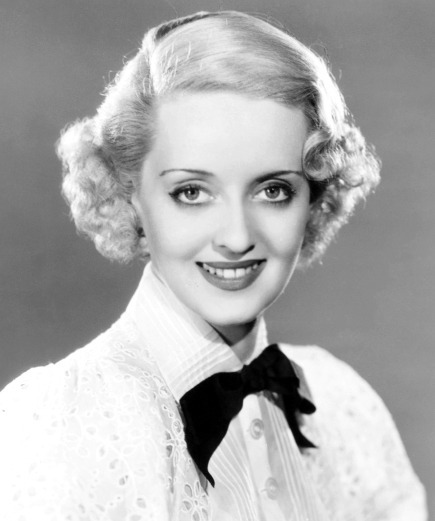
Bette Davis, born Ruth Elizabeth Davis on April 5, 1908, in Lowell, Massachusetts, stands as one of the most iconic figures in Hollywood’s golden era. With a career that spanned over five decades, Davis became a symbol of strong, independent women in cinema, known for her intense and often controversial performances. Her legacy is marked not just by her remarkable acting skills but by her refusal to conform to the typical Hollywood standards of beauty and femininity. In this article, we delve into the life, career, and lasting impact of Bette Davis, exploring her journey from a young actress to an enduring legend.
Early Life and Background
Bette Davis was born into a family of mixed heritage, with Anglo-Welsh roots on her father’s side and French ancestry on her mother’s side. Her parents’ marriage was tumultuous, leading to their eventual divorce. Following the separation, Davis was raised primarily by her mother, who played a significant role in nurturing her artistic inclinations. Davis’ early exposure to the performing arts came through dance, where she studied under the renowned Martha Graham. However, it was her passion for acting that ultimately led her to pursue a career in the theater.
Davis’ determination to break into the acting world was evident from the start. After being rejected from the prestigious Eva LeGallienne’s Manhattan Civic Repertory, she enrolled at the John Murray Anderson’s Dramatic School, where she honed her craft alongside future stars like Katharine Hepburn.
Rise to Fame
Bette Davis made her Broadway debut in 1929 in the play “Broken Dishes.” Her performance caught the attention of Hollywood, and by the following year, she had signed a contract with Universal Pictures. However, her initial foray into film was met with disappointment, leading her to leave Universal in 1932. It wasn’t until she joined Warner Brothers that her career began to take off.
Davis’ breakthrough role came in 1934 with the film “Of Human Bondage,” where she portrayed the cold and manipulative Mildred. This role showcased her exceptional talent and established her as a force to be reckoned with in Hollywood. Her performance was so powerful that it earned her widespread acclaim and her first Academy Award nomination.
In 1936, Davis won her first Oscar for her role in “Dangerous,” further solidifying her status as one of Hollywood’s leading actresses. This success emboldened her to take greater control over her career, leading her to reject conventional roles in favor of more challenging and complex characters.
The Peak of Her Career
The late 1930s and 1940s marked the peak of Bette Davis’ career. In 1939, she won her second Oscar for her role in “Jezebel,” a film that was Warner Brothers’ answer to the epic “Gone with the Wind.” Davis had been considered for the lead role in “Gone with the Wind,” but her portrayal of the strong-willed Southern belle in “Jezebel” became one of her most memorable performances.
Throughout the 1940s, Davis continued to deliver powerful performances in films such as “The Little Foxes” (1941) and “Now, Voyager” (1942). However, not all of her projects during this period were successful, with some films failing to live up to her immense talent. Despite these setbacks, Davis remained a dominant figure in Hollywood, known for her uncompromising approach to her craft and her ability to bring depth to even the most unsympathetic characters.
Transition and Resurgence
The 1950s saw a shift in Davis’ career as she faced a series of professional challenges. After leaving Warner Brothers, she signed with 20th Century Fox, where she starred in the critically acclaimed film “All About Eve” (1950). In this film, Davis played Margo Channing, a fading star struggling to maintain her place in the limelight. The role was a reflection of Davis’ own career at the time, and her performance earned her an eighth Academy Award nomination.
The success of “All About Eve” was followed by a series of lesser-known films, which led Davis to take a brief hiatus from Hollywood and return to the stage. However, her career experienced a resurgence in the early 1960s with the film “What Ever Happened to Baby Jane?” (1962). In this psychological horror film, Davis played the role of Baby Jane Hudson, a former child star turned bitter and demented recluse. The film was a commercial success and brought Davis back into the spotlight, earning her yet another Oscar nomination.
Later Years and Legacy
As Davis entered the later years of her career, she continued to work in both film and television, although her health began to decline. Despite these challenges, she remained a beloved figure in the entertainment industry. In 1987, she made her final film appearance in “The Whales of August,” where she played the role of a blind sister alongside Lillian Gish. Her performance was a testament to her enduring talent and dedication to her craft.
Bette Davis passed away on October 6, 1989, in Paris, France, at the age of 81. Her death marked the end of an era, but her influence on cinema and popular culture continues to be felt to this day. Davis’ ability to portray complex, often unlikable characters with depth and humanity set her apart from her contemporaries. She was not afraid to take risks, both in her career choices and in her performances, and this fearlessness earned her a place among the greatest actors of all time.
Historical Context and Impact
Bette Davis’ career spanned a period of significant change in Hollywood. She began her career in the early 1930s, a time when the studio system dominated the film industry. This system often dictated the roles that actors could take, and stars were expected to conform to certain standards of beauty and behavior. Davis, however, was never one to fit into a mold. Her unconventional looks and strong-willed personality set her apart from the typical Hollywood starlets of the time.
Davis’ battle with Warner Brothers in the mid-1930s was a turning point in her career and in Hollywood history. Frustrated with the mediocre roles she was being offered, Davis attempted to break her contract with the studio and sought better opportunities in England. Although she ultimately lost the legal battle and was forced to return to Warner Brothers, the case brought attention to the issue of studio control over actors and paved the way for future stars to demand more creative freedom.
Davis’ influence extended beyond her acting. She was a trailblazer for women in the film industry, challenging the notion that actresses had to be young and conventionally beautiful to succeed. Her willingness to take on roles that depicted women as flawed, complex individuals helped to change the way female characters were portrayed in film.
Conclusion
Bette Davis was more than just a Hollywood star; she was a pioneer who helped to reshape the film industry and redefine what it meant to be a leading lady. Her career was marked by a series of bold choices and unforgettable performances that continue to resonate with audiences today. As we reflect on her life and legacy, it is clear that Bette Davis was not just an actress but an icon whose influence will be felt for generations to come.


