
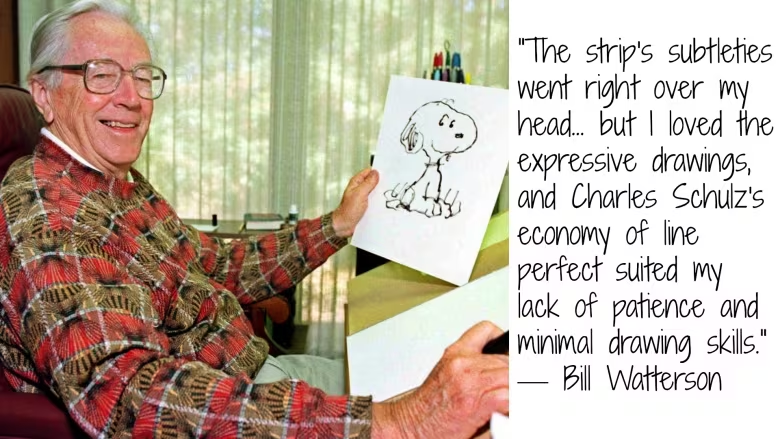
Bill Watterson, born on July 5, 1958, in Washington, D.C., is a name that has become synonymous with creativity, wit, and a unique perspective on life. Best known as the creator of the iconic comic strip Calvin and Hobbes, Watterson’s work has transcended the boundaries of conventional cartooning to become a cultural phenomenon. This article delves into the life and career of Bill Watterson, offering detailed insights into his journey, the rise of his fame, and the legacy he has left behind in the world of comics and beyond. We will explore the nuances of his work, the historical context that influenced his creations, and the lasting impact of his contributions to the art of storytelling.
Early Life and Passion for Cartooning
William Boyd Watterson II, better known as Bill Watterson, grew up in a family that nurtured creativity and intellectual curiosity. His father worked as a patent attorney, and his mother was actively involved in local government. At the age of six, Watterson’s family moved to Chagrin Falls, Ohio, a small town that would later inspire the suburban settings of his famous comic strip.
From an early age, Watterson showed a keen interest in drawing and cartooning. He was captivated by the world of comic strips and began creating his own comics during his school years. His early work appeared in school publications, where his talent for combining humor with insightful commentary began to emerge. Watterson’s love for cartooning continued through his high school years, where he contributed to the school’s newspaper, honing his skills and developing his unique style.
In 1976, Watterson enrolled at Kenyon College in Gambier, Ohio, where he majored in Political Science. Despite his academic focus, his passion for cartooning remained undiminished. He contributed political cartoons to the college newspaper, an experience that would later influence his approach to satire and social commentary in his work. Watterson graduated in 1980 with a Bachelor of Arts degree, but his true calling lay in the world of cartooning.
The Struggles and the Birth of Calvin and Hobbes
After graduating from college, Watterson pursued a career as a cartoonist, but success did not come easily. He initially worked as a political cartoonist for the Cincinnati Post, but his tenure was short-lived. His work was deemed too unconventional for the paper, and he was soon let go. This early setback, however, did not deter Watterson. Instead, it fueled his determination to find his own voice in the world of comics.
Watterson spent the next few years developing various comic strip ideas, many of which were rejected by syndicates. During this time, he worked a series of unfulfilling jobs to make ends meet, but he never gave up on his dream of becoming a successful cartoonist. It was during this period of struggle that Watterson began to develop the characters that would eventually become Calvin and Hobbes.
On November 18, 1985, the first Calvin and Hobbes comic strip was published. The strip introduced readers to Calvin, a precocious six-year-old boy with a boundless imagination, and his stuffed tiger, Hobbes, who comes to life in Calvin’s eyes as a wise, sardonic companion. The chemistry between the two characters, along with the strip’s clever humor and philosophical undertones, quickly captured the hearts of readers.
Calvin and Hobbes was an instant success, resonating with both children and adults. The strip’s ability to explore complex themes through the lens of a child’s imagination made it stand out in the crowded world of comic strips. Within a year, Watterson won the prestigious Reuben Award for “Outstanding Cartoonist of the Year,” solidifying his place as one of the leading voices in the medium.
The Genius of Calvin and Hobbes
What set Calvin and Hobbes apart from other comic strips was Watterson’s ability to blend humor with profound reflections on life, society, and the human condition. Calvin’s adventures with Hobbes often delved into philosophical questions, existential musings, and critiques of modern culture. Whether they were exploring the wonders of nature, contemplating the absurdities of adulthood, or engaging in imaginative play, Calvin and Hobbes provided readers with a window into the mind of a child who was wise beyond his years.
Watterson’s art style was equally distinctive. He had a talent for using minimalistic yet expressive line work to convey a wide range of emotions and scenarios. The strip’s visual aesthetic was simple but effective, allowing the characters’ personalities and the story’s themes to take center stage. Watterson’s refusal to commercialize his work, despite the immense popularity of Calvin and Hobbes, further added to the strip’s integrity and appeal.
One of the most remarkable aspects of Calvin and Hobbes was its exploration of the tension between imagination and reality. Calvin’s world was one where the boundaries between the two were fluid, where a cardboard box could transform into a time machine, and a simple walk in the woods could become an epic adventure. This blurring of reality and fantasy was a central theme in the strip, and it resonated with readers who remembered the boundless creativity of their own childhoods.
Watterson’s Stance on Commercialization and Artistic Integrity
Throughout his career, Watterson remained steadfast in his belief that art should not be compromised by commercial interests. Unlike many of his contemporaries, Watterson refused to license Calvin and Hobbes for merchandising, believing that doing so would diminish the characters and the world he had created. This decision was met with both admiration and criticism, but Watterson never wavered in his commitment to preserving the artistic integrity of his work.
Watterson’s refusal to commercialize Calvin and Hobbes extended to his relationships with publishers and syndicates. He fought for and won creative control over his work, a rare achievement in an industry where syndicates often dictated the terms. Watterson’s battles with his syndicate, Universal Press Syndicate, are well-documented, with Watterson insisting on the right to determine the format, content, and presentation of his strip.
In 1995, at the height of Calvin and Hobbes‘s popularity, Watterson made the difficult decision to end the strip. On December 31, 1995, the final Calvin and Hobbes strip was published, marking the end of an era. Watterson’s decision to conclude the strip at its peak was in keeping with his philosophy of leaving his work untouched by the pressures of commercialization and mediocrity.
Life After Calvin and Hobbes
After retiring Calvin and Hobbes, Watterson retreated from the public eye, choosing to live a quiet life in Hudson, Ohio, with his wife Melissa. He focused on painting and other creative pursuits, far removed from the spotlight that had once shone so brightly on him. Watterson’s reclusiveness only added to the mystique surrounding him, as fans and the media speculated about his life and artistic endeavors.
Despite his withdrawal from public life, Watterson’s influence on the world of comics and popular culture remains profound. Calvin and Hobbes continues to be celebrated for its timeless humor, deep philosophical insights, and the sheer joy it brings to readers of all ages. The strip has been reprinted in numerous collections, and it remains a staple in the homes of comic enthusiasts around the world.
Watterson’s legacy is also evident in the way he inspired a new generation of cartoonists. His insistence on creative control, his resistance to commercialization, and his dedication to the craft of cartooning have set a standard for artistic integrity that many aspire to but few achieve. Watterson showed that it was possible to create art that was both popular and meaningful, without succumbing to the pressures of commercialism.
The Legacy of Bill Watterson
Bill Watterson’s contribution to the world of comics is immeasurable. Through Calvin and Hobbes, he created a body of work that transcends the medium, offering readers not just entertainment, but also a profound exploration of the human experience. The strip’s exploration of childhood, imagination, and the complexities of life has left an indelible mark on popular culture.
Watterson’s decision to end Calvin and Hobbes at its peak, and his subsequent retreat from public life, have only enhanced the strip’s legacy. By refusing to allow his characters to be commercialized, Watterson preserved the purity and integrity of his creation, ensuring that Calvin and Hobbes would be remembered not just as a comic strip, but as a work of art.
Today, Bill Watterson is celebrated not just for his cartooning, but for his commitment to artistic principles. His story is one of perseverance, integrity, and the power of creativity. As fans continue to discover and rediscover Calvin and Hobbes, Watterson’s work remains as relevant and beloved as ever.
Conclusion
Bill Watterson’s life and career are a testament to the enduring power of art and the importance of staying true to one’s principles. Through Calvin and Hobbes, he created a world that continues to inspire, entertain, and provoke thought. Watterson’s influence extends far beyond the realm of comics, touching on universal themes that resonate with readers of all ages.
As we reflect on the life and work of Bill Watterson, it is clear that his legacy will continue to inspire future generations of artists and thinkers. His dedication to his craft, his refusal to compromise, and his ability to capture the essence of childhood wonder in his work have ensured that Calvin and Hobbes will remain a cherished part of the cultural landscape for years to come.


