
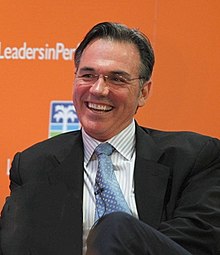
Billy Beane, born Lamar William Beane III on March 29, 1962, in San Diego, California, is a name that has transcended the world of sports. Best known for revolutionizing baseball management through the use of sabermetrics, Beane’s innovative approach to team-building has been immortalized in the bestselling book “Moneyball: The Art of Winning an Unfair Game” by Michael Lewis and its subsequent film adaptation, where he was portrayed by Brad Pitt. This article delves into Beane’s life, his rise to fame, and the key highlights of his career, providing detailed insights and explanations.
Early Life and Athletic Career
Beane grew up in a military family where discipline was emphasized by his father, a naval officer. His early years were marked by a strong inclination towards sports, excelling in baseball, football, and basketball during high school. Despite receiving an offer to play football at Stanford University, Beane chose to pursue a professional baseball career.
In 1980, Beane was selected in the first round of the Major League Baseball draft by the New York Mets. His career as a player, however, did not live up to the high expectations. Over the next few years, he played for several teams, including the Minnesota Twins, Detroit Tigers, and Oakland Athletics, but never achieved significant success on the field.
Transition to Baseball Management
After retiring as a player in 1989, Beane sought to remain in the sport he loved by transitioning into management. In 1990, he joined the Oakland Athletics as a scout under the guidance of then-General Manager Sandy Alderson. Alderson introduced Beane to the concept of sabermetrics, the statistical analysis of baseball data to evaluate player performance.
By 1993, Beane had been promoted to Assistant General Manager, and in 1997, he succeeded Alderson as the General Manager of the Athletics. Faced with a limited budget, Beane adopted and expanded Alderson’s use of sabermetrics to build a competitive team. This approach focused on undervalued players with high on-base percentages and other metrics that traditional scouts often overlooked.
The Moneyball Revolution
The early 2000s marked the height of Beane’s impact on baseball. His methods were chronicled in Michael Lewis’s 2003 book “Moneyball,” which highlighted how Beane assembled competitive teams on a fraction of the budget of other franchises. The 2002 season was particularly notable as the Athletics won 103 games and set an American League record with a 20-game winning streak, despite having one of the lowest payrolls in the league.
Beane’s innovative approach emphasized data-driven decision-making over traditional scouting methods. This strategy not only transformed the Athletics but also influenced the entire baseball industry. Teams across the league began adopting sabermetric principles, fundamentally changing how players were evaluated and teams were constructed.
Influence Beyond Baseball
Beane’s success with the Athletics and the widespread attention from “Moneyball” extended his influence beyond baseball. In 2007, he joined the board of directors for the software company NetSuite, leveraging his analytical expertise in a different field. His methods have been discussed and implemented in various other sports and industries, showcasing the versatility and effectiveness of data-driven management.
In 2009, Sports Illustrated named Beane one of the top ten sports executives of the decade, recognizing his transformative impact on the sport. His approach demonstrated that intelligent, analytical strategies could level the playing field, even for teams with limited financial resources.
Personal Philosophy and Approach
Beane’s philosophy is centered around objective analysis and valuation. He once explained, “It’s about evaluating the skills of players and putting a price on them. Thirty years ago, stockbrokers used to buy stocks strictly on gut feeling. Let’s put it this way: everyone in the baseball game has a pension plan and a choice to make; some choose a fund manager who manages their pension by gut feeling, and others choose to rely on an expert in economic research and analysis. I know which way I’ve chosen.”
This philosophy underscores Beane’s belief in the power of data and research to make informed decisions, a principle that has resonated with many beyond the realm of sports.
Challenges and Criticisms
Despite his successes, Beane’s methods have not been without criticism. Traditionalists in the baseball community have often resisted the move towards sabermetrics, arguing that it overlooks the intangible aspects of the game. Additionally, while the Athletics have consistently fielded competitive teams under Beane’s management, they have not won a World Series, which some critics cite as a shortcoming of his approach.
Beane’s response to these criticisms has always been pragmatic. He acknowledges the limitations of any single approach and emphasizes the importance of balance between data and traditional scouting methods. His willingness to adapt and evolve has kept the Athletics competitive in an ever-changing sports landscape.
Legacy and Ongoing Impact
Billy Beane’s legacy is firmly established in the annals of baseball history. His revolutionary approach to team management has not only changed how baseball teams are built but has also influenced sports management more broadly. The term “Moneyball” has entered the lexicon as shorthand for any strategy that uses data and analytics to gain a competitive edge.
The film adaptation of “Moneyball,” starring Brad Pitt, further cemented Beane’s status as a cultural icon. The movie brought his story to a wider audience and highlighted the human aspect of his journey—his struggles, triumphs, and unwavering commitment to innovation.
Conclusion
Billy Beane’s career is a testament to the power of innovation and the impact of data-driven decision-making. From his early days as a promising athlete to his groundbreaking work as a baseball executive, Beane has consistently challenged conventional wisdom and pushed the boundaries of what is possible in sports management.
His influence extends beyond baseball, inspiring other sports and industries to adopt similar analytical approaches. As the landscape of professional sports continues to evolve, Beane’s contributions will remain a cornerstone of modern team-building strategies.
Billy Beane’s story is one of resilience, creativity, and relentless pursuit of excellence. His legacy serves as a reminder that with the right approach, even the most formidable challenges can be overcome. As we look to the future of sports and beyond, the principles championed by Beane will continue to shape the way we think about performance, value, and success.


