
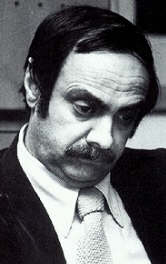
Boris Giuliano, a name etched into the annals of Italian history, is synonymous with bravery, dedication, and the relentless pursuit of justice. As a key figure in the fight against organized crime in Sicily during the 1970s, Giuliano’s life and career offer a profound look into the complexities of law enforcement in one of the most challenging environments in modern history. This article delves into the life of Boris Giuliano, his rise to fame, and the life highlights that shaped his legacy.
Early Life and Background
Giorgio Boris Giuliano was born on October 22, 1930, in Piazza Armerina, a town in the province of Enna, Sicily. His early years were marked by a unique upbringing, as his father was a non-commissioned officer in the Italian Navy stationed in Libya. This role meant that young Boris spent part of his childhood in the North African country, exposing him to a different culture and environment at a young age.
In 1941, as World War II engulfed Europe, the Giuliano family returned to Sicily, settling in Messina. Here, Boris continued his education, eventually earning a degree. Despite the turmoil of the times, he also pursued sports passionately, playing basketball at a competitive level and even reaching Serie B with the CUS Messina team during his university years.
A Career in Law Enforcement
Giuliano’s entry into law enforcement was almost serendipitous. In 1962, he won a competitive exam to become a police officer, and after completing his training, he requested to be assigned to Palermo. This decision would place him at the heart of the fight against one of the most notorious criminal organizations in history—Cosa Nostra.
Initially, Giuliano served in the Homicide Section of the Palermo Mobile Squad, quickly establishing himself as a diligent and effective investigator. His tenacity and skills did not go unnoticed, and by 1976, he had risen to the position of Chief of the Mobile Squad. During this period, Giuliano also had the opportunity to specialize in investigative techniques at the FBI National Academy in the United States, further honing his abilities.
The Disappearance of Mauro De Mauro
One of the most significant cases in Giuliano’s career was the mysterious disappearance of journalist Mauro De Mauro in 1970. De Mauro was investigating the death of Enrico Mattei, a prominent Italian public figure, when he vanished without a trace. The case attracted national attention, and Giuliano, alongside other top investigators, was tasked with unraveling the mystery.
De Mauro’s disappearance was not just a simple missing person case; it was enmeshed in the murky world of politics, organized crime, and covert operations. Giuliano pursued various leads, meticulously piecing together the puzzle. De Mauro had a complex background, including connections with Junio Valerio Borghese, a controversial figure involved in a failed coup attempt. This, along with De Mauro’s investigative work on the mafia and drug trafficking, added layers of intrigue to the case.
Giuliano’s investigations led him to explore the possible connections between De Mauro’s work and the broader criminal activities in Sicily. His relentless pursuit of the truth in this case exemplified his commitment to justice, even in the face of immense danger.
The Final Investigations and Assassination
The late 1970s marked a dangerous period in Giuliano’s life. In 1979, he was involved in a critical investigation following the discovery of two suitcases containing $500,000 at Palermo’s Punta Raisi airport. The money was linked to a heroin shipment seized at JFK Airport in New York. Giuliano’s probe into this case led him to uncover significant links between the mafia and the international drug trade.
Simultaneously, his team apprehended two mafia members, Antonino Marchese and Antonino Gioè, who were found with a receipt bearing an address in Via Pecori Giraldi. This led to the discovery of weapons, drugs, and a fake ID with the photo of Leoluca Bagarella, a high-ranking mafia member and brother-in-law of the infamous Salvatore Riina.
These investigations placed Giuliano directly in the crosshairs of the mafia. Anonymous death threats began to flood in, and it became clear that his life was in imminent danger. Despite the threats, Giuliano continued his work undeterred, even as he began investigating financial transactions linked to the mafia, including those involving the notorious banker Michele Sindona.
On July 21, 1979, Boris Giuliano’s life was tragically cut short. As he was paying for his coffee at a café in Via Di Blasi, Palermo, Leoluca Bagarella approached him from behind and shot him seven times at close range. Giuliano’s assassination sent shockwaves through Italy, underscoring the perilous nature of the fight against organized crime.
Legacy and Impact
Boris Giuliano’s death marked a pivotal moment in the history of the Sicilian mafia. His funeral was a moment of national mourning, with Cardinal Pappalardo voicing the collective outrage and despair of the public, urging the state to fulfill its duty to protect its citizens. The cardinal’s impassioned plea for justice resonated with the words of the prophet Ezekiel, condemning the murderers and the protectors of criminals who roamed freely.
In the years following his death, Giuliano’s work and legacy were not forgotten. In 1995, a trial resulted in the conviction of several top mafia bosses, including Salvatore Riina, Bernardo Provenzano, and Michele Greco, as well as Bagarella, who was identified as the triggerman in Giuliano’s assassination. These convictions were a testament to the lasting impact of Giuliano’s investigations and the indomitable spirit he embodied.
Family and Continuation of Service
Boris Giuliano’s commitment to law enforcement did not end with his death. His son, Alessandro Giuliano, followed in his father’s footsteps, becoming a distinguished police officer. Alessandro’s career includes notable achievements, such as the capture of the serial killer Michele Profeta in 2001. He also served as the head of the Mobile Squad in Venice and later in Milan, continuing the family legacy of fighting crime and upholding justice.
Boris Giuliano in Popular Culture
The story of Boris Giuliano has also made its way into popular culture, reflecting the enduring fascination with his life and work. His character has been portrayed in various films and television series, most notably in “La mafia uccide solo d’estate” (The Mafia Kills Only in Summer) by Pierfrancesco Diliberto, also known as Pif, and the 2016 TV miniseries “Boris Giuliano: A Policeman in Palermo.” These portrayals have helped to keep his memory alive, introducing his heroic deeds to new generations.
Conclusion
Boris Giuliano’s life is a poignant reminder of the sacrifices made by those who stand up against organized crime. His unwavering dedication to justice, even in the face of mortal danger, sets him apart as one of Italy’s most revered law enforcement figures. Giuliano’s story is not just about his tragic end but also about the legacy of courage, integrity, and commitment to the rule of law that he left behind. As history continues to unfold, the lessons from his life remain as relevant today as they were during the turbulent years of his service.


