
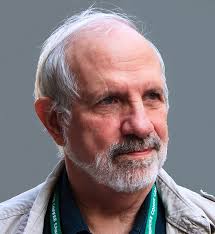
Brian De Palma, born on September 11, 1940, in Newark, New Jersey, is one of the most influential directors in American cinema, often hailed as the modern-day successor to Alfred Hitchcock. With a career spanning over five decades, De Palma has made significant contributions to the thriller genre, blending suspense, innovative narrative techniques, and a keen understanding of cinematic tension. This article delves into Brian De Palma’s age, rise to fame, and the key highlights of his life, offering detailed insights into his cinematic style, his influences, and his enduring legacy in the film industry.
Early Life and the Path to Filmmaking
Brian Russell De Palma was born into a family with strong scientific inclinations. His father, an orthopedic surgeon, and his mother, a former opera singer who sacrificed her career for her family, shaped the environment in which De Palma grew up. His early years were spent in Philadelphia, where the family moved when he was five years old. Interestingly, De Palma’s initial interests were not in filmmaking but in science and technology. His fascination with the mechanics of various devices foreshadowed the meticulous attention to detail that would later characterize his films.
During his high school years, De Palma was recognized for his innate talent in electronics and was known among his peers as someone who could spend hours disassembling and reassembling devices to understand their inner workings. This curiosity for how things worked translated into a deep understanding of the technical aspects of filmmaking later in his career.
De Palma’s journey into the world of film began almost by accident. After enrolling in Columbia University with the intention of pursuing a degree in physics, he discovered a passion for the performing arts. It was here that De Palma was exposed to the world of theater and experimental cinema, leading him to shift his focus from science to filmmaking. This transition was solidified when he received a scholarship to attend Sarah Lawrence College, where he studied under Wilford Leach, a mentor who greatly influenced his early career.
Breaking into Hollywood: Early Films and Successes
Brian De Palma’s early work in film was characterized by his involvement in the experimental cinema movement of the 1960s. His first notable films, such as “Greetings” (1968) and “Hi, Mom!” (1970), showcased his willingness to explore unconventional narratives and his knack for blending humor with social commentary. These films, although not mainstream successes, established De Palma as a daring new voice in American cinema.
De Palma’s big break came when he began working on more commercially viable projects that allowed him to fully explore his cinematic influences, particularly the work of Alfred Hitchcock. One of his earliest successes was the film “Sisters” (1972), a psychological thriller that drew heavily on Hitchcockian themes of voyeurism and duality. The film was a critical success and solidified De Palma’s reputation as a master of suspense.
His next major hit, “Carrie” (1976), based on the Stephen King novel, catapulted De Palma to fame. The film’s success was due in large part to De Palma’s skillful direction, particularly in its use of split-screen techniques and slow-motion sequences that heightened the film’s tension. “Carrie” was not only a box office success but also garnered critical acclaim, earning Academy Award nominations for its stars, Sissy Spacek and Piper Laurie.
The Hitchcock Influence: Crafting a Legacy in Thrillers
Brian De Palma’s reputation as a modern-day Hitchcock stems from his mastery of suspense and his innovative use of cinematic techniques that echo those of the legendary director. De Palma’s films are known for their intricate plots, complex characters, and a visual style that often includes long takes, split screens, and elaborate tracking shots. These elements combine to create a sense of tension and unease that is a hallmark of his work.
One of De Palma’s most famous films, “Dressed to Kill” (1980), exemplifies his Hitchcockian influence. The film, a psychological thriller, features a plot filled with twists and turns, as well as a controversial shower scene that drew direct comparisons to Hitchcock’s “Psycho.” De Palma’s ability to build suspense through carefully crafted visuals and pacing made “Dressed to Kill” a critical and commercial success, further cementing his reputation as a master of the thriller genre.
Another significant work, “Blow Out” (1981), starring John Travolta, showcases De Palma’s skill in blending political intrigue with personal drama. The film’s plot revolves around a sound technician who accidentally records evidence of a political assassination. “Blow Out” is often regarded as one of De Palma’s finest films, praised for its complex narrative and its commentary on the power of media and surveillance.
Iconic Collaborations and Box Office Hits
Throughout his career, Brian De Palma has worked with some of the most iconic actors in Hollywood, creating memorable films that have left a lasting impact on audiences. His collaborations with Al Pacino in films like “Scarface” (1983) and “Carlito’s Way” (1993) are particularly noteworthy. “Scarface,” a gritty tale of a Cuban immigrant’s rise and fall in the American drug trade, became a cultural phenomenon, known for its intense performances, particularly Pacino’s portrayal of Tony Montana, and its unflinching depiction of violence and excess.
“Carlito’s Way,” while not as commercially successful as “Scarface,” was praised for its more subdued and reflective tone, showcasing De Palma’s ability to tell a compelling story of redemption and tragedy. Pacino’s performance as Carlito Brigante, a former criminal trying to escape his past, was widely acclaimed, and the film has since gained a strong cult following.
De Palma’s work on “The Untouchables” (1987), a crime drama about the takedown of Al Capone, is another highlight of his career. The film, starring Kevin Costner, Sean Connery, and Robert De Niro, was both a critical and commercial success, earning Connery an Academy Award for Best Supporting Actor. De Palma’s direction was praised for its stylish approach to the classic crime genre, particularly in the famous train station shootout scene, which has become one of the most iconic moments in film history.
The Visual Style: Techniques and Innovations
Brian De Palma’s films are known for their distinct visual style, which often includes the use of split screens, long takes, and complex tracking shots. These techniques are not just stylistic choices but are integral to how De Palma builds suspense and engages the audience. The split screen, for example, allows De Palma to show simultaneous actions, creating a sense of tension as the audience is forced to watch multiple perspectives at once.
Another hallmark of De Palma’s style is his use of the long take, where a scene is shot in a single, continuous take without cuts. This technique is used to immerse the audience in the action, often heightening the suspense by building anticipation over time. One of the most famous examples of this is the opening sequence of “Snake Eyes” (1998), where a 12-minute tracking shot follows Nicolas Cage’s character through a crowded casino, setting the stage for the film’s central mystery.
De Palma’s use of slow motion is another key element of his visual style. Rather than merely being a stylistic flourish, slow motion in De Palma’s films is often used to emphasize moments of violence or to draw out the tension in a scene. This technique is particularly effective in films like “The Fury” (1978) and “Carrie,” where slow motion is used to create a sense of impending doom.
Personal Life and Influence on Cinema
Despite his success in Hollywood, Brian De Palma has always maintained a relatively low profile in his personal life. He has been married and divorced several times, including a marriage to actress Nancy Allen, who starred in several of his films, including “Carrie” and “Dressed to Kill.” De Palma has one daughter, Piper, from his marriage to Darnell De Palma.
De Palma’s influence on cinema is undeniable. His films have inspired countless directors, and his innovative techniques have become staples of the thriller genre. Directors like Quentin Tarantino and Guillermo del Toro have cited De Palma as a major influence on their work, particularly in their use of suspense and visual storytelling.
In addition to his work in film, De Palma has also dabbled in other areas of the entertainment industry. In 1986, he directed the music video for Bruce Springsteen’s hit song “Dancing in the Dark,” which famously featured a young Courteney Cox dancing on stage with Springsteen. This project showcased De Palma’s ability to bring his cinematic style to different mediums, further demonstrating his versatility as a director.
Later Career and Legacy
In the later years of his career, Brian De Palma continued to explore new genres and challenge himself as a filmmaker. Films like “Mission: Impossible” (1996) and “Femme Fatale” (2002) demonstrated his ability to adapt to the changing landscape of Hollywood while still maintaining his unique style. “Mission: Impossible,” in particular, was a major box office success, launching a franchise that has become one of the most enduring in modern cinema.
While some of his later films have been met with mixed reviews, De Palma’s legacy as a master of suspense and a pioneer of visual storytelling remains intact. His influence can be seen in the work of contemporary filmmakers, and his films continue to be studied and admired by cinephiles and scholars alike.
Brian De Palma’s contributions to the thriller genre and his innovative use of cinematic techniques have left an indelible mark on the film industry. His ability to craft tension, combined with his distinctive visual style, has made him one of the most important directors of his generation. As new generations of filmmakers continue to draw inspiration from his work, De Palma’s legacy will undoubtedly endure, securing his place in the pantheon of great American directors.


