
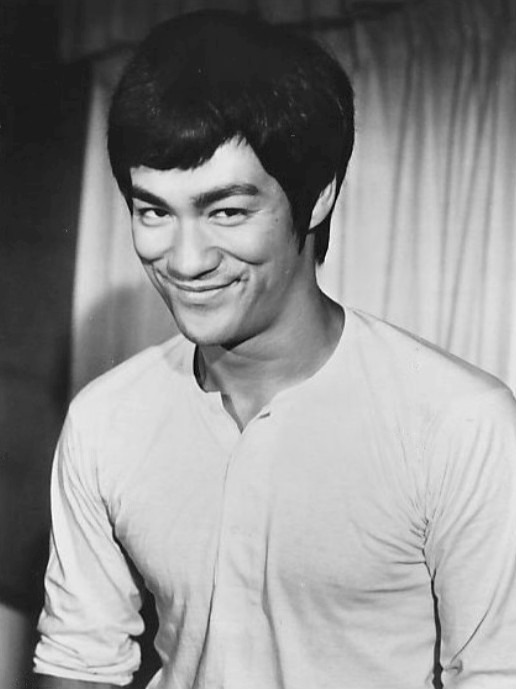
Bruce Lee remains one of the most iconic figures in the history of martial arts and cinema. Born on November 27, 1940, in San Francisco, California, Bruce Lee’s legacy transcends the world of martial arts, leaving an indelible mark on both Eastern and Western cultures. His life was a blend of dedication, discipline, and innovation, which led him to become a global cultural phenomenon. This article will explore the life of Bruce Lee in depth, from his early years to his meteoric rise to fame and the profound impact he left behind.
Early Life: The Roots of a Legend
Bruce Lee was born Lee Jun Fan in San Francisco’s Chinatown, at the Jackson Street Hospital. His father, Lee Hoi Chuen, was a well-known Cantonese opera star, and his mother, Grace Ho, was of German-Chinese descent. Bruce was the fourth of five children in a family that had deep roots in both the entertainment industry and traditional Chinese culture.
Despite being born in the United States, Bruce spent much of his childhood in Hong Kong, where his family returned shortly after his birth. Growing up in a bustling, multicultural city, Bruce was exposed to a variety of influences, including traditional Chinese martial arts and Western cinema. As a young boy, he earned the nickname “Mo Si Tung,” which means “never sits still,” a testament to his boundless energy and curiosity.
Bruce’s early education was in a Chinese school, followed by enrollment at the prestigious La Salle College in Hong Kong. It was during his time at La Salle that Bruce began to develop a serious interest in martial arts, particularly Wing Chun, a form of Kung Fu. This decision was partly influenced by the frequent street fights between Chinese and British students, as Hong Kong was still a British colony at the time. These confrontations spurred Bruce to seek out martial arts training to defend himself and his friends.
The Martial Arts Journey: Wing Chun and Beyond
At the age of 13, Bruce Lee began training under the legendary Wing Chun master Yip Man. Wing Chun, a martial art known for its focus on close-range combat and quick, efficient movements, became the foundation of Bruce’s martial arts philosophy. Yip Man’s teachings extended beyond physical techniques; he also introduced Bruce to the principles of Taoism and other Eastern philosophies, which deeply influenced Bruce’s later work.
Bruce’s time at Yip Man’s school was transformative. He quickly became one of Yip Man’s most dedicated students, absorbing not only the physical aspects of Wing Chun but also the philosophical underpinnings that would shape his future innovations in martial arts.
However, Bruce’s martial arts journey was not without its challenges. A notable incident occurred when students from the Choy Lee Fut school challenged Yip Man’s students to a fight. The confrontation escalated into a brawl, during which Bruce was injured. This experience further fueled his determination to master martial arts, but it also led to legal trouble. At the age of 18, Bruce was involved in a serious fight that resulted in injuries to his opponent, leading his mother to send him back to the United States to avoid further trouble.
The American Dream: Education and the Birth of Jeet Kune Do
In 1959, Bruce Lee returned to the United States, settling in Seattle, Washington. Here, he completed his high school education at Edison Technical School and went on to study philosophy at the University of Washington. Bruce’s academic pursuits were as intense as his martial arts training, and he amassed an extensive library of books on philosophy, martial arts, and various disciplines.
While in Seattle, Bruce began teaching martial arts to a small group of students, blending traditional Wing Chun techniques with insights from his philosophical studies. His approach was innovative, emphasizing the practical application of techniques rather than strict adherence to traditional forms. This period marked the beginning of Bruce’s evolution from a traditional martial artist to a martial arts philosopher and innovator.
In 1964, Bruce married Linda Emery, with whom he had two children: Brandon and Shannon. That same year, he gained national attention with a demonstration at the Long Beach International Karate Championships, where his speed, power, and charisma captured the imagination of martial artists and spectators alike.
It was during this time that Bruce began developing his own martial arts philosophy, which he later named Jeet Kune Do, or “The Way of the Intercepting Fist.” Jeet Kune Do was a radical departure from traditional martial arts styles. It emphasized efficiency, directness, and adaptability, rejecting rigid forms and techniques in favor of what Bruce described as “the art of fighting without fighting.” This philosophy was not just about physical combat but also about personal growth and self-expression, reflecting Bruce’s belief that martial arts were a means of self-discovery and liberation.
Hollywood Beckons: The Rise to Stardom
Bruce Lee’s unique approach to martial arts and his magnetic personality did not go unnoticed by Hollywood. In the mid-1960s, he began his acting career in the United States, landing a role in the television series “The Green Hornet” (1966-1967), where he played Kato, the masked sidekick. Although the show was short-lived, it gave Bruce significant exposure and established him as a formidable martial artist on screen.
Despite his success on “The Green Hornet,” Bruce faced challenges in Hollywood. At the time, Asian actors were often relegated to stereotypical roles, and leading roles were rare. Frustrated by the limited opportunities in the U.S., Bruce returned to Hong Kong, where he found an eager audience for his talents.
In Hong Kong, Bruce quickly became a superstar. His films, including “The Big Boss” (1971), “Fist of Fury” (1972), and “Way of the Dragon” (1972), were massive hits, breaking box office records and cementing his status as an international icon. These films showcased Bruce’s martial arts skills and his unique philosophy, blending intense action with deep philosophical underpinnings.
One of the most iconic scenes in “Way of the Dragon” is the showdown between Bruce Lee and Chuck Norris in the Colosseum in Rome. This scene has become legendary in martial arts cinema, symbolizing the ultimate clash of styles and philosophies. The film’s success also marked Bruce’s debut as a director, further demonstrating his multifaceted talents.
The Final Years: “Enter the Dragon” and the Legacy of Bruce Lee
In 1973, Bruce Lee’s career reached its zenith with the release of “Enter the Dragon,” a co-production between Hollywood and Hong Kong studios. The film was a critical and commercial success, introducing Bruce Lee to a global audience and solidifying his status as the first international martial arts superstar. “Enter the Dragon” combined stunning fight choreography with a compelling narrative, reflecting Bruce’s vision of martial arts as a holistic discipline that encompassed body, mind, and spirit.
Tragically, Bruce Lee’s life was cut short just weeks before the release of “Enter the Dragon.” On July 20, 1973, Bruce died unexpectedly at the age of 32. The official cause of death was a cerebral edema, believed to have been caused by a reaction to a painkiller he had taken for a headache. However, his sudden death has been the subject of much speculation, with various theories ranging from assassination by rival martial artists to more mundane explanations.
Bruce Lee’s death sent shockwaves around the world. He was mourned by millions of fans and fellow martial artists who saw in him not just a movie star but a visionary who had transcended cultural boundaries. His funeral in Hong Kong was attended by thousands of mourners, and a second, more private ceremony was held in Seattle, where he was laid to rest at Lakeview Cemetery.
The Enduring Legacy of Bruce Lee
Bruce Lee’s influence extends far beyond his films. He is widely regarded as the father of modern mixed martial arts (MMA), with many fighters and coaches citing his philosophy of adaptability and directness as foundational to the sport. Jeet Kune Do’s emphasis on fluidity and efficiency is echoed in the training regimes of countless martial artists around the world.
Moreover, Bruce Lee’s impact on cinema and popular culture is immeasurable. He broke down racial barriers in Hollywood, paving the way for future generations of Asian actors and filmmakers. His films continue to inspire new audiences, and his image remains a powerful symbol of strength, perseverance, and the pursuit of excellence.
Bruce Lee’s life and legacy have been the subject of numerous books, documentaries, and films. His writings on martial arts and philosophy have been collected and published, providing insights into his thoughts on life, combat, and self-improvement. Today, Bruce Lee is remembered not just as a martial artist or actor, but as a philosopher, innovator, and cultural icon whose ideas continue to resonate with people across the globe.
Conclusion
Bruce Lee’s journey from a child in Hong Kong to a global superstar is a testament to his extraordinary talent, discipline, and vision. His contributions to martial arts, cinema, and philosophy have left an indelible mark on the world, influencing countless individuals and shaping the way we think about combat, self-expression, and cultural identity.
As we reflect on Bruce Lee’s life, we are reminded of the power of dedication and the impact one person can have on the world. Bruce Lee was more than just a fighter or a film star; he was a pioneer who challenged conventions and inspired generations to pursue their passions with unwavering commitment. His legacy lives on, not just in the martial arts community, but in the hearts of all who have been touched by his life and work.


