
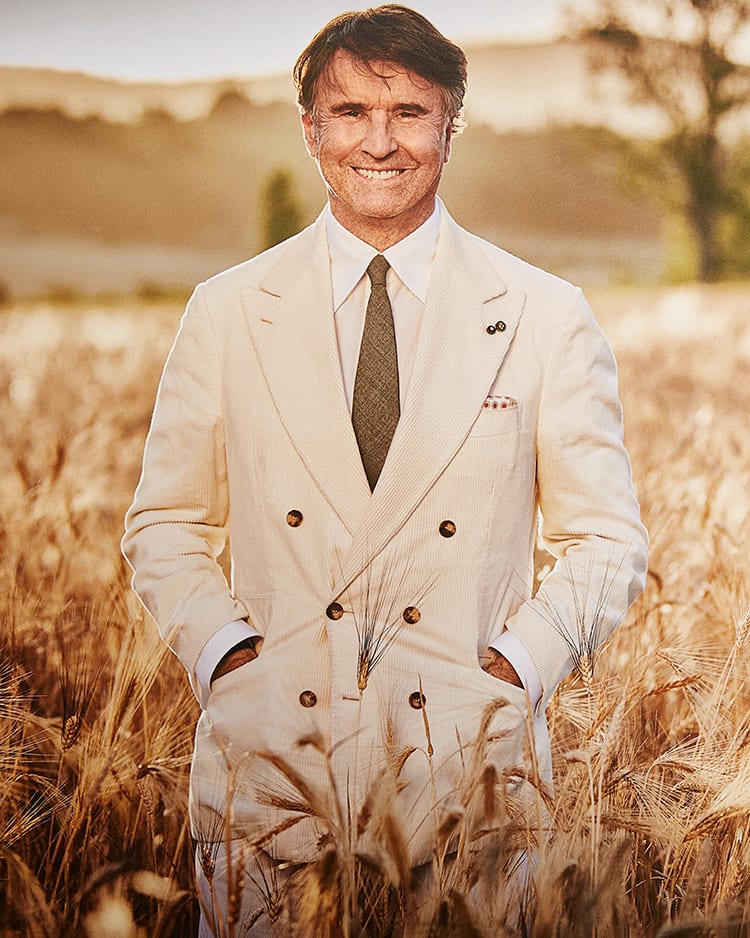
Brunello Cucinelli, born on September 3, 1953, in Castel Rigone, a small village near Perugia, Italy, is a renowned entrepreneur in the luxury fashion industry. He is the founder of the eponymous fashion brand Brunello Cucinelli, known for its high-quality cashmere products and for pioneering the concept of “humanistic capitalism.” Cucinelli’s journey from humble beginnings to becoming a global symbol of sustainable and ethical business practices is a testament to his vision and leadership. This article delves into his life, exploring his rise to fame, the values that drive his business, and his significant contributions to both the fashion industry and society at large.
Early Life and Influences
Brunello Cucinelli was born into a modest farming family in Castel Rigone. His early life was shaped by the values of hard work, simplicity, and respect for nature, which were deeply ingrained in him by his parents. Cucinelli’s father worked in a factory under harsh conditions, an experience that left a lasting impact on young Brunello. Witnessing his father’s struggles and the lack of dignity in his work environment, Cucinelli developed a strong desire to create a different kind of workplace—one that respected the humanity of its workers.
Cucinelli attended a technical school where he trained to become a surveyor. He later enrolled in an engineering program at the University of Perugia, but he found the academic environment uninspiring and soon dropped out. This decision marked a turning point in his life, as he began to focus on his true passion: entrepreneurship.
The Birth of a Brand: Founding Brunello Cucinelli S.p.A.
In 1978, at the age of 25, Brunello Cucinelli founded his company with a unique vision in mind. He wanted to create luxury garments that combined the highest quality materials with ethical production practices. Cucinelli’s initial idea was to produce brightly colored cashmere sweaters, a departure from the traditional muted tones associated with cashmere at the time. This innovative approach quickly gained attention and set his brand apart in the luxury fashion market.
Cucinelli’s business philosophy was rooted in the concept of “humanistic capitalism,” which emphasizes the importance of treating employees with respect and dignity. He believed that a company’s success should not only be measured by financial performance but also by its impact on the well-being of its workers and the broader community. This philosophy became the cornerstone of his business and played a significant role in the success of his brand.
Building the Solomeo Headquarters: A Model of Ethical Business
In the early 1980s, after marrying Federica Benda, Cucinelli moved to her hometown of Solomeo, a small village near Perugia. It was here that he began to realize his vision of creating a “cittadella aziendale” or “company town,” where his business could flourish in harmony with the local community. In 1985, Cucinelli purchased a dilapidated castle in Solomeo and transformed it into the headquarters of his company.
The restoration of the castle was just the beginning. Over the years, Cucinelli invested heavily in the revitalization of Solomeo, turning it into a thriving center for his business operations and a model of sustainable development. He restored historical buildings, created parks, and built facilities for the education and well-being of his employees, including a library, theater, and gym. This holistic approach to business management reflects Cucinelli’s belief that beauty, culture, and the environment are integral to a successful enterprise.
Expansion and Global Recognition
As the demand for Brunello Cucinelli’s products grew, so did the company. By the turn of the millennium, the brand had expanded its presence internationally, opening stores in major cities around the world, including New York, Paris, London, and Tokyo. Despite this rapid growth, Cucinelli remained committed to his principles of ethical production and sustainable business practices.
In 2012, Brunello Cucinelli took a significant step by listing his company on the Milan Stock Exchange. The IPO was a resounding success, and the company’s stock price quickly soared, reflecting investors’ confidence in the brand’s strong ethical foundation and growth potential. Cucinelli’s decision to go public was driven not just by financial considerations but also by a desire to share his vision of humanistic capitalism with a broader audience.
The success of the IPO provided Cucinelli with the resources to further expand his business and continue his philanthropic initiatives. In 2014, he launched the “Project for Beauty,” through the Brunello and Federica Cucinelli Foundation. This ambitious project involved the creation of three parks in the valley surrounding Solomeo, transforming abandoned industrial sites into green spaces for the cultivation of trees and orchards. This initiative underscores Cucinelli’s commitment to the environment and his belief in the importance of leaving a positive legacy for future generations.
Humanistic Capitalism: A New Model for Business
At the heart of Brunello Cucinelli’s success is his philosophy of humanistic capitalism. This approach challenges the traditional capitalist model by placing the well-being of employees, the community, and the environment at the center of business operations. Cucinelli’s vision is rooted in the belief that businesses have a moral responsibility to contribute to the common good and that profitability should not come at the expense of human dignity.
In practice, this philosophy is reflected in every aspect of Cucinelli’s business. Employees at the Solomeo headquarters work in a beautiful, culturally enriched environment that encourages creativity and personal growth. The company adheres to a strict ethical code in its production processes, ensuring fair wages and working conditions for all its workers, including those in its supply chain.
Cucinelli’s approach has garnered international recognition and admiration. He has been invited to speak at prestigious institutions and events around the world, where he shares his vision of a more humane and sustainable form of capitalism. His ideas have resonated with business leaders and policymakers alike, particularly in an era where corporate social responsibility is becoming increasingly important.
Awards and Honors
Brunello Cucinelli’s contributions to business and society have been widely recognized. In 2010, he was awarded the title of Cavaliere del Lavoro (Knight of Labor) by the President of Italy, Giorgio Napolitano. This prestigious honor is given to individuals who have made significant contributions to the Italian economy and society.
In addition to his knighthood, Cucinelli has received numerous other accolades. He was awarded the Global Economy Prize by the German government, an acknowledgment of his impact on the global economy and his role in promoting ethical business practices. He has also been honored with an honorary degree in Philosophy and Ethics from the University of Perugia, reflecting his deep commitment to the philosophical underpinnings of his business model.
Cucinelli’s influence extends beyond the business world. He is a passionate advocate for the preservation of cultural heritage and the promotion of education. His foundation supports a wide range of cultural and educational initiatives, including the restoration of historical sites and the funding of scholarships for young people in need.
Personal Life and Legacy
Despite his success, Brunello Cucinelli remains deeply connected to his roots. He is known for his modest lifestyle and his commitment to his family and community. Cucinelli and his wife, Federica, have two daughters, Camilla and Carolina, who are also involved in the family business. The Cucinelli family is known for their strong bond and shared values, which are reflected in the company’s operations.
Cucinelli is an avid reader and a passionate student of classical philosophy. He draws inspiration from the works of ancient philosophers such as Marcus Aurelius and Socrates, whose teachings influence his approach to business and life. Cucinelli believes in the importance of continuous learning and encourages his employees to engage in intellectual pursuits. The company headquarters in Solomeo includes a library that is open to all employees, fostering a culture of learning and personal development.
As Brunello Cucinelli continues to lead his company into the future, his legacy as a pioneer of humanistic capitalism is secure. He has shown that it is possible to build a successful global business without compromising on ethical principles and that businesses can play a vital role in creating a more just and sustainable world.
Conclusion: The Enduring Impact of Brunello Cucinelli
Brunello Cucinelli’s journey from a small village in Italy to the heights of global fashion is a story of vision, integrity, and unwavering commitment to human values. His brand is not just a symbol of luxury but also a beacon of ethical business practices in an industry often criticized for its exploitative practices.
Cucinelli’s philosophy of humanistic capitalism offers a compelling alternative to the traditional business model, demonstrating that profitability and social responsibility can go hand in hand. His work has inspired countless others in the business world to rethink their approach to leadership and corporate responsibility.
As Brunello Cucinelli continues to innovate and expand his influence, his impact on the fashion industry and the broader business community will continue to grow. His legacy is not just in the luxurious garments that bear his name but in the lives he has touched and the example he has set for future generations of entrepreneurs.


