
Introduction
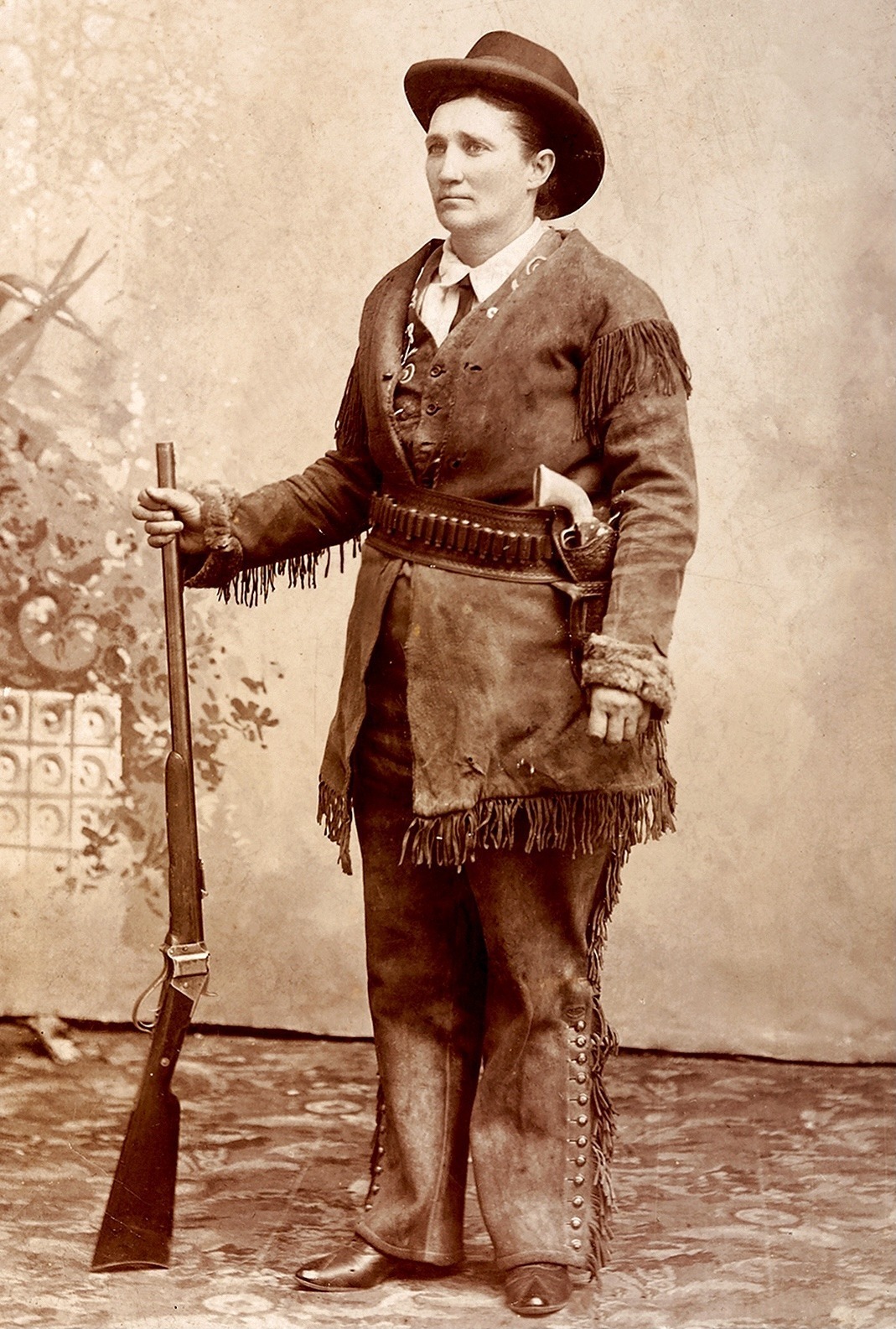
Calamity Jane, born Martha Jane Canary on May 1, 1852, is one of the most legendary figures of the American Wild West. Known for her rough-and-tumble lifestyle, Calamity Jane became a symbol of the untamed frontier, breaking the conventional roles assigned to women of her time. Her life was a mix of adventure, hardship, and myth, which contributed to her enduring fame. This article delves into the life of Calamity Jane, exploring her early years, the highlights of her adventurous life, her relationships, and the legacy she left behind.
Early Life: From Orphan to Frontierswoman
Martha Jane Canary was born in Princeton, Missouri, into a family of six children. Her early life was marked by tragedy and instability. In 1865, when she was just 13 years old, her family set out on a journey westward, hoping to settle in Virginia City, Montana. However, the journey was fraught with difficulty. Along the way, her mother, Charlotte, succumbed to pneumonia. Shortly after arriving in Salt Lake City, Utah, her father, Robert, also passed away in 1867.
At the age of 15, Martha found herself an orphan, responsible for her younger siblings. With little education and no formal training, she took on various jobs to support her family. These jobs included working as a dishwasher, cook, waitress, nurse, and even as a dance hall girl. In a society where women were expected to adhere to traditional roles, Martha Jane Canary defied the norms, choosing a life of independence and adventure.
The Birth of Calamity Jane
Martha’s transformation into the legendary Calamity Jane began in the early 1870s. She became known for her skill with a gun and her ability to hold her own in the rough environment of the frontier. According to popular legend, she earned the nickname “Calamity Jane” during a conflict with Native Americans in Wyoming around 1872 or 1873. While there are many versions of how she acquired the name, the most commonly accepted story is that she saved a captain named Egan during an attack, and in gratitude, he declared that she was “Calamity Jane.”
Despite the romanticized tales, Calamity Jane’s life was far from glamorous. She lived a life on the margins, often working as a scout for the U.S. Army, and was known for her heavy drinking and volatile temper. Her reputation as a hard-living, no-nonsense woman who could outshoot and outdrink most men earned her both admiration and notoriety in the Wild West.
The Wild West and Calamity Jane’s Adventures
In 1876, Calamity Jane arrived in the Black Hills of South Dakota, where she became a part of the bustling gold rush town of Deadwood. It was here that she met some of the most famous figures of the Wild West, including Wild Bill Hickok, a legendary lawman and gunslinger. Their relationship has been the subject of much speculation and myth. Some accounts suggest that they were lovers, while others claim that Hickok had little regard for her. After Hickok’s death in 1876, Calamity Jane claimed that they had been married and that he was the father of her daughter, Jean. However, there is no concrete evidence to support these claims.
During her time in Deadwood, Calamity Jane continued to live a life that was a mixture of fact and fiction. She worked as a cook and laundress, but she was also known for her participation in saloon brawls and her generosity towards those in need. Her reputation as a fearless woman who defied societal norms only grew as stories of her exploits spread.
Calamity Jane in Popular Culture
As the frontier era began to fade, the legend of Calamity Jane continued to grow. She became a part of the Wild West shows that were popular in the late 19th and early 20th centuries, performing alongside other famous figures like Buffalo Bill Cody. In these shows, Calamity Jane would regale audiences with tales of her adventures, often exaggerating her exploits for dramatic effect. Her rough demeanor and colorful language made her a popular attraction, although her drinking and erratic behavior often led to her being fired from these performances.
Calamity Jane’s story became further enshrined in American folklore through dime novels and later, through Hollywood films and television shows. These portrayals often depicted her as a larger-than-life character, a blend of heroism and lawlessness, embodying the spirit of the Wild West. However, these fictionalized accounts often glossed over the hardships she endured and the complexities of her life.
Later Life and Legacy
In the latter part of her life, Calamity Jane’s health began to deteriorate due to her chronic alcoholism and the harsh conditions she had endured throughout her life. In 1881, she purchased a ranch in Miles City, Montana, along the Yellowstone River, where she briefly settled down. She married a man named Clinton Burke and gave birth to a daughter named Jane in 1887. However, her marriage was troubled, and she eventually left Burke.
Despite her fame, Calamity Jane never found financial security. She spent her final years in poverty, often relying on the generosity of others. In 1901, she participated in the Pan-American Exposition, but by this time, her health was in severe decline. She died on August 1, 1903, in a hotel room in Terry, South Dakota, at the age of 51. True to her larger-than-life persona, she was buried next to Wild Bill Hickok in Deadwood’s Mount Moriah Cemetery, a fitting resting place for a woman whose life had been so closely intertwined with the myths of the Wild West.
Historical Context and Impact
Calamity Jane’s life was emblematic of the challenges and opportunities faced by women on the American frontier. In a time and place where women were expected to be wives, mothers, and homemakers, Calamity Jane carved out a different path for herself. Her story highlights the fluidity of identity on the frontier, where people often reinvented themselves in response to the harsh and rapidly changing environment.
The frontier was a place of both immense possibility and great peril, where the social conventions of the East held less sway. For many women, the West offered a chance to escape the strictures of Victorian society and to redefine their roles. Calamity Jane’s choice to live as she did—eschewing traditional female roles, dressing in men’s clothing, and engaging in traditionally male activities like shooting and scouting—was both a personal and a political act. It challenged the norms of her time and expanded the possibilities for what women could be and do.
Her legacy is a complex one. On one hand, she is celebrated as a symbol of the independent, adventurous spirit of the American West. On the other hand, her life also reflects the harsh realities faced by many women who lived on the margins of society. Her struggles with poverty, alcoholism, and social acceptance underscore the difficulties that came with defying societal expectations.
The Myth vs. The Reality
One of the most intriguing aspects of Calamity Jane’s legacy is the tension between the myth and the reality of her life. Much of what we know about her comes from her own accounts, which were often embellished, as well as from the sensationalist stories that were written about her during and after her lifetime. This has made it difficult to separate fact from fiction.
The image of Calamity Jane that has been passed down through popular culture is one of a wild, uncontrollable woman who lived life on her own terms. While there is some truth to this portrayal, it also oversimplifies the complexity of her character. Calamity Jane was not just a rowdy frontierswoman; she was also someone who cared deeply for others, often using what little she had to help those in need. She was a survivor who adapted to the harsh realities of frontier life, but she was also a victim of those same circumstances.
Conclusion
Calamity Jane remains one of the most fascinating figures of the American West. Her life was a testament to the possibilities and the perils of frontier life, as well as to the ways in which women could defy the expectations of their time. While the myths surrounding her may sometimes overshadow the reality, they also speak to the enduring power of her story. As both a historical figure and a cultural icon, Calamity Jane embodies the rugged individualism and resilience that have come to define the American frontier.
Her life, filled with both triumph and tragedy, continues to captivate the imagination, reminding us of the complexities and contradictions of the human experience. Whether as a symbol of the Wild West or as a real woman who lived a difficult life, Calamity Jane’s legacy is one that endures, offering a window into a time and place where the lines between myth and reality were often blurred.


