
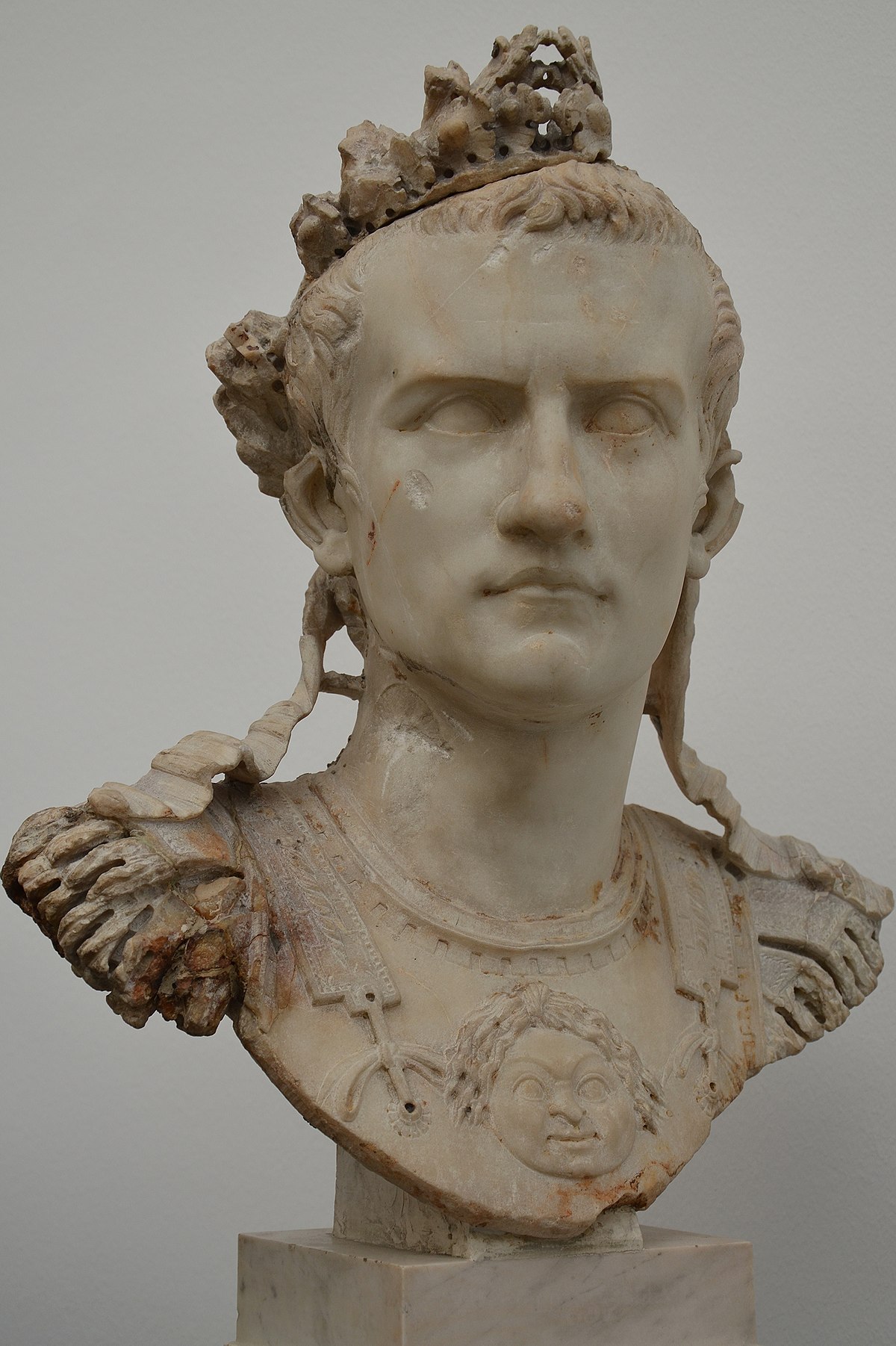
Caligula, born Gaius Julius Caesar Germanicus, was a Roman Emperor whose brief but chaotic reign has captured the imagination of historians and storytellers for centuries. Born on August 31, 12 CE, in Antium (modern-day Anzio, Italy), Caligula ascended to power in 37 CE after the death of his great-uncle and adoptive grandfather, Emperor Tiberius. His rule, which lasted until 41 CE, is often remembered for its extraordinary cruelty, erratic behavior, and extravagant excesses, making him one of the most infamous figures in Roman history. This article delves into Caligula’s life, exploring the key events and actions that defined his rule and examining the historical context that shaped his notorious reputation.
Early Life and Rise to Power
Caligula was born into a prominent Roman family. His father, Germanicus, was a highly respected general, and his mother, Agrippina the Elder, was a member of the Julio-Claudian dynasty. His childhood was marked by tragedy and intrigue, as political machinations led to the downfall and deaths of several of his close family members. Despite these early challenges, Caligula was brought up amidst the grandeur of the Roman imperial court, witnessing firsthand the complexities of power and politics.
Caligula’s nickname, which would become his moniker as emperor, means “little boot” in Latin—a name given to him by soldiers in his father’s army who were amused by the miniature military boots he wore as a child. As he grew up, Caligula’s proximity to the military and his father’s popularity helped shape his public image and endear him to the Roman legions, a factor that played a crucial role in his eventual rise to power.
In 37 CE, the Roman Empire was in a state of relief following the death of Emperor Tiberius, whose reign had been marked by paranoia and repression. Caligula, then 25 years old, was seen as a breath of fresh air, and his accession was initially welcomed with enthusiasm by the Roman people and Senate. His early actions as emperor suggested a commitment to restoring traditional Roman values and institutions. He granted amnesties, reduced taxes, and reinstated popular public games and events, actions that earned him the favor of both the Senate and the masses.
The Sudden Shift: From Benevolence to Madness
Caligula’s initial popularity, however, was short-lived. Just seven months into his reign, Caligula fell gravely ill. The nature of his illness remains a mystery, with some historical sources suggesting it might have been a form of epilepsy or encephalitis. Whatever the cause, Caligula emerged from this period of illness dramatically changed, displaying signs of what many contemporary and later historians describe as madness.
Following his recovery, Caligula’s behavior became increasingly erratic and despotic. He began to exhibit extreme cruelty, executing those who he perceived as threats on the flimsiest of pretexts. His paranoia led him to order the execution of even those within his close circle, sometimes multiple times, forgetting he had already done so. The Emperor’s descent into madness was characterized by bizarre acts, such as declaring himself a living god and demanding worship, including erecting statues of himself in temples and ordering people to treat him as an incarnation of Roman deities like Jupiter and Venus.
The sources describe Caligula’s behavior as becoming more irrational over time. He would dress in women’s clothing, adorned with bracelets and other jewelry, and he frequently gave grandiose titles to himself, such as “Father of the Army” and “Best and Greatest of the Caesars.” These actions baffled and alarmed the Roman Senate and the people, who had initially seen him as a promising leader. His decisions often seemed arbitrary and were marked by a blend of sadism and megalomania, creating a climate of fear and instability throughout the empire.
Caligula’s Infamous Acts and Policies
Caligula’s reign was marked by numerous policies and acts that contributed to his reputation as one of Rome’s most tyrannical rulers. He embarked on massive construction projects, including the building of luxurious palaces and extravagant public works that drained the imperial treasury. To fund these projects, he resorted to imposing heavy taxes, confiscating properties, and even forcing wealthy citizens to bequeath their estates to him under threat of death.
One of the most infamous stories about Caligula involves his plan to make his favorite horse, Incitatus, a consul—one of the highest political offices in Rome. While some historians argue that this may have been intended as a joke or a way to mock the Senate’s perceived incompetence, it is also seen as a testament to his contempt for Roman political traditions and institutions. This act, whether genuine or satirical, underscored the emperor’s disregard for the norms and values of Roman governance.
Caligula’s foreign policy was equally erratic. He launched a campaign against the Germanic tribes that resulted in little military gain but heavy costs in men and resources. His decision to march his army to the English Channel and order them to collect seashells as “spoils of the sea” further exemplified his unpredictable and whimsical nature. These actions, coupled with his arbitrary executions and irrational decrees, fostered a sense of disillusionment and fear among the Roman elite and the general populace.
His relationship with the Roman Senate deteriorated rapidly as he increasingly sidelined and humiliated its members. He is reported to have often mocked and belittled senators, forcing them to run beside his chariot in togas or perform humiliating acts. This antagonistic stance towards the Senate contributed to the growing resentment among Rome’s ruling class, which ultimately played a part in his downfall.
The Decline and Fall of Caligula
The tipping point of Caligula’s reign came with the death of his sister, Drusilla, in 38 CE, whom he reportedly adored and possibly had an incestuous relationship with. Her death further unhinged the emperor, pushing him deeper into paranoia and tyranny. He began to insist on deification, demanding that he be worshipped as a living god and establishing a priesthood dedicated to his cult. These actions, combined with his increasing brutality and erratic behavior, led to widespread fear and anger.
The Roman historian Suetonius and other ancient sources suggest that Caligula’s behavior grew increasingly unhinged, to the point where he declared war on the god Neptune and ordered his soldiers to whip the waves of the sea. While some of these stories may have been exaggerated or colored by the biases of later historians, they reflect the perception of Caligula’s madness and the chaos of his rule.
By 41 CE, Caligula’s enemies had reached their breaking point. His increasing madness, combined with his cruelty and disregard for Roman traditions, had alienated nearly everyone in the Roman political and military establishment. On January 24, 41 CE, a group of conspirators led by Cassius Chaerea, a member of the Praetorian Guard, assassinated Caligula. The attack took place as Caligula was leaving a theater during the Palatine Games. He was stabbed thirty times, and his wife, Caesonia, and their young daughter, Julia Drusilla, were also killed in the purge that followed.
Legacy of Caligula: Tyranny, Madness, and Myth
Caligula’s assassination did not immediately restore stability to the Roman Empire. The Praetorian Guard, responsible for his death, initially sought to restore the Republic, but this plan was quickly abandoned. Instead, Caligula’s uncle, Claudius, was declared emperor, marking the continuation of the Julio-Claudian dynasty.
Caligula’s reign, though brief, left a lasting mark on Roman history and culture. He is often cited as a quintessential example of the corrupting influence of absolute power and the dangers of unrestrained autocracy. His actions and policies serve as a cautionary tale about the limits of imperial authority and the potential for abuse when power is concentrated in the hands of a single individual.
Historically, Caligula’s reputation has been shaped by the writings of historians such as Suetonius, Tacitus, and Cassius Dio, who documented his reign in a manner that underscored his cruelty, madness, and excesses. While some modern scholars argue that these accounts may have been exaggerated or biased, possibly reflecting the political agendas of the authors or their patrons, the prevailing image of Caligula remains that of a mad tyrant whose rule exemplified the dangers of unchecked power.
Caligula’s life and reign have also been the subject of numerous artistic and literary interpretations, from ancient Roman satire to contemporary films and novels. His character has been portrayed variously as a tragic figure undone by his own hubris, a madman driven by insatiable lust for power, and a symbol of the broader excesses of imperial Rome.
Conclusion
Caligula’s life is a stark reminder of the fragility of power and the ways in which it can be abused. His rule serves as a critical case study in the dynamics of tyranny, the psychological effects of absolute authority, and the importance of checks and balances in governance. While the exact details of his madness and the true extent of his excesses may never be fully known, Caligula’s story remains a powerful narrative about the perils of absolute power and the potential for corruption that lies within it.
Despite the terror and chaos that defined his reign, Caligula’s impact on Roman history is undeniable. His brief time as emperor exposed the weaknesses of the imperial system and set the stage for subsequent rulers who would grapple with the legacy of his rule. Today, as we reflect on the lessons of history, Caligula’s story serves as both a warning and a fascinating exploration of the human condition and the complexities of leadership and authority.


