
Introduction
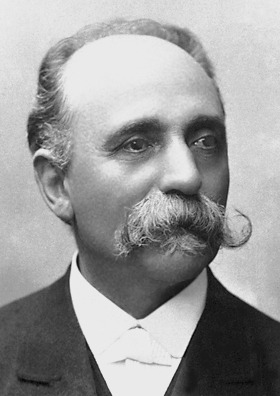
Camillo Golgi, born on July 7, 1843, in Corteno, a small village in the Val Camonica region of Brescia, Italy, is a towering figure in the history of medicine and biology. A Nobel Prize-winning physician and scientist, Golgi’s groundbreaking work laid the foundation for modern neuroscience and cellular biology. His discoveries, particularly in the field of neuroanatomy, have had a lasting impact on medical science. This article explores the life of Camillo Golgi, from his early years to his rise to international fame, and highlights the key achievements that define his remarkable career.
Early Life and Education
Camillo Golgi was born into a family with strong medical ties; his father was a practicing physician who greatly influenced Golgi’s decision to pursue a career in medicine. Golgi enrolled at the University of Pavia, one of Italy’s oldest and most prestigious universities, where he completed his medical degree in 1865. His thesis, titled “On the Etiology of Mental Diseases,” was guided by Cesare Lombroso, a controversial figure known as the father of criminology. Lombroso’s influence introduced Golgi to the complex world of neuroanatomy and the study of the human brain, setting the stage for his future contributions to science.
The Journey into Neuroanatomy
After graduating, Golgi continued to work at the University of Pavia, specifically at the San Matteo Hospital. His early career was characterized by a deep interest in the nervous system, which he pursued with fervor despite limited resources. In 1872, Golgi accepted the position of Chief Medical Officer at a hospital for chronic diseases in Abbiategrasso, a small town near Milan. It was here, in a makeshift laboratory set up in the hospital’s kitchen, that Golgi made one of his most significant discoveries.
Using his rudimentary laboratory, Golgi developed a revolutionary technique for staining nerve cells, which became known as the “black reaction” or “Golgi’s method.” This method, which involved using silver nitrate to stain neurons, allowed scientists to view the intricate structures of nerve cells for the first time. The clarity and detail provided by Golgi’s method were unparalleled, enabling researchers to study the nervous system with a precision that was previously impossible.
The Black Reaction: A Turning Point in Neuroscience
Golgi’s method was a game-changer in the field of neuroscience. Before his discovery, the nervous system was largely a mystery, with scientists struggling to understand its complex structure. The black reaction provided a clear view of neurons and their networks, revealing the existence of what we now know as the Golgi apparatus—a critical component of the cell involved in protein and lipid processing.
The significance of the black reaction cannot be overstated. It opened up new avenues of research, allowing scientists to map the nervous system in unprecedented detail. The method was so effective that it is still used in some forms of neuroanatomical research today, more than a century after its development. This innovation laid the groundwork for modern neuroscience, and its impact on the field continues to be felt.
Academic Success and International Recognition
Golgi’s groundbreaking work did not go unnoticed. In 1881, he returned to the University of Pavia as a professor of histology, and later, as a professor of general pathology. His academic career flourished, and he became a respected teacher and mentor, opening his laboratory to students and researchers eager to explore the frontiers of neuroscience. Golgi’s lab became a hub of scientific discovery, attracting talent from across Italy and beyond.
However, it wasn’t until 1885, more than a decade after developing the black reaction, that Golgi’s work began to gain international recognition. The turning point came when Rudolf Albert von Kölliker, a renowned German histologist, presented Golgi’s findings to the Physical-Medical Society of Würzburg. Kölliker’s endorsement helped to spread Golgi’s method throughout Europe, and soon, scientists across the continent were using the black reaction to study the nervous system.
Golgi’s reputation as a leading figure in neuroanatomy was cemented by these developments. In 1906, at the age of 63, he was awarded the Nobel Prize in Physiology or Medicine, which he shared with the Spanish neuroscientist Santiago Ramón y Cajal. The award recognized their contributions to our understanding of the nervous system, with Golgi being honored specifically for his pioneering work on the structure of nerve cells.
The Golgi Apparatus: A Landmark Discovery
One of Golgi’s most significant contributions to cell biology was the discovery of the Golgi apparatus, sometimes referred to as the Golgi complex or Golgi body. This cellular structure, which Golgi identified while studying neurons, is now known to be involved in the modification, sorting, and packaging of proteins and lipids for secretion or use within the cell.
The discovery of the Golgi apparatus was a monumental achievement in the field of cellular biology. At the time, the existence of such a structure was met with skepticism by some in the scientific community, but Golgi’s meticulous research eventually won out. The Golgi apparatus is now recognized as a fundamental component of eukaryotic cells, essential for their proper functioning. The importance of this discovery was fully appreciated only later, with the advent of electron microscopy, which confirmed Golgi’s findings and expanded our understanding of cellular processes.
Contributions to Malaria Research
In addition to his work in neuroanatomy and cell biology, Golgi made significant contributions to the study of malaria, a disease that was rampant in Italy during his lifetime. Through his research, Golgi identified the life cycle of the Plasmodium parasite, which causes malaria, and established the timing of the parasite’s development in human red blood cells. This discovery led to what is known as the “Golgi cycle,” a critical insight that allowed for more effective treatment of the disease with quinine.
Golgi’s work on malaria had a direct and lasting impact on public health. By understanding the life cycle of the malaria parasite, doctors could time the administration of quinine to coincide with the parasite’s most vulnerable stages, improving the effectiveness of the treatment. Golgi’s research thus played a crucial role in the fight against malaria, saving countless lives and advancing the field of parasitology.
Political and Social Engagement
Camillo Golgi was not only a scientist but also a socially engaged citizen. Throughout his life, he took on various roles in public service, including serving as an alderman for health in the city of Pavia. His contributions to public health extended beyond his research, as he worked to improve sanitation and healthcare in his community.
In 1900, Golgi was appointed a Senator of the Kingdom of Italy, a role in which he continued to advocate for scientific research and public health initiatives. His involvement in politics demonstrated his commitment to using his knowledge and influence to benefit society at large. Golgi’s ability to balance his scientific career with public service is a testament to his dedication to improving the human condition in every way possible.
The Nobel Prize and Legacy
Camillo Golgi’s receipt of the Nobel Prize in 1906 marked the pinnacle of his career. The award was a recognition of his monumental contributions to science, particularly in the fields of neuroanatomy and cell biology. Sharing the prize with Santiago Ramón y Cajal was particularly significant, as it highlighted the complementary nature of their work—Golgi’s discoveries of neural structures and Cajal’s development of the neuron doctrine, which together laid the foundation for modern neuroscience.
Golgi’s legacy extends far beyond his Nobel Prize. His discoveries, particularly the Golgi apparatus and the black reaction, continue to be fundamental to our understanding of cell biology and neuroscience. His work has inspired generations of scientists and remains a cornerstone of modern biological research.
Later Years and Death
Even in his later years, Camillo Golgi remained active in research and public service. During World War I, he directed the Military Hospital in Pavia, where he focused on the rehabilitation of soldiers with nerve injuries. His dedication to helping others extended to his scientific work, which he continued to publish until 1923.
Golgi passed away on January 21, 1926, at the age of 82, in Pavia, where he had spent much of his life. His death marked the end of an era, but his influence on science and medicine lives on. Today, the Golgi apparatus, the black reaction, and the Golgi cycle are all integral concepts in biology and medicine, ensuring that Golgi’s name will be remembered for generations to come.
Historical Context and Impact
Camillo Golgi’s work must be understood within the broader context of the scientific advances of the 19th and early 20th centuries. His discoveries came at a time when the fields of histology and neuroanatomy were still in their infancy, and his contributions helped to establish these disciplines as integral parts of medical science.
Golgi’s approach to research was characterized by meticulous attention to detail and a relentless pursuit of knowledge. His ability to innovate, even with limited resources, is a testament to his scientific genius. The methods and discoveries that emerged from his work laid the groundwork for countless advancements in neuroscience, cell biology, and medicine.
Golgi’s legacy is not only scientific but also educational. As a professor and mentor, he trained and inspired many students who would go on to make significant contributions to science themselves. His laboratory at the University of Pavia became a center of excellence, fostering a spirit of inquiry and discovery that continues to influence the scientific community.
Conclusion
Camillo Golgi stands as a giant in the history of science, a man whose discoveries transformed our understanding of the nervous system and cellular biology. From the black reaction to the Golgi apparatus, his work has had a profound and lasting impact on medical science. Golgi’s legacy is one of innovation, dedication, and a deep commitment to advancing human knowledge.
As we reflect on Golgi’s life and achievements, we are reminded of the power of curiosity and perseverance in the pursuit of scientific discovery. His work continues to inspire researchers around the world, proving that the quest for knowledge is a never-ending journey. Camillo Golgi’s contributions have shaped the course of modern medicine, ensuring that his name will forever be associated with the highest standards of scientific excellence.


