
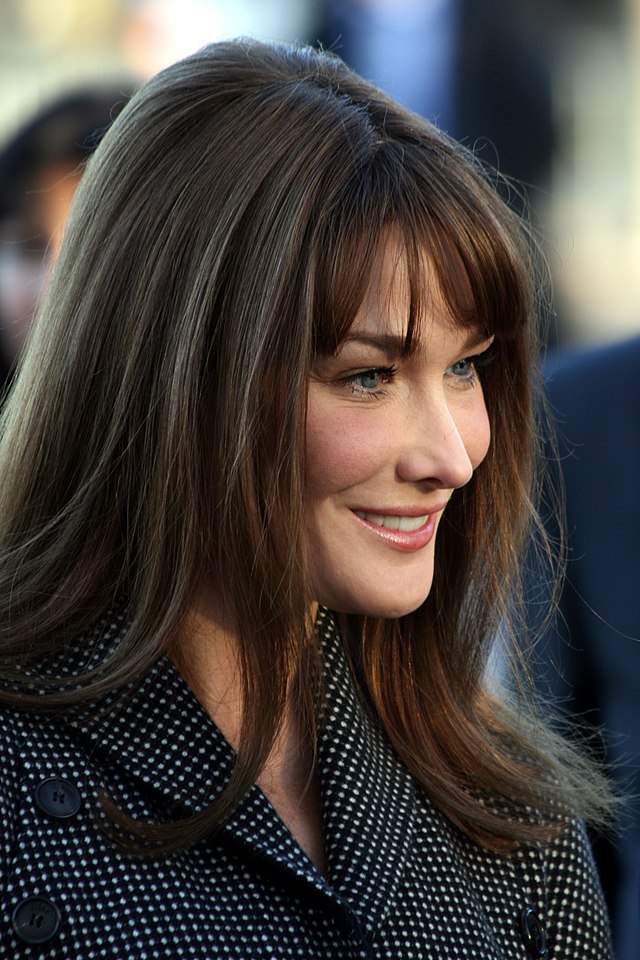
Carla Bruni, a name synonymous with elegance, beauty, and artistic talent, has been a prominent figure in both the fashion world and the music industry for decades. Born Carla Gilberta Bruni Tedeschi on December 23, 1967, in Turin, Italy, she has risen to international fame not only as a supermodel but also as a singer-songwriter, and more recently, as the wife of former French President Nicolas Sarkozy. This article delves into her life, exploring the nuances of her career, her personal life, and her lasting influence on global culture.
Early Life and Family Background
Carla Bruni was born into a wealthy and influential family in Turin, Italy. Her father, Alberto Bruni Tedeschi, was a prominent industrialist who founded the CEAT tire company, the second-largest tire manufacturer in Italy after Pirelli. Her mother, Marisa Borini, was a concert pianist. Carla’s upbringing was marked by privilege and a strong cultural influence, which would later shape her career and public persona.
The Bruni family moved to France when Carla was a child, following the sale of the family business in the 1970s. The move was partly motivated by her father’s desire to pursue a career in music composition, and he eventually became the artistic director of the Teatro Regio in Turin. Growing up in Paris, Carla was exposed to a rich cultural milieu, attending private schools in both Switzerland and France. Despite her privileged background, Carla was determined to forge her own path, leading her to pursue a career in modeling.
The Modeling Career: A Rise to Stardom
Carla Bruni’s entry into the modeling world was nothing short of meteoric. She initially studied architecture at the Sorbonne but soon realized that her true calling lay elsewhere. Dissatisfied with the confines of academia, she left her studies to explore the world of fashion. Her striking looks and innate sense of style quickly caught the attention of a Parisian modeling agency, which signed her up for a campaign for a popular jeans brand.
This campaign was a turning point in her career, catapulting her into the spotlight. The public was captivated by her ethereal beauty, and soon, Carla Bruni became one of the most sought-after models in the world. Throughout the 1990s, she graced the covers of countless fashion magazines and walked the runways for some of the most prestigious fashion houses, including Chanel, Dior, and Yves Saint Laurent.
Carla’s modeling career was distinguished not just by her beauty but also by her professionalism and the respect she garnered in an industry often criticized for its superficiality. Unlike many of her contemporaries, she avoided scandals and maintained a reputation for being both intelligent and culturally astute. Her ability to navigate the fashion world with grace and sophistication made her a favorite of photographers and designers alike.
Transition to Music: A New Chapter
By the early 2000s, Carla Bruni had already made her mark on the fashion industry. However, she felt the need to express herself in new ways, leading to her transition into music. Music had always been a significant part of her life, thanks to her family’s artistic background. Carla was an accomplished guitarist and had been composing songs for years. In 2002, she decided to share her music with the world, releasing her debut album, “Quelqu’un m’a dit” (“Someone Told Me”).
The album was a critical and commercial success, especially in France, where it sold over two million copies. Her music, characterized by its intimate, folk-inspired sound, resonated with audiences. The title track, “Quelqu’un m’a dit,” became a hit, and Carla Bruni was soon recognized not just as a former model but as a serious artist in her own right. Her transition from the catwalk to the recording studio was seamless, and she quickly established herself as a talented singer-songwriter.
Following the success of her debut album, Carla Bruni continued to pursue her music career, releasing several more albums over the years. Her sophomore effort, “No Promises” (2007), featured English-language songs set to the poetry of authors such as W. B. Yeats and Emily Dickinson. This album further showcased her literary inclinations and her ability to blend poetry with music.
In 2008, she released “Comme si de rien n’était” (“As If Nothing Had Happened”), an album that reflected her growing confidence as a songwriter. The album included original songs as well as covers of classics by Bob Dylan and Francesco Guccini, highlighting her eclectic musical tastes. The release of this album coincided with a major turning point in her personal life: her marriage to Nicolas Sarkozy.
Personal Life: Love, Marriage, and Motherhood
Carla Bruni’s personal life has often been the subject of intense media scrutiny, particularly after she began dating Nicolas Sarkozy, who was then the President of France. The couple’s relationship became public in late 2007, and their whirlwind romance quickly became a favorite topic of the tabloids. On February 2, 2008, just a few months after they began dating, Carla Bruni and Nicolas Sarkozy were married in a private ceremony at the Élysée Palace.
The marriage brought Carla Bruni even more into the public eye, as she took on the role of France’s First Lady. Despite the challenges of living under constant media attention, Carla adapted to her new role with grace and poise. She used her platform to advocate for various charitable causes, including efforts to combat HIV/AIDS and promote education in developing countries.
In October 2011, Carla Bruni gave birth to her daughter, Giulia, making headlines as the first sitting French president’s wife to give birth in modern history. Carla also has a son, Aurélien, from a previous relationship, and Sarkozy has three sons from his previous marriages. Balancing her duties as a mother with her public responsibilities was undoubtedly challenging, but Carla managed to do so while maintaining her artistic pursuits.
Musical Evolution and Continued Success
Despite the demands of her role as First Lady, Carla Bruni never abandoned her music career. In 2013, she released “Little French Songs,” an album that reflected her love for French chanson and showcased her growth as a musician. The album received positive reviews and reaffirmed her status as a respected singer-songwriter.
In 2017, Carla Bruni released “French Touch,” an album of cover songs that included her interpretations of classics like “Enjoy the Silence” by Depeche Mode and “The Winner Takes It All” by ABBA. The album was well-received, with critics praising her ability to bring a fresh perspective to well-known songs. Her unique voice and emotive performances continued to captivate audiences around the world.
Carla Bruni’s most recent album, “Carla Bruni,” was released in 2020. This self-titled album marked a return to her musical roots, featuring a mix of original songs and covers. Notably, it included a song in Italian for the first time, a nod to her heritage. The album was a critical success, further cementing her place in the music industry.
Historical Context and Cultural Impact
Carla Bruni’s life and career must be viewed within the broader context of the late 20th and early 21st centuries, a period marked by significant social and cultural changes. As a model in the 1990s, Carla was part of the “supermodel” era, a time when models like Naomi Campbell, Cindy Crawford, and Claudia Schiffer became global celebrities. However, Carla’s trajectory was unique in that she managed to transition from the world of fashion to music, a feat that few of her contemporaries have achieved.
Her marriage to Nicolas Sarkozy added another layer to her public persona, transforming her into a political figure as well as a cultural icon. As France’s First Lady, Carla Bruni was often compared to other famous first ladies, such as Jacqueline Kennedy and Michelle Obama. However, she carved out her own identity, using her position to support causes close to her heart while continuing to pursue her artistic passions.
Carla Bruni’s influence extends beyond her music and modeling. She is often seen as a symbol of the modern woman—someone who is not afraid to reinvent herself and take on new challenges. Her ability to navigate different worlds—fashion, music, and politics—has made her a role model for many, and her legacy is one of resilience, creativity, and grace.
Conclusion
Carla Bruni’s life is a testament to the power of reinvention and the pursuit of one’s passions. From her early days as a supermodel to her successful career as a singer-songwriter and her role as France’s First Lady, Carla has consistently demonstrated a commitment to excellence and a refusal to be confined by expectations.
Her journey is one of continuous evolution, and as she continues to create and inspire, Carla Bruni remains a significant figure in the worlds of fashion, music, and public life. Her story is not just one of personal achievement but also of the broader cultural shifts that have shaped the late 20th and early 21st centuries.
As she continues to explore new avenues in her career, one thing is certain: Carla Bruni’s impact on global culture will be felt for many years to come.


