
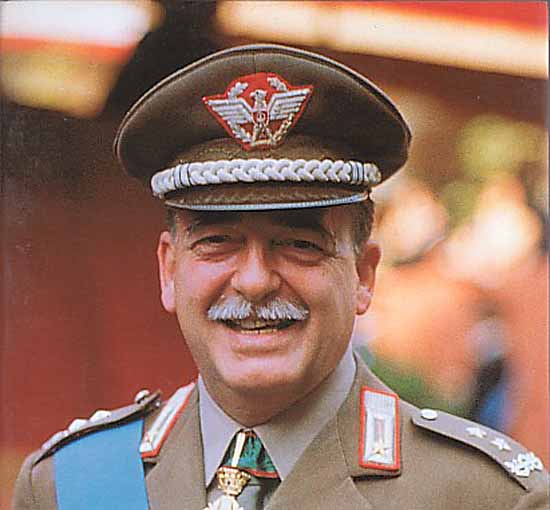
Carlo Alberto Dalla Chiesa, born on September 27, 1920, in Saluzzo, Italy, was a highly respected general in the Carabinieri, the national gendarmerie of Italy. His name is synonymous with the fight against terrorism and organized crime, particularly the mafia, during one of the most turbulent periods in modern Italian history. Dalla Chiesa’s life was marked by a deep commitment to justice, which ultimately cost him his life. This article delves into the age, fame, and life highlights of Carlo Alberto Dalla Chiesa, offering detailed insights and explanations while exploring the nuances and historical context that defined his remarkable journey.
Early Life and Military Career
Carlo Alberto Dalla Chiesa was born into a family with a strong military tradition. His father, Romano Dalla Chiesa, was a high-ranking officer in the Carabinieri, and this lineage undoubtedly influenced Carlo Alberto’s career choice. Despite not attending the prestigious Carabinieri Academy, Dalla Chiesa began his military career as a commissioned officer during World War II.
In 1943, as a young officer, Dalla Chiesa found himself in a pivotal role during a critical moment in Italian history. He was stationed in San Benedetto del Tronto when Italy capitulated to the Allied forces. Choosing to side with the Italian resistance movement, Dalla Chiesa joined the partisans fighting against the Nazi occupation, a decision that showcased his early commitment to justice and his country.
After the war, Dalla Chiesa married Doretta Fabbo, with whom he had three children: Nando, Rita, and Simona. His son Nando would later become a prominent politician, and his daughter Rita gained fame as a television presenter. Dalla Chiesa’s early post-war years were spent fighting banditry in southern Italy, and by 1949, he had requested to be transferred to Sicily—a decision that would set the course for much of his career.
Fighting the Mafia in Sicily
In 1949, Dalla Chiesa was sent to Corleone, Sicily, a place that would later become infamous as the stronghold of the Mafia. At that time, the Mafia was consolidating its power in the region, and the separatist movement was still a force to be reckoned with. Dalla Chiesa was tasked with investigating a series of murders, including the high-profile assassination of socialist trade unionist Placido Rizzotto. His investigation led him to identify Luciano Liggio, a notorious Mafia boss, as the culprit. This early success earned him a Silver Medal of Military Valor, a testament to his bravery and dedication.
Dalla Chiesa’s time in Sicily laid the groundwork for his lifelong battle against organized crime. His work there was not only about bringing criminals to justice but also about understanding the deep connections between the Mafia and local politics—a theme that would recur throughout his career.
The 1960s: A Decade of Challenges
In the 1960s, Dalla Chiesa’s career took him to various parts of Italy. After a stint in Florence and Como, he was transferred to Rome in 1963 with the rank of lieutenant colonel. However, it was his transfer to Turin that would prove to be enigmatic and significant. This move, ordered by General Giovanni De Lorenzo, was later revealed to be connected to “Piano Solo,” a secret plan for a potential coup d’état aimed at preventing the formation of Italy’s first center-left government. Although Dalla Chiesa was not directly involved in the political machinations, this period highlighted the complex and often dangerous intersections between the military, politics, and law enforcement in Italy.
In 1966, Dalla Chiesa returned to Sicily, this time as a colonel in command of the Palermo Carabinieri Legion. His return coincided with the exit of De Lorenzo from the Carabinieri, allowing Dalla Chiesa to focus on his primary mission: combating the Mafia. During this period, he achieved significant successes, including the arrests of notorious criminals like Gerlando Alberti and Frank Coppola. His efforts in Sicily were recognized with a Bronze Medal for Civil Valor for his leadership during the aftermath of the devastating 1968 Belice earthquake.
The Fight Against Terrorism
The 1970s brought new challenges for Dalla Chiesa, as Italy faced the growing threat of terrorism from groups like the Red Brigades. Promoted to brigadier general in 1973, Dalla Chiesa was assigned to lead anti-terrorism efforts in northern Italy. He established a special anti-terrorism unit based in Turin, which became instrumental in the fight against the Red Brigades.
In 1974, Dalla Chiesa’s unit achieved a major victory by capturing Renato Curcio and Alberto Franceschini, two of the top leaders of the Red Brigades. This success was made possible by the infiltration of Silvano Girotto, also known as “Frate Mitra,” into the organization. Dalla Chiesa’s strategic brilliance and unyielding determination were crucial in this victory, and it marked the beginning of his reputation as Italy’s foremost anti-terrorism expert.
Recognizing his effectiveness, the Italian government granted Dalla Chiesa special powers and appointed him as the Coordinator of Police Forces and Intelligence Agencies for combating terrorism. In this role, he played a pivotal part in the investigation into the kidnapping and murder of former Prime Minister Aldo Moro by the Red Brigades in 1978. Dalla Chiesa’s efforts led to the arrest of many of the perpetrators and their collaborators, and he was instrumental in formalizing the concept of “pentitismo”—a legal framework that allowed for reduced sentences in exchange for cooperation from former terrorists, which proved to be a powerful tool in dismantling terrorist networks.
The Return to Sicily: The Final Battle
In December 1981, after years of battling terrorism, Dalla Chiesa was promoted to deputy commander of the Carabinieri. However, his final and most challenging assignment was yet to come. In April 1982, he was appointed as the Prefect of Palermo, a role that placed him at the forefront of the fight against the Mafia in one of the most dangerous cities in Italy.
Dalla Chiesa took on this new challenge with the same resolve he had shown throughout his career. However, he quickly realized that he was being sent into a war zone with insufficient support. The Mafia in Sicily had grown more powerful and brazen, and Dalla Chiesa’s attempts to rally governmental support for his mission were met with indifference. His famous lament, “Mi mandano in una realtà come Palermo, con gli stessi poteri del prefetto di Forlì” (“They send me to a place like Palermo with the same powers as the prefect of Forlì”), encapsulated his frustration and the immense challenges he faced.
Despite these obstacles, Dalla Chiesa continued to work tirelessly, investigating the Mafia’s connections with local politicians and trying to dismantle their networks. He was aware of the risks he faced, but he remained committed to his duty. In August 1982, he gave an interview to the journalist Giorgio Bocca, in which he expressed his deep concerns about the state’s failure to combat the Mafia effectively. This interview, published just weeks before his death, was a clear cry for help—a plea for the resources and support needed to take on the Mafia’s entrenched power.
The Assassination of a Hero
On the evening of September 3, 1982, just five months after his appointment as Prefect of Palermo, Carlo Alberto Dalla Chiesa was assassinated in a brutal ambush by the Mafia. He was driving with his young second wife, Emanuela Setti Carraro, when their car was attacked by a group of Mafia hitmen. The attackers, armed with Kalashnikov rifles, riddled the car with bullets, killing both Dalla Chiesa and his wife instantly. Domenico Russo, Dalla Chiesa’s bodyguard and driver, was also killed in the attack.
The murder of Carlo Alberto Dalla Chiesa sent shockwaves through Italy. It was a stark reminder of the Mafia’s power and the high stakes involved in the fight against organized crime. In the days following the assassination, the Italian public mourned the loss of a man who had dedicated his life to the service of his country. However, the tragedy also highlighted the failures of the Italian state to protect one of its most dedicated servants.
Legacy and Recognition
In the aftermath of his death, Carlo Alberto Dalla Chiesa was posthumously awarded the Gold Medal of Civil Valor. The citation recognized his unwavering commitment to fighting organized crime and his ultimate sacrifice in the line of duty. The medal was a symbol of the nation’s gratitude, but it also served as a reminder of the high cost of the battle against the Mafia.
Dalla Chiesa’s legacy lives on in Italy today. He is remembered not only for his contributions to the fight against terrorism and organized crime but also for his integrity, courage, and dedication to justice. His name has been immortalized in countless monuments, streets, schools, and public buildings across Italy. These honors are a testament to the impact he had on Italian society and the enduring respect he commands.
The Historical Context: Italy in the 20th Century
To fully appreciate Carlo Alberto Dalla Chiesa’s life and achievements, it’s important to understand the historical context in which he operated. The mid-20th century in Italy was a period of immense social, political, and economic upheaval. The aftermath of World War II left the country in disarray, and the subsequent decades saw the rise of both left-wing and right-wing extremist groups, including the Red Brigades, which sought to destabilize the government through acts of terrorism.
At the same time, the Mafia in southern Italy was consolidating its power, infiltrating local governments, and expanding its influence across the country. The intersection of terrorism, organized crime, and political instability created a volatile environment that made Dalla Chiesa’s work particularly challenging.
Conclusion: The Enduring Impact of Carlo Alberto Dalla Chiesa
Carlo Alberto Dalla Chiesa’s life was a testament to the power of courage, integrity, and dedication in the face of overwhelming odds. He stood as a bulwark against the forces of terror and crime, even when those forces threatened to engulf him. His assassination was a tragic loss, but it also galvanized Italy’s resolve to continue the fight against the Mafia and terrorism.
Today, Carlo Alberto Dalla Chiesa is remembered as a hero, a man who gave his life for the cause of justice. His story is a reminder of the sacrifices made by those who serve in the fight against organized crime and the importance of unwavering commitment to the rule of law. As Italy continues to grapple with the legacies of its past, the life and work of Carlo Alberto Dalla Chiesa remain an enduring example of what it means to serve with honor and courage.


