
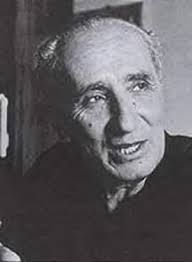
Carlo Betocchi, born on January 23, 1899, in Turin, Italy, stands as one of the notable Italian poets of the 20th century. Despite his significant contributions to literature, Betocchi’s work has not always received the recognition it deserves, risking his legacy fading into obscurity. This article delves into his life, achievements, and the lasting impact of his poetic works.
Early Life and Education
Betocchi’s early years were marked by frequent relocations due to his father’s job as an employee of the Italian State Railways. His family moved to Florence when he was still a child. Unfortunately, tragedy struck in 1911 when he lost his father, leaving a lasting impact on his young life. Despite the hardships, Betocchi pursued education vigorously, graduating as a land surveyor. His academic journey continued at the officers’ school in Parma, which was interrupted by his participation in World War I, where he served on the front lines in 1917 and volunteered in Libya between 1918 and 1920.
Career Beginnings and Literary Contributions
After his military service, Betocchi spent time in France and various parts of central and northern Italy before settling in Florence from 1928 to 1938. This period was crucial for his literary career, as he actively contributed to the Catholic-inspired magazine “Il Frontespizio,” founded by Piero Bargellini. Betocchi managed the poetry column “La più bella poesia” from 1934, marking the beginning of his journey as a published poet. His first poetry collection, “Realtà vince il sogno,” was published in “Il Frontespizio” in 1932.
Academic and Editorial Roles
In 1953, Betocchi returned to Florence, dedicating himself to teaching literary subjects at the Luigi Cherubini Conservatory. His editorial prowess was further demonstrated from 1961 to 1977, when he served as an editor for the literary magazine “L’Approdo Letterario.”
Thematic Evolution of Poetry
Betocchi’s poetic journey reflects a profound exploration of faith, reality, and human emotions. Initially, his work exuded a joyful confidence in Providence. As he aged, his poetry grappled with deeper doubts and reflections brought on by personal suffering. Betocchi himself described his poetry as stemming from joy, even when addressing pain: “My poetry is born from joy; even when I speak of pain, my poetry is born from joy. It is the joy of knowing, the joy of being, and of being able to accept and endure.”
From 1932 onwards, Betocchi produced numerous poetry collections, each reflecting significant phases of his life and thoughts. Notable works include “Realtà vince il sogno,” “Estate di San Martino” (1961), “Un passo, un altro passo” (1967), and “Prime e ultimissime” (1974). His poetry collection “Poesie del sabato” was published in 1980, showcasing his evolving literary style and thematic focus.
Post-World War II Publications
The aftermath of World War II saw Betocchi publish several important works, including “Notizie di prosa e poesia” (1947), “Un ponte sulla pianura” (1953), and “Poesie” (1955). These publications highlighted his religious enlightenment intertwined with a strong will to accept and confront reality, transcending visible measures of everyday objects and domestic settings.
Christian and Popular Poet
Betocchi’s poetry is characterized by its Christian and popular roots, emphasizing affection and solidarity with all living beings. His writing is marked by a stark, essential style, reflecting the simplicity and necessity of life’s fundamental aspects. This approach mirrors the essence of Tuscan cuisine, known for its “poor” yet essential ingredients, devoid of unnecessary adornments. Betocchi’s poetry remains unadorned, focusing on the pure, unembellished expression of life’s truths.
Final Years and Legacy
Carlo Betocchi passed away in Bordighera, Imperia, on May 25, 1986. His legacy, though at times overshadowed by more widely recognized contemporaries, continues to influence and inspire. In 1999, the collection “Dal definitivo istante. Poesie scelte e inediti” was published by Biblioteca Universale Rizzoli, featuring selected and previously unpublished poems, curated by Giorgio Tabanelli with contributions from Carlo Bo and Mario Luzi.
Betocchi’s life and work embody the essence of Italian poetry in the 20th century, reflecting a profound connection to faith, reality, and human emotion. His journey from early hardships to literary acclaim highlights the enduring power of poetry to capture and convey the complexities of human experience.


