
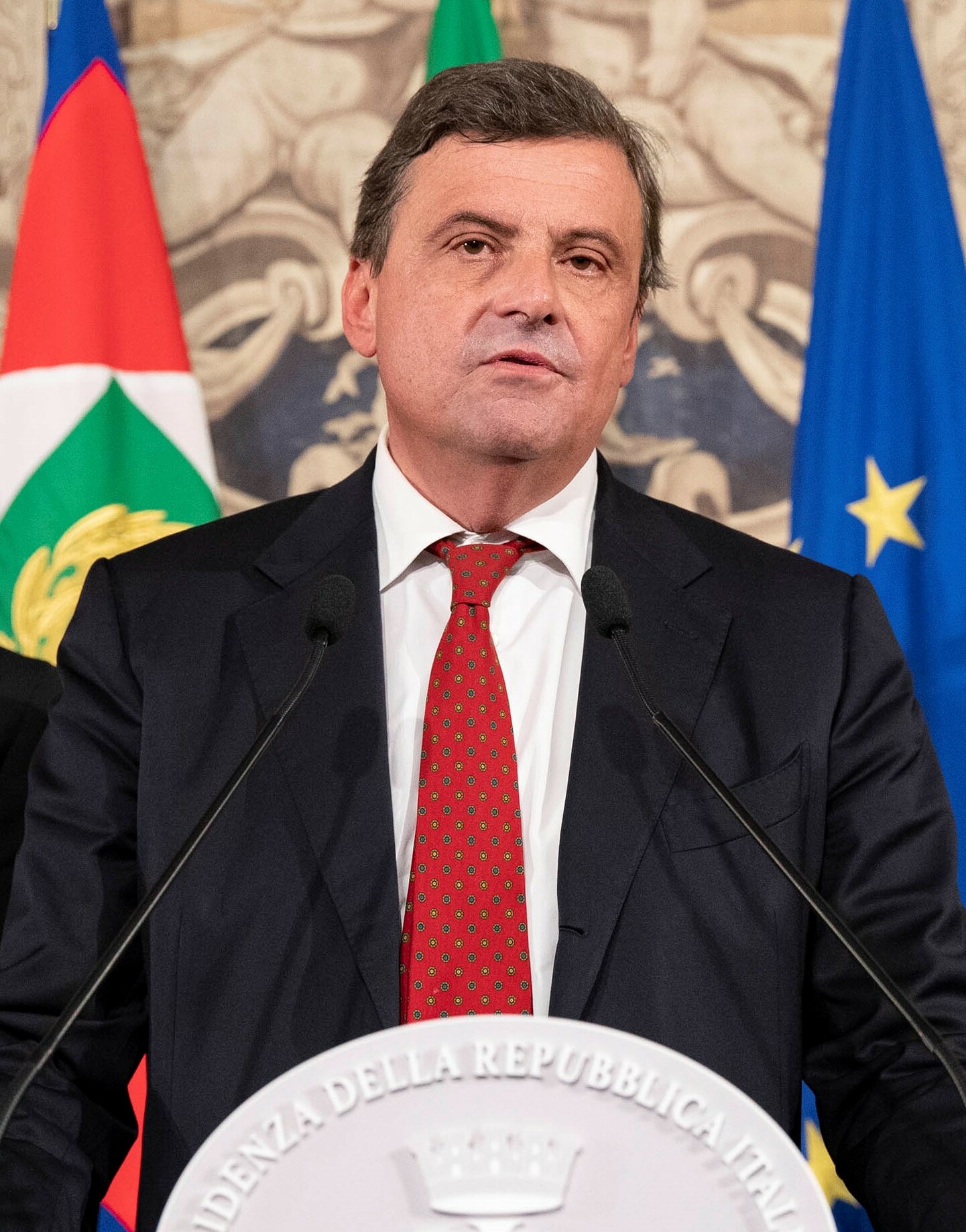
Carlo Calenda, a prominent figure in Italian politics, has garnered attention for his dynamic career that spans business, government, and political activism. Born on April 9, 1973, in Rome, Calenda’s life has been marked by significant achievements in both the private and public sectors. His journey from a young executive at Ferrari to a key player in Italy’s political landscape provides an insightful look into the intersections of business acumen, political strategy, and public service.
Early Life and Family Background
Carlo Calenda was born into a distinguished family with deep roots in Italian culture and cinema. His mother, Cristina Comencini, is a well-known filmmaker and novelist, and the daughter of the renowned director Luigi Comencini. His father, Fabio Calenda, is also a prominent figure, adding to the rich cultural milieu in which Carlo was raised.
At the young age of ten, Calenda made his acting debut in the television miniseries “Cuore” (Heart), which was co-written by his mother and directed by his grandfather. He played the role of Enrico Bottini, one of the main characters, showcasing his early connection to the arts. However, his future lay not in acting but in a different realm of influence.
Education and Early Career
Carlo Calenda pursued higher education at the Sapienza University of Rome, where he earned a degree in Law. His education laid the groundwork for a career that would blend legal expertise with business and political strategy. After completing his studies, Calenda entered the business world, working for various financial companies. His sharp analytical skills and leadership qualities quickly became apparent.
In 1998, at just 25 years old, Calenda joined Ferrari, where he took on the role of managing relationships with financial institutions and clients. His tenure at Ferrari marked the beginning of a successful career in business, where he demonstrated his ability to navigate complex organizational environments and foster critical business relationships.
Following his time at Ferrari, Calenda transitioned to Sky, where he served as the head of marketing. His work at Sky further honed his skills in strategic communication and brand management, preparing him for the larger challenges he would face in his subsequent roles.
Transition to Public Service
Calenda’s transition from business to public service began in the early 2000s when he started working closely with Luca Cordero di Montezemolo, the then-president of Confindustria, Italy’s largest business association. Between 2004 and 2008, Calenda served as Montezemolo’s assistant, where he was responsible for the strategic and international affairs of the organization. This role allowed Calenda to lead delegations of Italian entrepreneurs on international missions, promoting economic ties and exploring business opportunities in countries such as Israel, Serbia, Russia, Brazil, Algeria, the United Arab Emirates, Romania, and China.
Calenda’s growing influence in Confindustria and his involvement in international business laid the foundation for his later political career. He became the general director of Interporto Campano and later assumed the presidency of Interporto Servizi Cargo, further solidifying his reputation as a skilled business leader.
Entry into Politics
Carlo Calenda’s formal entry into politics came in 2013 when he ran for a seat in the Italian Parliament under the Scelta Civica (Civic Choice) party, founded by then-Prime Minister Mario Monti. Although he was not elected, Calenda’s political career did not stall. He was soon appointed as Deputy Minister for Economic Development in the government of Enrico Letta, a position he retained when Matteo Renzi succeeded Letta as Prime Minister.
In this role, Calenda was entrusted with significant responsibilities, including overseeing Italy’s trade relations and international investment strategies. He was instrumental in directing the activities of ICE (Italian Trade Agency), promoting Italian businesses abroad, and attracting foreign investments to Italy. His portfolio included managing bilateral trade relations, supporting investment projects, and coordinating Italy’s commercial policy within the European Union and global platforms such as the G20 and OECD.
Diplomatic Challenges and Achievements
In 2015, Calenda left Scelta Civica and expressed his intention to join the Partito Democratico (PD), although he did not immediately formalize his membership. Despite his political affiliations, Calenda was appointed as Italy’s Permanent Representative to the European Union in January 2016, a role that typically would be reserved for seasoned diplomats. His appointment was controversial, sparking criticism from within Italy’s diplomatic corps due to his lack of traditional diplomatic experience.
During his tenure, Calenda participated in numerous international missions alongside Italy’s Prime Minister, visiting countries such as Mozambique, Congo, Turkey, Angola, Colombia, Chile, Peru, and Cuba. These missions were part of Italy’s broader strategy to strengthen economic ties and promote Italian interests abroad. Calenda led 32 international missions, with 18 focusing on commercial delegations involving key stakeholders from the banking sector, business associations, and export promotion agencies.
Minister of Economic Development
In May 2016, Carlo Calenda was appointed Minister of Economic Development, succeeding Matteo Renzi, who had temporarily held the post after the resignation of Federica Guidi. As minister, Calenda was responsible for Italy’s industrial policy, trade, and economic development strategies. His tenure as minister was marked by efforts to revitalize Italy’s struggling economy, attract foreign investment, and support Italian businesses in the global market.
One of Calenda’s significant challenges came in the wake of Renzi’s defeat in the December 2016 constitutional referendum, which led to Renzi’s resignation as Prime Minister. Despite the political upheaval, Calenda was retained as Minister of Economic Development in the new government led by Paolo Gentiloni. This continuity allowed Calenda to implement longer-term strategies and reforms aimed at enhancing Italy’s economic competitiveness.
Post-Ministerial Career and Founding of Azione
After the March 2018 general elections, which resulted in a significant defeat for the center-left, Calenda announced his decision to formally join the Partito Democratico (PD). He saw the party as a vehicle for political renewal and believed in its potential to recover from its electoral losses. Calenda’s commitment to the PD was driven by his desire to revitalize the party and contribute to a broader progressive agenda.
However, political dynamics within the PD and Italy’s broader political landscape led to Calenda’s departure from the party in August 2019. The formation of a new government coalition between the PD and the Movimento 5 Stelle (Five Star Movement), which Calenda opposed, prompted him to leave the PD. In November 2019, alongside Senator Matteo Richetti, Calenda launched his own political movement, Azione (Action).
Azione was positioned as a centrist, reformist party focused on pragmatic solutions to Italy’s economic and social challenges. The party sought to appeal to moderate voters disillusioned with the traditional left-right political divide and offered a platform centered on economic reform, environmental sustainability, and strong European integration.
Candidacy for Mayor of Rome
In October 2020, Carlo Calenda announced his candidacy for the 2021 Rome mayoral elections. His campaign focused on addressing the critical issues facing the Italian capital, including public transportation, waste management, and urban regeneration. Calenda’s approach emphasized practical, data-driven solutions and a vision of Rome as a modern, efficient, and sustainable European capital.
Legacy and Impact
Carlo Calenda’s career is a reflection of his ability to navigate the complex worlds of business and politics with a focus on results and pragmatic solutions. His work in both the private and public sectors has earned him a reputation as a competent leader with a deep understanding of the economic challenges facing Italy.
As a minister, Calenda played a crucial role in shaping Italy’s economic policy during a period of significant global and domestic challenges. His efforts to promote Italian businesses abroad, attract foreign investment, and implement industrial reforms have had a lasting impact on the country’s economic landscape.
In the political arena, Calenda’s formation of Azione represents his commitment to offering an alternative to Italy’s polarized political environment. His focus on centrist, reform-oriented policies reflects a broader trend in European politics, where traditional party lines are increasingly blurred in favor of pragmatic governance.
SEO Considerations: Optimizing Content for Search Visibility
To enhance the visibility of content related to Carlo Calenda, it’s essential to incorporate SEO best practices that cater to both general and specialized search queries. Keywords such as “Carlo Calenda biography,” “Italian politician Carlo Calenda,” “Carlo Calenda Azione party,” and “Rome mayoral candidate Carlo Calenda” should be strategically placed throughout the content. Addressing different search intents, from those seeking a brief overview of his career to those looking for in-depth political analysis, will help attract a broad audience.
Balancing keyword density with engaging, well-structured content ensures that the article remains both informative and optimized for search engines. Detailed insights into Calenda’s political strategies, his economic policies, and his vision for Italy will appeal to readers ranging from political enthusiasts to business professionals and general readers interested in contemporary Italian politics.
Historical Context: Italian Politics and Economic Policy
Carlo Calenda’s political career must be understood within the broader context of Italian politics and the country’s ongoing economic challenges. Italy has a complex political landscape characterized by frequent changes in government, deep-seated economic issues, and a polarized electorate. Calenda’s rise to prominence came at a time when Italy was grappling with the aftermath of the global financial crisis, the Eurozone crisis, and persistent structural problems such as high public debt and unemployment.
Calenda’s work in the Ministry of Economic Development reflects the broader trends in European economic policy, particularly the emphasis on competitiveness, innovation, and international trade. His approach to economic governance, which balances market-oriented reforms with social considerations, aligns with the policies of other centrist and reformist politicians in Europe.
Conclusion: Carlo Calenda’s Role in Italian Politics
Carlo Calenda’s career offers valuable insights into the intersections of business leadership and political strategy in Italy. His contributions to both sectors have been marked by a commitment to pragmatic, results-oriented solutions and a deep understanding of the complexities of governance. As a politician, Calenda has consistently sought to bridge the gap between Italy’s political institutions and its economic realities, advocating for policies that promote growth, innovation, and sustainability.
As the founder of Azione and a candidate for Rome’s mayoralty, Calenda continues to shape the future of Italian politics. His focus on centrist, reformist policies offers an alternative to the traditional left-right divide, positioning him as a key player in the ongoing evolution of Italy’s political landscape. Whether in business, government, or politics, Carlo Calenda’s career exemplifies the potential of leadership grounded in expertise, pragmatism, and a commitment to public service.


