
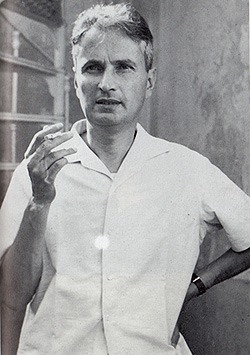
Carlo Cassola stands as one of Italy’s most significant literary figures, a novelist, essayist, and storyteller whose works captured the essence of the human condition in a time of great social and political change. Born in Rome on March 17, 1917, Cassola’s literary journey spanned several decades, marked by a profound exploration of existential themes, the stark realities of war, and the nuances of everyday life in mid-20th-century Italy. This article delves deep into Carlo Cassola’s life, examining his age, the fame he achieved, and the pivotal highlights of his career.
Early Life and Family Background
Carlo Cassola was born into a family with deep historical roots in Italy. His father, Garzia Cassola, was of Lombard origin but had long been settled in Tuscany. Garzia was a committed socialist and a contributor to the newspaper “Avanti!” under the direction of Leonida Bissolati, a prominent figure in the Italian socialist movement. Carlo’s mother, Maria Camilla Bianchi, hailed from Volterra, a town in the heart of Tuscany, known for its rich cultural and historical heritage.
Cassola’s childhood, however, was far from idyllic. As the youngest of five siblings, he often felt isolated, describing his early years as lonely. His older siblings were much older, leaving him to navigate the world of childhood largely on his own. This sense of isolation, combined with a naturally introspective and imaginative nature, led Cassola to retreat into his inner world, where he found solace in literature and storytelling.
Education and Early Literary Influences
Cassola’s formal education began in 1927 at the Regio Liceo-Ginnasio Torquato Tasso in Rome. He later transferred to the Liceo Classico Umberto I, where he developed a deep passion for literature, particularly the works of Giovanni Pascoli. However, despite his burgeoning interest in literary studies, Cassola was disillusioned by the rigid structure of formal education, which he later criticized as a “school of criminality” in a scathing commentary on the state of education.
Despite his frustrations with the education system, Cassola’s time at the Liceo Classico was pivotal in shaping his literary career. It was during these years that he was introduced to the works of prominent Italian writers such as Riccardo Bacchelli, Antonio Baldini, and Leonida Répaci. These authors, along with his readings of existential and philosophical literature, sparked a deep interest in the written word, setting the stage for his future as a writer.
The Beginnings of a Literary Career
Carlo Cassola’s entry into the literary world occurred during the tumultuous years of World War II. By this time, Cassola had already developed a keen interest in the literary movement known as Hermeticism, which was characterized by a focus on the essential and the absolute, often expressed through a minimalist and introspective style. This movement, with its emphasis on the purity of expression and the existential dimensions of human experience, resonated deeply with Cassola’s own philosophical inclinations.
His first literary efforts were a series of short stories written between 1937 and 1940. These stories were later compiled and published in two collections: Alla periferia and La vista in 1942. From the outset, Cassola’s writing was noted for its ability to capture the authentic essence of everyday life. As literary critic Salvatore Guglielmino observed, Cassola aimed to “capture in a gesture or event its most authentic aspect, the modest and everyday element that reveals the essence of an existence, the tone of a sentiment.”
Academic Achievements and Early Publications
In 1939, amidst the looming clouds of war, Carlo Cassola completed his academic studies, earning a degree in law from the University of Rome. His thesis, which focused on civil law, was a reflection of his formal education rather than his personal interests. Despite the academic achievement, it was clear that Cassola’s true passion lay in literature, not law.
Upon completing his military service in Spoleto and Bressanone, Cassola returned to his literary pursuits with renewed vigor. He published three notable short stories—La visita, Il soldato, and Il cacciatore—in the magazine Letteratura. These stories garnered attention from other literary publications such as Corrente and Frontespizio, leading to regular collaborations with these magazines.
Post-War Literary Activity and the Rise to Prominence
The end of World War II marked a significant turning point in Carlo Cassola’s career. Deeply influenced by the experiences of war and the resistance movement in Italy, Cassola’s writing took on a new dimension, reflecting the harsh realities and moral complexities of the time. In 1946, he published the short story Baba, a narrative serialized in four parts in the magazine Il Mondo. This work was among the first of many that would explore the themes of resistance, loss, and the human condition in post-war Italy.
During this period, Cassola became increasingly involved in the intellectual and cultural life of post-war Italy. He joined the editorial boards of several influential publications, including La Nazione del Popolo, the official organ of the Tuscan Liberation Committee, as well as Giornale del Mattino and L’Italia Socialista. His involvement in these publications not only solidified his status as a prominent literary figure but also provided a platform for his evolving ideas and perspectives on the social and political issues of the day.
Personal and Professional Crisis
The year 1949 was a watershed moment in Carlo Cassola’s life. It was a year marked by personal tragedy and professional uncertainty. His wife, who had been his companion and muse, died suddenly at the age of 31 due to a renal attack. This devastating loss plunged Cassola into a deep existential crisis, leading him to question the very foundations of his literary and philosophical beliefs.
This period of introspection and re-evaluation of his life’s work gave birth to one of his most renowned works, Il taglio del bosco (The Cutting of the Forest). This novel, which would later become a seminal work in Italian literature, was a departure from his earlier, more existentially detached narratives. Il taglio del bosco is a poignant exploration of grief, loss, and the inexorable passage of time, themes that resonated deeply with Cassola’s personal experiences.
Despite its profound insights and literary merit, Il taglio del bosco faced significant challenges in finding a publisher. Both Mondadori and Bompiani, two of Italy’s leading publishing houses, rejected the manuscript. It was only through the efforts of Elio Vittorini, who directed the experimental series I gettoni, that the novel was eventually published, allowing Cassola’s voice to once again reach the public.
The Height of Literary Success
Following the publication of Il taglio del bosco, Carlo Cassola entered one of the most productive periods of his career. His works from this era, including I Libri del tempo, Fausto e Anna, and I Vecchi Compagni, cemented his reputation as a leading figure in Italian literature. These novels continued to explore the themes of human fragility, the quiet struggles of ordinary life, and the complex interplay between individual desires and social realities.
Cassola’s writing during this period was characterized by a simplicity and clarity of style that belied the profound existential questions at the heart of his narratives. His ability to convey deep emotions and complex ideas through straightforward, unadorned prose earned him both critical acclaim and a devoted readership. His works became a staple of Italian literature courses, and he was widely regarded as one of the foremost interpreters of the human condition in the post-war era.
Later Years and Legacy
As the years progressed, Carlo Cassola’s health began to decline. In 1984, he published one of his last significant works, Le persone contano più dei luoghi (People Matter More Than Places), a reflection on the importance of human connections over geographical or material considerations. This work, like many of his later writings, was deeply introspective, focusing on the themes of mortality, memory, and the enduring impact of personal relationships.
In the final years of his life, Cassola’s health deteriorated further, and he was diagnosed with a heart condition. Despite his illness, he continued to write, driven by the same passion for literature that had defined his life. On January 29, 1987, Carlo Cassola passed away at the age of 69 in Montecarlo di Lucca, succumbing to a sudden cardiac collapse.
Conclusion
Carlo Cassola’s legacy is one of quiet but profound impact. His works, which often focused on the small, everyday moments of life, captured the essence of the human experience in a way that few others have achieved. Through his exploration of themes such as grief, loss, love, and the passage of time, Cassola offered readers a window into the complexities of the human soul.
In a literary career that spanned several decades, Cassola’s ability to convey deep existential truths through simple, unpretentious prose made him a beloved and influential figure in Italian literature. His works continue to be studied and appreciated not only for their literary merit but also for their insights into the human condition.
Carlo Cassola’s life and career remind us of the enduring power of literature to illuminate the human experience, to provide comfort in times of sorrow, and to connect us with the universal truths that bind us all. His legacy, like his writing, is one of quiet strength and lasting influence.


