
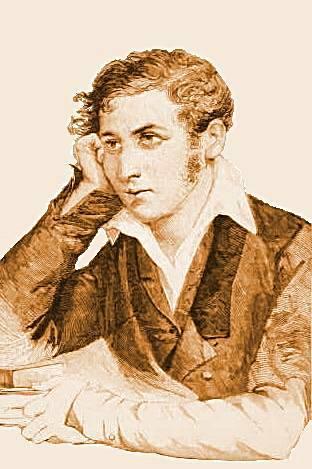
Carlo Cattaneo is a name that resonates deeply within the historical, intellectual, and cultural spheres of 19th-century Italy. Born on June 15, 1801, in Milan, Cattaneo grew to become a significant figure in the Italian Risorgimento, the movement for Italian unification. His life, marked by a deep commitment to intellectual pursuits and political activism, reflects the turbulent era in which he lived. This article aims to delve into the life of Carlo Cattaneo, exploring his age, the fame he garnered, and the key highlights that defined his existence.
Early Life and Education
Carlo Cattaneo was born in a period when Milan was under the control of the Austrian Empire, a factor that greatly influenced his later political views. From a young age, he was exposed to the ideas of the Enlightenment, which emphasized reason, science, and progress. His early education under the tutelage of Gian Domenico Romagnosi, a prominent philosopher and liberal jurist, played a crucial role in shaping his worldview.
In 1824, at the age of 23, Cattaneo graduated in law from the University of Pavia. However, his interests extended far beyond the legal field. He was particularly fascinated by the burgeoning fields of science, technology, and economics, which he believed were critical to the progress of society. This multidisciplinary approach would become a hallmark of his career.
Intellectual Pursuits and The Politecnico
Cattaneo’s intellectual journey was diverse and prolific. In 1828, he began working as an editor for the “Annali Universali di Statistica,” a periodical that focused on the statistical and economic aspects of society. This role allowed him to explore various facets of society through the lens of data and analysis, reinforcing his belief in the importance of science and reason in societal development.
In 1839, Cattaneo founded “Il Politecnico,” a monthly cultural magazine that became a platform for disseminating technical and scientific knowledge. The magazine, which ran until 1864, was a reflection of Cattaneo’s belief in the power of education and knowledge dissemination as tools for societal progress. “Il Politecnico” covered a wide range of topics, including history, philosophy, economics, and politics, showcasing Cattaneo’s intellectual versatility and his commitment to fostering a well-informed public.
The Five Days of Milan and Political Activism
Carlo Cattaneo’s political activism came to the forefront during the revolutionary movements of 1848, known as the “Five Days of Milan” (Cinque Giornate di Milano). This was a crucial moment in the Italian struggle for independence from Austrian rule. Cattaneo played a significant role in these events, serving as the head of the war council. His leadership and strategic thinking were instrumental in the success of the Milanese uprising, which briefly expelled the Austrian forces from the city.
However, the victory was short-lived, and the return of Austrian forces in August 1848 forced Cattaneo into exile. He initially fled to Paris and later settled in Switzerland, where he continued his political and intellectual work. Despite being in exile, Cattaneo remained an influential figure in the Italian unification movement, advocating for a federalist model of governance as opposed to the centralized monarchy favored by many of his contemporaries.
Republican and Federalist Ideals
Cattaneo’s political philosophy was deeply rooted in republicanism and federalism. Unlike Giuseppe Mazzini, who was willing to compromise republican ideals for the sake of national unification under a monarchy, Cattaneo remained steadfast in his belief that Italy’s future lay in a republic composed of autonomous regions. His federalist views were outlined in his 1849 work, “L’insurrection de Milan en 1848,” where he critiqued the policies of Carlo Alberto of Savoy and advocated for a society that embraced technological, scientific, and economic progress.
Cattaneo’s vision of Italy was one where power was decentralized, allowing for the diverse regions of the country to maintain their unique identities and governance structures. He believed that such a system would better reflect the historical, cultural, and economic realities of the Italian peninsula.
Later Years and Return to Milan
After the expulsion of the Austrians from Milan in 1859, Cattaneo returned to his homeland. However, his refusal to pledge allegiance to the monarchy prevented him from taking an active role in the newly formed Italian government. Despite being elected as a deputy multiple times, Cattaneo chose to remain on the political sidelines, focusing instead on his intellectual pursuits.
During this period, he revived “Il Politecnico,” using it as a platform to promote national unity and economic development. His writings from this era reflect his continued commitment to the ideals of progress, education, and civic responsibility.
In 1860, Cattaneo met Giuseppe Garibaldi in Naples, hoping to find a kindred spirit in the famous general. However, his hopes for a federalist Italy were once again dashed, as Garibaldi’s military campaigns ultimately paved the way for a centralized monarchy under the House of Savoy.
Legacy and Death
Carlo Cattaneo spent his final years in Castagnola, Switzerland, where he died on February 6, 1869, at the age of 67. His legacy, however, lives on through his numerous writings and the impact he had on the Italian unification movement. Cattaneo authored several important works, including “Notizie naturali e civili su la Lombardia” (1844), “Archivio triennale delle cose d’Italia” (1850-55), “Invito alli amatori della filosofia” (1857), and “La città considerata come principio ideale delle istorie italiane” (1858).
Cattaneo’s works are characterized by a pragmatic approach to philosophy, one that sought to bridge the gap between theoretical ideas and practical applications in economics, politics, and science. His contributions to the intellectual and political life of Italy are a testament to his belief in the power of knowledge and reason to shape a better society.
Conclusion
Carlo Cattaneo was a man ahead of his time, a thinker and activist whose ideas continue to resonate in discussions about governance, federalism, and the role of science and technology in society. His life was a reflection of his unwavering commitment to the principles of republicanism, federalism, and progress. While he did not live to see the full realization of his vision for Italy, his influence on the intellectual and political landscape of the 19th century is undeniable.
Cattaneo’s story is not just a tale of one man’s journey through a tumultuous period in history; it is also a reminder of the enduring power of ideas and the importance of standing by one’s principles, even in the face of overwhelming odds. His life and legacy continue to inspire those who seek to understand the complexities of nation-building, governance, and the pursuit of knowledge.


