
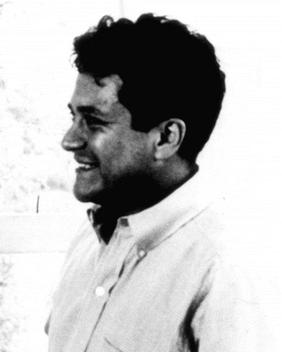
Carlos Castaneda is a name that reverberates through the realms of anthropology, mysticism, and literature. Born Carlos César Salvador Aranha Castañeda on December 25, 1925, his life and work have been shrouded in mystery and controversy, making him one of the most enigmatic figures of the 20th century. His contributions to the understanding of shamanism and altered states of consciousness have had a profound impact on both academic circles and popular culture. However, the true nature of his life and the veracity of his writings remain topics of debate.
Early Life and Education: The Making of a Mystic
Carlos Castaneda’s early life is as mysterious as his later years. According to various sources, he was born in Cajamarca, Peru, while other reports suggest that his birthplace was São Paulo, Brazil. This ambiguity in his origins foreshadows the elusive nature that would characterize his life. What is clear, however, is that Castaneda moved to the United States in the 1950s, where he would eventually become a naturalized citizen.
Castaneda pursued higher education in the United States, enrolling at the University of California, Los Angeles (UCLA). He studied anthropology, a field that would serve as the foundation for his later explorations into indigenous knowledge systems, particularly those of the Yaqui people of Mexico. His academic background provided him with the tools to document and analyze the spiritual practices he would later claim to have experienced firsthand.
The Encounter with Don Juan Matus: A Turning Point
The pivotal moment in Castaneda’s life came in 1961 when he met Don Juan Matus, a Yaqui Indian shaman who would become his mentor and the central figure in his books. According to Castaneda, Don Juan introduced him to a world of shamanic practices that defied conventional understanding. Through Don Juan, Castaneda claimed to have learned about the use of psychotropic plants, such as peyote, to achieve altered states of consciousness and access non-ordinary realities.
Don Juan’s teachings, as presented by Castaneda, were revolutionary. They offered a radical departure from Western scientific paradigms, emphasizing the importance of direct experience and the subjective nature of reality. Castaneda’s accounts of his apprenticeship with Don Juan were published in a series of books that would become bestsellers, starting with The Teachings of Don Juan: A Yaqui Way of Knowledge in 1968. This book, and the ones that followed, captured the imagination of readers worldwide and positioned Castaneda as a leading figure in the New Age movement.
The Teachings of Don Juan: The Path with a Heart
At the core of Don Juan’s teachings, as conveyed by Castaneda, is the concept of living a life with intent and purpose—a life that follows “the path with a heart.” According to Don Juan, this path is one that resonates deeply with an individual, offering a sense of fulfillment and alignment with the universe. The journey on this path involves overcoming four natural enemies: fear, clarity, power, and old age. Each of these represents a stage of personal growth and spiritual development.
Fear, as the first enemy, must be faced and conquered to proceed on the path. Clarity, which follows, is a double-edged sword; while it provides insight and understanding, it can also lead to overconfidence and complacency. Power, the third enemy, offers the practitioner great abilities but can corrupt if not handled with humility and care. Finally, old age, the last enemy, is a test of endurance, where the challenge is to maintain the strength and vitality necessary to continue on the path until the very end.
These teachings, which blend elements of indigenous spirituality, existential philosophy, and psychological insight, have had a lasting influence on readers seeking alternative approaches to life and consciousness. They have also sparked considerable debate within academic circles about the authenticity of Castaneda’s experiences and the true nature of Don Juan.
The Controversy: Fact or Fiction?
From the outset, Carlos Castaneda’s work was met with both acclaim and skepticism. His books, while widely popular, raised questions about their authenticity. Critics argued that Don Juan Matus might be a fictional character, a composite of various indigenous informants, or even a complete fabrication. The narrative style of Castaneda’s books, which blurred the lines between ethnography and novelistic storytelling, only added to the uncertainty.
One of the most significant critiques came from fellow anthropologists, who pointed out the lack of corroborating evidence for many of Castaneda’s claims. Attempts to verify the existence of Don Juan or to trace the specific rituals and practices described in the books often led to dead ends. This led to a broader debate about the role of subjectivity in anthropology and the ethics of presenting fictionalized accounts as factual ethnography.
Despite the controversy, Castaneda remained a prominent figure in the countercultural and New Age movements of the 1960s and 1970s. His work resonated with those seeking spiritual alternatives to mainstream religion and materialism. The popularity of his books also fueled interest in shamanism and indigenous knowledge systems, although this interest was often accompanied by a lack of critical engagement with the cultural and historical contexts of these practices.
The Legacy of Carlos Castaneda: Beyond the Books
Carlos Castaneda’s influence extends far beyond the pages of his books. His ideas have permeated various aspects of popular culture, inspiring films, music, and literature. The concept of altered states of consciousness and the quest for personal transformation have become central themes in the New Age and spiritual movements, often drawing on Castaneda’s work as a foundational text.
However, Castaneda’s legacy is also marked by his reclusiveness and the mystery surrounding his later years. After achieving fame, he withdrew from public life, making only rare appearances and refusing interviews. This retreat into anonymity further fueled speculation about his life and the truth behind his writings. It wasn’t until after his death in 1998, at the age of 72, that more details about his personal life began to emerge.
Castaneda’s death was as enigmatic as his life. He passed away in Los Angeles from complications related to liver cancer. In the aftermath, it was revealed that he had been married and had adopted children, yet many aspects of his life remained shrouded in secrecy. His followers, some of whom were part of an inner circle known as the “Tensegrity” group, continued to practice the teachings of Don Juan, maintaining Castaneda’s influence long after his passing.
The Books of Carlos Castaneda: A Journey Through Consciousness
Carlos Castaneda’s literary legacy is embodied in his twelve books, each of which explores different aspects of his journey with Don Juan and the Yaqui way of knowledge. These books, published over a span of three decades, include:
- The Teachings of Don Juan: A Yaqui Way of Knowledge (1968)
- A Separate Reality (1971)
- Journey to Ixtlan (1972)
- Tales of Power (1974)
- The Second Ring of Power (1977)
- The Eagle’s Gift (1981)
- The Fire from Within (1984)
- The Power of Silence (1987)
- The Art of Dreaming (1993)
- Magical Passes (1998)
- The Wheel of Time (1998)
- The Active Side of Infinity (1998)
Each of these works delves into different facets of Don Juan’s teachings, from the practical techniques of shamanic practice to the philosophical underpinnings of the Yaqui worldview. They also reflect the evolution of Castaneda’s thought, as he moved from a focus on individual enlightenment to a broader exploration of human potential and the nature of reality.
SEO Considerations and Target Keywords
To optimize this content for search engines, it is essential to incorporate relevant keywords and phrases that reflect popular search queries related to Carlos Castaneda. Key phrases such as “Carlos Castaneda biography,” “Don Juan Matus,” “shamanism,” “altered states of consciousness,” and “New Age literature” should be strategically placed throughout the text to enhance search engine visibility.
In addition, using Latent Semantic Indexing (LSI) keywords like “anthropology and mysticism,” “Carlos Castaneda books,” “spiritual transformation,” and “legacy of Carlos Castaneda” can help capture a broader range of search intents. Balancing keyword density with readability is crucial to ensure that the content is both informative and accessible to readers while adhering to SEO best practices.
Conclusion: The Enigma of Carlos Castaneda
Carlos Castaneda remains one of the most enigmatic figures in modern literature and anthropology. His work, while controversial, has left an indelible mark on the study of shamanism and the exploration of human consciousness. Whether viewed as a visionary or a charlatan, Castaneda’s influence on the spiritual and cultural landscape of the 20th century is undeniable.
As readers continue to engage with his books, the questions of truth and fiction, reality and imagination, remain central to the legacy of Carlos Castaneda. His teachings, as conveyed through the figure of Don Juan, challenge us to reconsider our understanding of reality and the potential of the human mind. In the end, Castaneda’s life and work invite us to embark on our own journeys of discovery, exploring the paths with a heart that lead to the unknown.


