
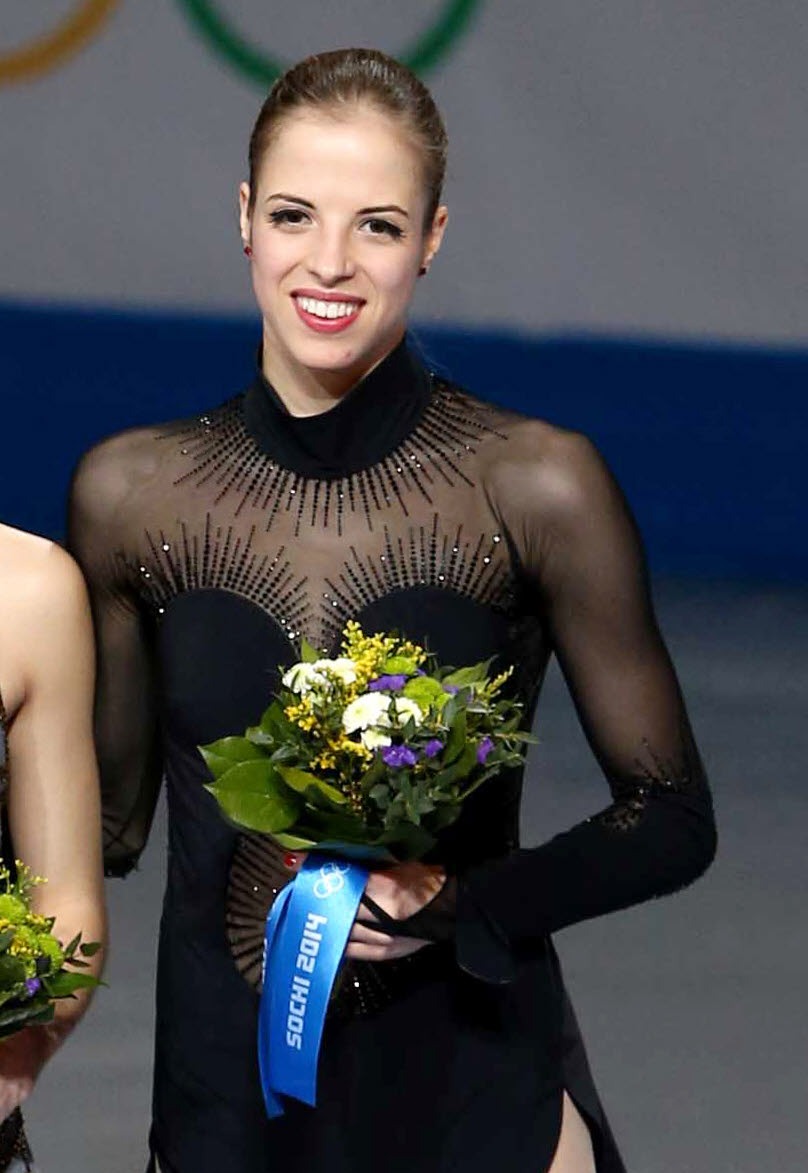
Carolina Kostner, born on February 8, 1987, in Bolzano, Italy, is one of the most celebrated figures in the world of figure skating. Known for her grace, artistic expression, and technical prowess on the ice, Kostner has captivated audiences worldwide and has become a symbol of excellence in her sport. Her journey from a young girl in a small Italian town to an Olympic medalist and world champion is a story of dedication, resilience, and passion. This article explores Carolina Kostner’s life, her rise to fame, her challenges, and the highlights of her illustrious career.
Early Life and Introduction to Figure Skating
Carolina Kostner was born into a family with deep athletic roots. Her father, Erwin Kostner, was a prominent ice hockey player who captained the Italian national team and later became a coach. Her mother, Maria Patrizia, was a former figure skater and coach, providing Carolina with the early inspiration and guidance to take up the sport. Growing up in Ortisei, a picturesque town in the province of Bolzano, Carolina was introduced to the ice at the tender age of four, a decision that would shape the rest of her life.
Despite her early start in figure skating, Carolina’s path to greatness was not straightforward. The collapse of a local ice rink in 2001 left her without a coach in Italy, forcing her family to make a difficult decision. With the support of her parents, Carolina moved to Oberstdorf, Germany, to continue her training under the guidance of Michael Huth, a renowned coach. This move was crucial in her development as a skater, allowing her to train in a more competitive environment while also pursuing her education in languages.
The Early Years of Competition
Carolina Kostner’s talent became evident early in her career. She made her debut in the junior category in 2001, quickly rising through the ranks. Her first major victory came in September 2002 at the Nebelhorn Trophy in Oberstdorf, where she competed in the senior category for the first time and took home the gold. This victory marked the beginning of her ascent in the international figure skating scene.
In 2003, Carolina made her debut at the European Championships, where she impressed audiences with a program set to the theme from Schindler’s List. Despite a small error that cost her a higher placement, she finished in a respectable fourth place, showcasing her potential as a future star. That same year, she competed in the World Championships in Washington, D.C., where she performed a short program to George Winston’s Variations on Canon in D and secured a third-place finish in the short program, eventually placing sixth overall.
Rising Through the Ranks: European and World Success
The mid-2000s saw Carolina Kostner steadily rise through the ranks of international figure skating. In 2004, she competed at the World Championships in Dortmund, where she performed her short program to Song from a Secret Garden. Despite a few mistakes, she managed to finish in fifth place, solidifying her reputation as one of the top skaters in the world.
Her breakthrough moment came in 2005 at the World Championships in Moscow, where she won her first major international medal, a bronze. Skating to Sunday by George Winston, Carolina delivered a performance that captivated both the judges and the audience, earning her a spot on the podium. This achievement marked the beginning of a series of successes that would define her career.
In 2006, Carolina was selected as the flag bearer for Italy at the Winter Olympics in Turin, a significant honor that reflected her status as one of Italy’s top athletes. Despite the pressure and high expectations, Carolina finished ninth, a result that was disappointing given the buildup to the event. However, this experience served as a valuable learning opportunity, preparing her for future competitions.
Dominance in Europe and Continued Success
Carolina Kostner’s dominance in European figure skating became apparent in the years following the Turin Olympics. In 2007, she won her first European Championship gold medal in Warsaw, a long-awaited victory that established her as the best skater in Europe. This triumph was particularly significant as it ended a 35-year gold medal drought for Italy in the event, with the last European champion being Rita Trapanese in 1972.
The following year, Carolina successfully defended her European title in Zagreb, Croatia, and went on to win a silver medal at the World Championships in Gothenburg, Sweden. Her performance, set to the Dumky Trio op. 90 by Antonin Dvořák, was a testament to her growing maturity and confidence as a skater. These victories cemented her status as one of the top competitors in the world and solidified her reputation for elegance and artistry on the ice.
Challenges and Triumphs on the World Stage
Carolina Kostner’s journey was not without its challenges. After a series of injuries and inconsistent performances, she faced setbacks that tested her resilience. However, her determination and love for the sport kept her going. In 2010, she won her third European Championship title in Tallinn, Estonia, reaffirming her position at the top of the sport. However, her performance at the 2010 Winter Olympics in Vancouver was less successful, as she finished outside the top ten, a disappointing result for the seasoned athlete.
Despite this setback, Carolina continued to push forward. In 2011, she returned to the World Championships podium in Moscow, winning a bronze medal. The following year, 2012, was a banner year for Carolina, as she won her fourth European Championship and, more importantly, her first World Championship gold medal in Nice, France. Her long-awaited victory at the World Championships was a crowning achievement in her career, solidifying her legacy as one of the greatest figure skaters of her generation.
The Sochi Olympics and an Unprecedented Achievement
The 2014 Winter Olympics in Sochi, Russia, marked a historic moment in Carolina Kostner’s career. At the age of 27, she delivered a stunning performance that earned her a bronze medal, making her the first Italian figure skater to win an Olympic medal in the ladies’ singles event. Her performance was widely praised for its emotional depth and technical precision, demonstrating her enduring skill and artistry. The bronze medal was a fitting reward for years of hard work and perseverance, and it remains one of the highlights of her illustrious career.
Scandal and Resilience
In the months following her Olympic triumph, Carolina Kostner faced one of the most challenging periods of her life. Her then-boyfriend, Alex Schwazer, a former Olympic race walker, was embroiled in a doping scandal that shocked the sports world. Carolina was accused of covering up for Schwazer, and in January 2015, she was handed a suspension of one year and four months by the Italian Anti-Doping Agency. Carolina maintained her innocence, insisting that she was unaware of any wrongdoing, and announced her intention to appeal the decision to the Court of Arbitration for Sport (CAS).
The scandal and suspension were a significant blow to Carolina, both personally and professionally. However, her response to the situation demonstrated her characteristic resilience and strength. She used the time away from competition to focus on her personal growth, returning to the sport with a renewed sense of purpose.
Legacy and Impact on Figure Skating
Carolina Kostner’s impact on figure skating extends beyond her numerous titles and accolades. She is widely regarded as one of the most elegant and artistic skaters of her time, known for her ability to combine technical excellence with emotional expression. Her programs have often been celebrated for their choreography, musical interpretation, and the seamless integration of complex elements, setting a standard for future generations of skaters.
Throughout her career, Carolina has been a role model for young athletes, demonstrating the importance of perseverance, discipline, and passion. Her journey from a small town in Italy to the pinnacle of international figure skating is a testament to what can be achieved through hard work and dedication. Even during her most challenging times, Carolina has remained committed to her sport and to her fans, inspiring countless others to pursue their dreams.
Post-Competition Career and Continued Influence
After returning from her suspension, Carolina Kostner continued to compete at the highest level, participating in several international competitions and exhibitions. Her performances have consistently drawn praise for their artistry and technical skill, proving that she remains a force to be reckoned with in the figure skating world.
In addition to her competitive career, Carolina has also explored other avenues, including coaching, choreography, and participating in various charitable initiatives. Her influence extends beyond the ice, as she continues to be a prominent figure in the world of sports and an ambassador for figure skating.
Carolina’s legacy is not just defined by her titles and medals but also by her contributions to the sport as an artist and an innovator. Her ability to push the boundaries of what is possible in figure skating has left an indelible mark on the sport, and her influence will be felt for years to come.
Conclusion
Carolina Kostner’s career is a story of triumph, adversity, and unwavering dedication to her craft. From her early days as a young skater in Italy to her status as an Olympic medalist and world champion, Carolina has consistently pushed the limits of what is possible in figure skating. Her legacy is one of grace, resilience, and artistic excellence, making her one of the most beloved and respected figures in the sport. As she continues to contribute to the world of figure skating, both on and off the ice, Carolina Kostner’s influence will undoubtedly inspire future generations of athletes to reach for greatness.


