
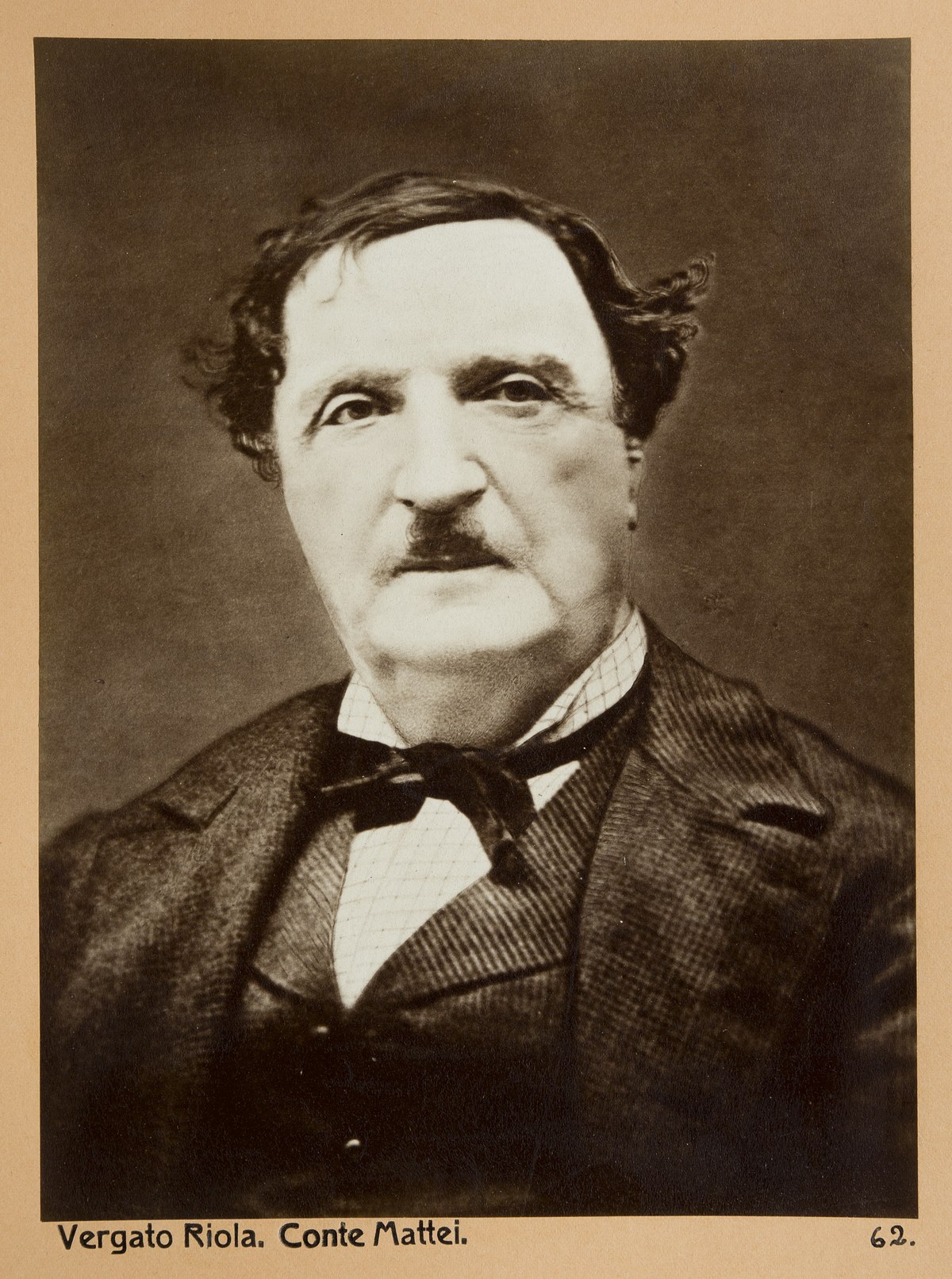
Cesare Mattei is a historical figure whose name might not be widely recognized today, but his influence on alternative medicine and his intriguing life story have left a lasting legacy. Born in Bologna, Italy, on January 11, 1809, Mattei’s life was a tapestry of triumphs and tragedies that shaped him into a pioneer of what he termed “electro-homeopathy,” a unique and controversial medical practice. This article delves deep into Mattei’s life, exploring his origins, rise to fame, and the highlights that defined his existence, all while considering the historical and cultural contexts that influenced him.
Early Life and Family Origins
Cesare Mattei was born into a family that had recently ascended from humble beginnings to the ranks of the Bolognese bourgeoisie. His grandfather, Andrea Mattei, played a crucial role in this transformation. In the late 18th century, Andrea capitalized on the right of enfiteusi—a form of long-term lease that allowed tenants to act as property owners and even sell the land for profit. This right enabled him to lift his family out of poverty, establishing a successful business in Bologna’s city center.
Andrea Mattei’s shrewd business acumen led to the acquisition of several properties, including a small, dilapidated shop that he transformed into a thriving enterprise. His fortune grew further when he took advantage of Austria’s decision to sell off vast tracts of land and prime real estate in Bologna, which had previously belonged to the Papal States. Andrea’s success allowed him to secure an official recognition, the IUS CIVITATIS, granting him entry into the upper echelons of society.
Cesare Mattei’s father, Luigi Mattei, inherited this wealth and married into nobility, further solidifying the family’s social standing. Cesare and his younger brother, Giuseppe, were born into a life of privilege, receiving an education befitting their status.
Social Life and Early Influences
As a young man, Cesare Mattei was well-placed within Bologna’s elite social circles, where he formed friendships with influential figures of the time. Notably, he became close with Paolo Costa, a philosopher, alchemist, esotericist, and member of the Carbonari—a secret revolutionary society. Costa’s influence on Mattei was profound, introducing him to ideas that would later shape his medical theories.
Mattei’s social connections also extended to the highest echelons of the Catholic Church. He gained the favor of Pope Pius IX, serving the Papal States in various capacities, including as treasurer for Emilia-Romagna, a private chamberlain to the Pope, and even as a founder of the Cassa di Risparmio bank. His involvement in politics saw him rise to the rank of senator, and he participated passionately in the historical developments of his time.
Despite his privileged life, Mattei’s existence was marked by personal tragedies that tested his resilience. His ability to recover from these setbacks with renewed vigor became a defining characteristic of his life, much like the mythical phoenix rising from the ashes.
The Turning Point: The Death of His Mother
The most significant event that altered the course of Cesare Mattei’s life was the prolonged illness and eventual death of his mother. She suffered for ten years from breast cancer, enduring unbearable pain with no effective medical relief. The prevailing medical practices of the time offered little more than bloodletting and cold baths, which did nothing to alleviate her suffering.
The death of his mother was a turning point for Mattei. Overwhelmed by grief and disillusioned with conventional medicine, he abandoned his public duties, except for his role as the Pope’s chamberlain, and retreated to his villa in Vigorso, near Budrio. For several years, Mattei remained out of the public eye, consumed by his sorrow and driven by a deep desire to find a way to alleviate the kind of suffering his mother had endured.
The Birth of Electro-Homeopathy
During his seclusion, Cesare Mattei dedicated himself to developing a new form of medicine that he believed could provide the relief that traditional medicine could not. This pursuit led to the creation of “electro-homeopathy,” a system that combined elements of homeopathy with what Mattei described as “electromagnetic principles” to treat a wide range of ailments.
In 1850, Mattei began the construction of the Rocchetta Mattei, a sprawling castle-like structure in Riola, which would serve as the headquarters for his new medical practice. The Rocchetta, built on a rocky outcrop with magnetic properties due to its high iron content, was an architectural marvel, blending Moorish, medieval, and Liberty styles. The design was heavily influenced by Mattei’s travels, including a visit to the Great Exhibition in London in 1851, where he was particularly taken by Moorish architecture.
By 1859, Mattei had completed a portion of the Rocchetta and began receiving patients from around the world. His electro-homeopathic treatments quickly gained a reputation for their miraculous results. Mattei’s remedies, which he prepared in secrecy within the Rocchetta’s towers, were said to cure everything from cancer to gangrene without the need for surgery.
The Rise to Fame and International Recognition
Cesare Mattei’s fame spread rapidly, and his electro-homeopathy attracted patients from all walks of life, including members of European royalty. Among his most notable patients was Tsar Alexander II of Russia, whose recovery from a serious illness under Mattei’s care further cemented his reputation as a medical miracle worker.
The success of Mattei’s treatments led to the establishment of a vast network of distribution centers for his remedies. Within four years, there were 26 centers, and by the time of his death in 1896, this number had grown to 176, covering even the most remote corners of the globe.
Despite his popularity, Mattei’s methods were not without controversy. The medical establishment, particularly conservative doctors and pharmacists, were highly critical of his lack of formal medical training and the secrecy surrounding his remedies. Mattei faced numerous legal challenges and threats throughout his life, but the protection of Pope Pius IX and the widespread popularity of his treatments allowed him to continue his work.
Mattei’s philanthropy also played a significant role in his enduring legacy. He provided his treatments free of charge, motivated by a genuine desire to alleviate human suffering. This altruistic approach, combined with the effectiveness of his remedies, endeared him to many, even as others sought to discredit him.
The Adoption of Mario Venturoli and Financial Ruin
In the later years of his life, Cesare Mattei faced yet another devastating blow. In 1887, he discovered that he had lost all his wealth and properties, including the Rocchetta, which had been put up for auction. The cause of this financial ruin was the betrayal of his nephew, Luigi Mattei, who had been entrusted with managing the family fortune. Unbeknownst to Cesare, Luigi had been deceived by Mattei’s enemies, leading him into debt and ultimately costing the family everything.
In his despair, Mattei disinherited Luigi and turned to Mario Venturoli, a loyal employee who had been instrumental in helping him recover some of his lost assets. Grateful for Venturoli’s assistance, Mattei adopted him as his son and brought him to live at the Rocchetta.
The Final Years and Legacy
The final years of Cesare Mattei’s life were marred by increasing paranoia and distrust, particularly towards his adopted son Mario’s wife, whom he believed was part of a conspiracy to poison him. This suspicion led to a rift between Mattei and Mario, and in his last days, Mattei disinherited his adopted son.
Cesare Mattei died on April 3, 1896, alone and estranged from those he had once trusted. On his deathbed, he left behind five sheets of paper detailing the preparation of his electro-homeopathic remedies, but the instructions were so cryptic that no one could replicate them. Today, only three of these sheets survive, and while the list of plants Mattei used is known, the exact methods he employed to create his “miraculous” cures remain a mystery.
Despite the controversies and mysteries surrounding his life and work, Cesare Mattei’s contributions to alternative medicine have had a lasting impact. His Rocchetta Mattei stands as a testament to his life’s work—a unique blend of architectural styles that symbolizes the eclectic nature of his medical theories. Today, the Rocchetta is a popular tourist destination, drawing visitors who are fascinated by its history and the enigmatic figure who built it.
Cesare Mattei’s legacy is one of innovation, resilience, and a relentless pursuit of knowledge in the face of adversity. His story is a reminder of the complexities of history and the enduring human desire to push the boundaries of what is possible, even when faced with skepticism and opposition.


