
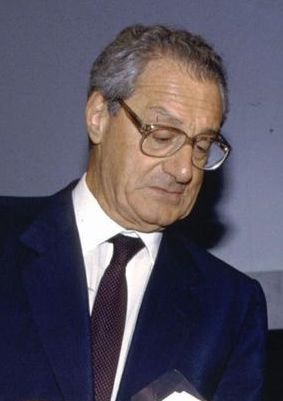
Cesare Romiti, one of Italy’s most influential industrialists and business executives, played a pivotal role in shaping the country’s post-war industrial landscape. Born on June 24, 1923, in Rome, Romiti’s career spanned over five decades, during which he led some of Italy’s most significant corporations, including Fiat and RCS MediaGroup. His journey from a young economist to a towering figure in Italian industry is a testament to his strategic acumen, leadership, and unwavering dedication to the country’s industrial growth.
Early Life and Education
Cesare Romiti was born into a modest family in Rome, the son of a postal employee. Despite the financial challenges his family faced, Romiti excelled in his studies, demonstrating an early aptitude for economics and business. He pursued a degree in Economic and Commercial Sciences, graduating with high honors. This academic foundation would prove crucial in his future career, providing him with the tools to navigate the complex world of business and finance.
After completing his education, Romiti began his professional journey in 1947 at the Bombrini Parodi Delfino (BPD) Group, a company based in Colleferro, near Rome. BPD was involved in various sectors, including chemicals, textiles, and mechanics. Romiti quickly rose through the ranks, becoming the company’s general manager. His leadership at BPD marked the beginning of a long and illustrious career that would see him influence the direction of Italy’s industrial sector for decades.
The Rise at Fiat: Reshaping Italian Industry
Romiti’s career took a significant turn in 1974 when he joined Fiat, Italy’s largest industrial group. At that time, Fiat was facing considerable challenges, including financial difficulties, labor unrest, and the broader economic crisis spurred by the 1973 oil embargo. Romiti’s entry into Fiat came at a critical juncture, and his impact on the company would be profound.
Initially appointed as the financial director, Romiti was soon promoted to the position of general manager in 1976, and later, CEO. His tenure at Fiat was characterized by decisive actions aimed at stabilizing the company’s finances and restoring its profitability. One of his first major achievements was the 1976 deal with the Libyan government, which saw the Libyan Arab Foreign Bank acquire a 9.5% stake in Fiat. This infusion of capital was crucial for Fiat’s survival during a period of economic turmoil.
Romiti’s leadership extended beyond financial restructuring. He played a key role in the international expansion of Fiat, overseeing the establishment of new production facilities in Latin America, particularly in Brazil and Venezuela. These moves were part of a broader strategy to reduce Fiat’s dependence on the volatile European market and tap into emerging economies with high growth potential.
One of the most challenging aspects of Romiti’s tenure at Fiat was managing labor relations. The 1970s and 1980s in Italy were marked by intense industrial conflicts, often linked to broader social and political unrest. Fiat, as the country’s largest private employer, was at the epicenter of these struggles.
The most significant confrontation came in 1980 when Fiat faced a prolonged strike that lasted 35 days, paralyzing its operations. The strike, which involved 23,000 workers, was a critical moment in Italian labor history. Romiti, known for his tough negotiating stance, played a crucial role in resolving the crisis. The turning point came when 40,000 Fiat employees, mostly white-collar workers, marched through the streets of Turin, demanding an end to the strike. This demonstration, known as the “March of the 40,000,” marked a decisive shift in Italian labor relations, signaling the decline of union power within Fiat and across the broader industrial sector.
Romiti’s handling of the strike was controversial but effective. It reinforced his reputation as a strong leader capable of making difficult decisions in the face of adversity. This period also highlighted the growing divide between management and labor, a theme that would continue to shape Italian industry in the years to come.
Strategic Acquisitions and Expansion
Under Romiti’s leadership, Fiat continued to expand its operations, both domestically and internationally. One of the most notable acquisitions was that of Alfa Romeo in 1986. Alfa Romeo, a state-owned car manufacturer under the ownership of the Istituto per la Ricostruzione Industriale (IRI), was struggling with financial difficulties and declining market share. The acquisition by Fiat was seen as a strategic move to consolidate the Italian automotive industry and prevent Alfa Romeo from falling into foreign hands.
The integration of Alfa Romeo into Fiat’s operations was not without challenges, but Romiti’s strategic vision ensured that the brand retained its identity while benefiting from Fiat’s resources and expertise. This acquisition, along with the earlier formation of Iveco (an amalgamation of Fiat’s various commercial vehicle operations), strengthened Fiat’s position as a global automotive powerhouse.
Romiti also oversaw Fiat’s diversification into other industries, including telecommunications and media. The acquisition of Telettra, a telecommunications equipment manufacturer, and the formation of partnerships with leading global players, demonstrated Fiat’s commitment to innovation and technological advancement. These moves were part of Romiti’s broader strategy to transform Fiat from a traditional automotive company into a diversified industrial conglomerate.
Leadership at RCS MediaGroup and Impregilo
After retiring from Fiat in 1998, Romiti did not step away from the business world. Instead, he took on the role of chairman at RCS MediaGroup, one of Italy’s largest publishing companies. RCS, which owns influential newspapers such as Corriere della Sera, played a crucial role in shaping public opinion in Italy. Romiti’s leadership at RCS was marked by a focus on modernization and expanding the company’s digital presence, a move that was essential in the rapidly changing media landscape of the early 21st century.
Romiti also founded Gemina, a financial holding company that controlled RCS MediaGroup. Under his guidance, Gemina expanded its influence in various sectors, including construction and infrastructure through its involvement with Impregilo, Italy’s leading construction and engineering firm. Romiti served as chairman of Impregilo until 2006, overseeing major infrastructure projects both in Italy and abroad.
His role at Impregilo further solidified Romiti’s reputation as a key figure in Italian industry, capable of managing complex, large-scale projects. His leadership in these companies demonstrated his ability to adapt to different industries and his continued influence on Italy’s economic development.
Contributions to Italian-Chinese Relations and Cultural Heritage
In addition to his corporate roles, Romiti was deeply involved in promoting Italian-Chinese relations. In 2003, he founded the Italy-China Foundation, an organization aimed at fostering economic and cultural exchanges between the two countries. Romiti recognized the growing importance of China on the global stage and sought to position Italy as a key partner in China’s development.
As president of the Italy-China Foundation, Romiti facilitated numerous business deals and partnerships, helping Italian companies access the vast Chinese market. His work in this area reflected his forward-thinking approach and his belief in the importance of international cooperation in an increasingly globalized economy.
Romiti was also a passionate advocate for cultural heritage. He served as president of the Accademia di Belle Arti di Roma (Rome Academy of Fine Arts) and was involved in various initiatives aimed at preserving and promoting Italy’s rich artistic and cultural traditions. His contributions to the cultural sector were recognized through multiple honorary degrees and awards, both in Italy and abroad.
Legacy and Impact on Italian Industry
Cesare Romiti’s legacy is deeply intertwined with the history of Italian industry in the 20th and early 21st centuries. His leadership at Fiat during a period of significant transformation and crisis helped shape the company’s direction and ensured its survival during challenging times. Romiti’s influence extended beyond Fiat, impacting various sectors, from media and publishing to construction and international relations.
Romiti was often described as a tough and pragmatic leader, unafraid to make difficult decisions in pursuit of his strategic goals. His approach to business was characterized by a focus on financial discipline, operational efficiency, and strategic expansion. While his methods were sometimes controversial, there is no denying that they were effective in achieving results.
Romiti’s impact on Italian industry can also be seen in his efforts to promote internationalization and innovation. His recognition of the importance of emerging markets, particularly in Latin America and China, positioned Italian companies to take advantage of new opportunities in a rapidly changing global economy. His work in promoting cultural and economic ties between Italy and China has left a lasting impact on the relationship between the two countries.
Conclusion: The Enduring Influence of Cesare Romiti
Cesare Romiti passed away on August 18, 2020, at the age of 97, leaving behind a legacy that continues to influence Italian industry and business. His contributions to Fiat, RCS MediaGroup, Impregilo, and the broader Italian economy are a testament to his strategic vision and leadership abilities.
Romiti’s life and career serve as an example of how one individual can shape the direction of an entire industry. His impact on Fiat, in particular, cannot be overstated—without his leadership, the company might have faced a very different future. Romiti’s legacy is not just one of business success but also of resilience, adaptability, and a commitment to the growth and prosperity of Italy.
As Italy continues to navigate the challenges of the 21st century, the lessons from Romiti’s career remain relevant. His focus on innovation, internationalization, and financial discipline provides a roadmap for future leaders looking to steer Italian industry through turbulent times. Cesare Romiti will be remembered as one of Italy’s great industrialists, whose influence will be felt for many years to come.


