
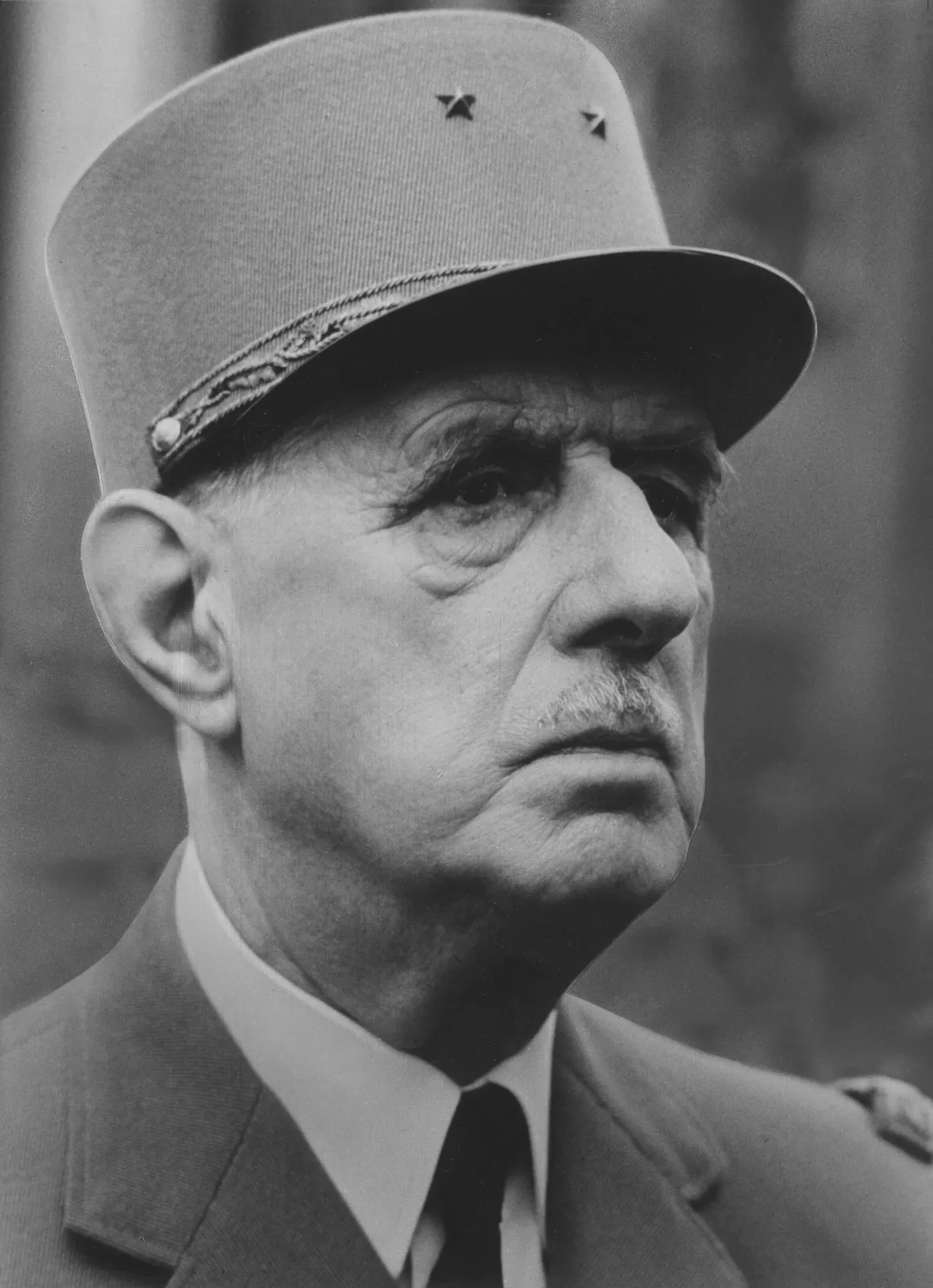
Charles De Gaulle is one of the most influential figures in 20th-century French history. A military leader, statesman, and the architect of modern France, De Gaulle’s life was marked by his unwavering commitment to his country and his determination to see it thrive as a sovereign and powerful nation. His leadership during World War II and his role in establishing the Fifth Republic have cemented his legacy as a defining figure in French politics. This article explores the life of Charles De Gaulle, delving into his early years, his rise to fame, and his lasting impact on France and the world.
Early Life and Military Career
Charles André Joseph Marie De Gaulle was born on November 22, 1890, in Lille, France. Raised in a devoutly Catholic and patriotic family, De Gaulle was instilled with a strong sense of duty and a deep love for his country from an early age. His father, Henri De Gaulle, was a teacher who fostered a rigorous intellectual environment at home, encouraging his children to engage with history, philosophy, and politics.
De Gaulle’s early education was marked by a fascination with military history and strategy. At the age of 18, he enrolled in the prestigious Saint-Cyr Military Academy, where he excelled as a student. Upon graduating in 1912, De Gaulle joined the French Army as a second lieutenant in the infantry. His military career would soon be tested by the outbreak of World War I.
World War I: A Baptism of Fire
When World War I erupted in 1914, Charles De Gaulle was thrust into the horrors of modern warfare. He served with distinction on the Western Front, quickly earning a reputation for his bravery and leadership under fire. In 1916, during the Battle of Verdun, one of the most brutal confrontations of the war, De Gaulle was wounded and taken prisoner by the Germans. He spent the remainder of the war in captivity, making several unsuccessful escape attempts.
Despite the hardships of imprisonment, De Gaulle used this time to reflect on military strategy and the future of warfare. His experiences during the war deeply influenced his thinking, particularly his belief in the importance of mobile, mechanized forces—a concept that would later become central to his military doctrine.
Interwar Years: Rise to Prominence
After World War I, De Gaulle continued his military career, steadily rising through the ranks. He became a captain in 1922 and attended the École Supérieure de Guerre, France’s premier military academy. His academic work there, including his thesis on the German military, demonstrated his keen strategic mind and his belief in the need for military innovation.
In the 1930s, De Gaulle began to gain wider recognition for his ideas on armored warfare. He published several books, including Vers l’Armée de Métier (Toward a Professional Army) in 1934, in which he argued for the creation of a professional, mechanized army capable of rapid and decisive action. Although his ideas were initially met with skepticism by the French military establishment, they would later prove prophetic.
As tensions in Europe escalated in the late 1930s, De Gaulle’s warnings about the weaknesses of the French Army’s defensive strategies became increasingly relevant. His advocacy for a more mobile and modernized military stood in stark contrast to the prevailing doctrine of static defense epitomized by the Maginot Line.
World War II: Leader of Free France
When World War II broke out in September 1939, Charles De Gaulle was a colonel in the French Army. By May 1940, as Nazi Germany launched its blitzkrieg offensive against France, De Gaulle was promoted to the rank of brigadier general and given command of a tank division. Despite the desperate situation, De Gaulle’s forces achieved some notable successes against the German advance, demonstrating the effectiveness of his armored warfare tactics.
As France teetered on the brink of collapse, De Gaulle was appointed Undersecretary of State for National Defense and War in the government of Prime Minister Paul Reynaud. However, the rapid German invasion led to Reynaud’s resignation and the rise of Marshal Philippe Pétain, who sought an armistice with Germany.
Refusing to accept the defeat of France, De Gaulle fled to London, where he made his famous radio broadcast from the BBC on June 18, 1940. In this speech, De Gaulle called on the French people to resist the German occupation and continue the fight for freedom. This marked the beginning of the Free French movement, with De Gaulle as its leader.
From London, De Gaulle worked tirelessly to rally support for Free France, organizing French forces abroad and coordinating with the Allies. His leadership and determination made him the symbolic leader of the French Resistance, even as the Vichy regime in France condemned him as a traitor and sentenced him to death in absentia.
Post-War France: Founding the Fifth Republic
With the liberation of France in 1944, De Gaulle returned to Paris as a hero. He was appointed head of the provisional government, where he oversaw the transition from Nazi occupation to a restored French Republic. De Gaulle’s vision for post-war France was one of national renewal and strength, free from the divisions and weaknesses that had plagued the Third Republic.
In 1946, however, De Gaulle resigned from the government, frustrated by the political infighting and the structure of the new Fourth Republic, which he believed was too weak and prone to instability. For the next decade, De Gaulle retreated from the political spotlight, focusing on his memoirs and waiting for the right moment to return.
That moment came in 1958, during the Algerian crisis, when France faced the threat of civil war over its colonial policies. With the country on the brink, De Gaulle was called back to power by the National Assembly. He was granted extraordinary powers to draft a new constitution, leading to the establishment of the Fifth Republic in 1958. This new constitution significantly strengthened the presidency, giving De Gaulle the authority he believed was necessary to govern effectively.
As President of the Fifth Republic, De Gaulle implemented a range of policies aimed at restoring France’s international standing and independence. He pursued a foreign policy of “grandeur,” emphasizing France’s sovereignty and its role as a major world power. This included the development of an independent nuclear deterrent, known as the “force de frappe,” and a withdrawal from NATO’s integrated military command in 1966 to ensure that France retained control over its own military decisions.
De Gaulle and Decolonization
One of the most challenging issues De Gaulle faced during his presidency was the question of decolonization, particularly in Algeria. The Algerian War of Independence, which began in 1954, was a bitter and brutal conflict that divided French society and threatened to undermine De Gaulle’s government.
Initially, De Gaulle sought to maintain Algeria as part of France, but he soon realized that continued colonial rule was untenable. In 1962, following a controversial and difficult negotiation process, the Évian Accords were signed, granting Algeria independence. This decision was met with fierce opposition from French settlers in Algeria and some elements of the military, leading to several assassination attempts against De Gaulle by the OAS (Organisation de l’armée secrète), a militant group opposed to Algerian independence.
Despite these challenges, De Gaulle’s handling of the Algerian crisis ultimately allowed France to exit the conflict with its dignity intact and set the stage for a broader process of decolonization in Africa.
Legacy of Leadership
Charles De Gaulle’s presidency was marked by his vision of a strong, independent France that could assert itself on the global stage. He sought to balance the demands of modernization with the preservation of France’s cultural identity and historical legacy. Domestically, De Gaulle’s economic policies helped drive the “Trente Glorieuses,” the 30 years of post-war economic growth that transformed France into a prosperous, modern nation.
However, De Gaulle’s tenure was not without its controversies. His strong-handed approach to governance and his sometimes aloof demeanor earned him both admirers and critics. The events of May 1968, when massive student protests and general strikes brought the country to a standstill, revealed the limits of his authority. Although De Gaulle managed to restore order, the unrest highlighted the growing disconnect between his leadership and the changing social dynamics of France.
In 1969, De Gaulle proposed a series of constitutional reforms aimed at decentralizing power and strengthening local governance. When these reforms were rejected in a national referendum, De Gaulle chose to resign from the presidency, believing that he had lost the mandate to lead. He retired to his home in Colombey-les-Deux-Églises, where he continued to write and reflect on his legacy until his death on November 9, 1970.
Conclusion
Charles De Gaulle’s impact on France and the world is profound and enduring. As a military leader, he embodied the spirit of resistance during one of France’s darkest hours. As a statesman, he reshaped the French Republic and restored the nation’s confidence on the global stage. His vision of a strong, independent France continues to influence French politics and foreign policy to this day.
De Gaulle’s legacy is not just that of a war hero or a political leader; it is the legacy of a man who believed deeply in the greatness of his country and dedicated his life to ensuring that France would remain a beacon of strength, culture, and independence in the world.


