
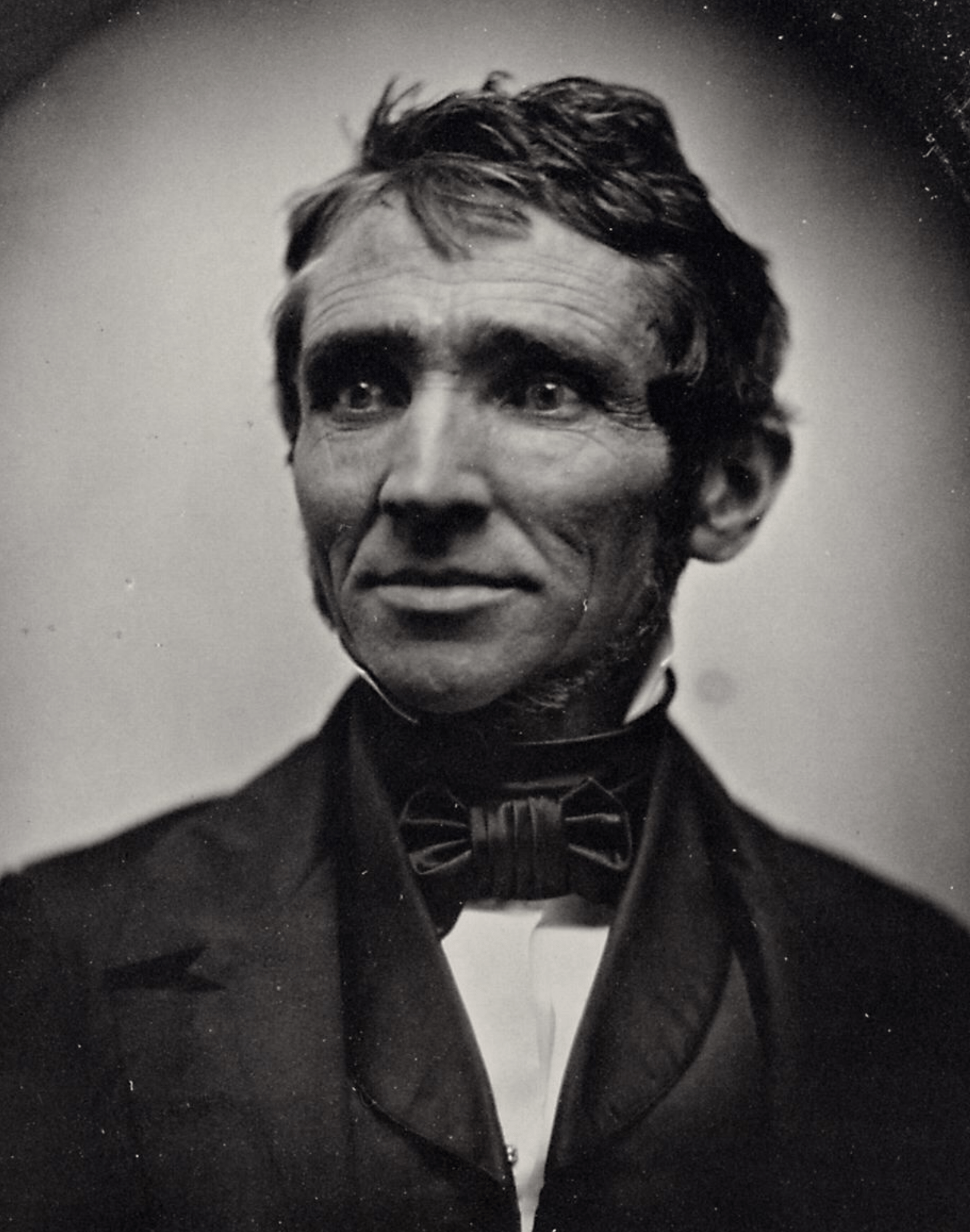
Charles Goodyear is a name synonymous with one of the most transformative discoveries in industrial history—the vulcanization of rubber. Born on December 29, 1800, in New Haven, Connecticut, Goodyear’s life was marked by perseverance, innovation, and an unyielding belief in the potential of rubber. His journey from a modest background to the halls of scientific fame is both inspiring and tragic, illustrating the often harsh realities faced by inventors in the 19th century.
Early Life and Background
Charles Goodyear was born into a world vastly different from the one he would eventually help shape. The early 19th century was a period of burgeoning industrialization, with America still finding its footing as a nation of innovation and progress. Goodyear’s father, Amasa Goodyear, was a man of modest means who ran a hardware business. It was from him that young Charles likely inherited his fascination with materials and manufacturing.
Despite his father’s best efforts, the Goodyear family was not wealthy, and Charles’s early life was marked by financial struggles—a theme that would continue throughout his life. Nonetheless, he received a basic education, which was common for the time, and eventually married Clarissa Beecher in 1824. The couple would go on to have several children, though their family life was fraught with hardships, including the loss of children and constant financial instability.
The Obsession with Rubber
Goodyear’s interest in rubber began in the 1830s, a period when rubber was seen as a material with immense potential but also significant limitations. At the time, natural rubber was plagued by issues such as becoming sticky and malleable in hot weather and brittle in the cold. These properties made it unreliable for many practical applications, despite its versatility.
Goodyear became convinced that rubber was the material of the future. He envisioned a world where rubber could be used in a multitude of ways—from clothing and shoes to industrial machinery and beyond. His obsession with this material drove him to conduct thousands of experiments, often at great personal and financial cost. He believed that if he could stabilize rubber, it would revolutionize industries and daily life.
His dedication to this cause was so intense that it bordered on the obsessive. Goodyear’s commitment to his experiments often led to neglect of his family’s financial well-being, causing immense strain. His wife, Clarissa, frequently urged him to abandon his pursuits and find steady employment, but Goodyear remained undeterred. He was a man on a mission, willing to endure poverty and hardship for the sake of his vision.
The Discovery of Vulcanization
The breakthrough that would change the world came almost by accident in 1839. As the story goes, Goodyear was conducting yet another experiment when he accidentally dropped a mixture of rubber and sulfur onto a hot stove. To his amazement, instead of melting into a sticky mess, the rubber became firm and elastic. This serendipitous discovery was the foundation of vulcanization—a process that would transform rubber into a durable and flexible material, capable of withstanding extreme temperatures and weather conditions.
Vulcanization involves heating rubber with sulfur, which creates cross-links between the polymer chains in the rubber. This process significantly improves the properties of natural rubber, making it elastic, waterproof, and resistant to abrasion and aging. It was the solution to the problems that had plagued rubber since its initial discovery and opened the door to its use in countless applications, from tires and hoses to waterproof clothing and medical devices.
Goodyear’s discovery was revolutionary, but it did not bring him immediate wealth or recognition. In fact, his financial troubles continued, and he struggled to capitalize on his invention. Goodyear was not a savvy businessman, and despite securing a patent for vulcanization in 1844, he faced numerous legal battles and challenges from rivals who sought to undermine his claims.
Legal Struggles and Financial Hardships
The patenting of his vulcanization process in 1844 should have secured Goodyear’s financial future, but instead, it marked the beginning of a prolonged and grueling legal battle. Others in the industry were quick to recognize the value of vulcanization, leading to a series of patent disputes. Goodyear found himself entangled in a complex web of litigation that drained his resources and energy.
One of the most notable legal battles was with Nathaniel Hayward and Horace Day, who claimed to have discovered a similar process. The case dragged on for years, and although Goodyear eventually won, the victory was bittersweet. The legal fees were astronomical, and by the time the dust settled, Goodyear was deeply in debt. He had spent most of his life’s savings and was left with little to show for his groundbreaking work.
Despite his struggles, Goodyear remained optimistic and continued to pursue his work with rubber. He was invited to showcase his rubber products at the 1851 Great Exhibition in London, where he received considerable acclaim. His displays included rubberized furniture, shoes, and even a life-sized rubber model of an ancient Egyptian mummy. These exhibitions earned him some recognition and honors, including the prestigious Legion of Honour from France. However, these accolades did not translate into financial success, and Goodyear continued to live in relative poverty.
The Final Years and Legacy
Charles Goodyear’s final years were marked by continued financial difficulties and personal tragedies. In 1860, while traveling to New York to visit his daughter, he received the devastating news of her death. The shock was too much for Goodyear, who had already been weakened by years of hardship and stress. He died on July 1, 1860, at the age of 59, leaving behind a legacy of innovation but also a mountain of debt—an estimated $200,000, a staggering sum for the time.
Goodyear’s story is a poignant reminder of the often harsh realities faced by inventors and innovators. Despite his immense contribution to the world, Goodyear never reaped the financial rewards of his work. His family was left to struggle with the debts he had accumulated, and it would be many years before his name would be associated with the success and prosperity he had longed for.
Today, the name Goodyear is synonymous with rubber and innovation, thanks in large part to the Goodyear Tire and Rubber Company, founded in 1898 by Frank Seiberling. Although the company was established nearly four decades after Goodyear’s death, it was named in his honor and became one of the largest and most successful tire manufacturers in the world. The company’s iconic winged foot logo is a tribute to the man whose tireless work with rubber laid the foundation for an industry that would change the world.
The Impact of Goodyear’s Invention
The impact of Charles Goodyear’s invention of vulcanization cannot be overstated. His discovery revolutionized industries and had far-reaching effects on the development of modern society. The ability to produce durable, elastic rubber made it possible to manufacture a wide range of products that were previously unimaginable.
One of the most significant applications of vulcanized rubber is in the automotive industry. The invention of the pneumatic tire, which relies on vulcanized rubber, was a key factor in the development of the automobile. Without Goodyear’s discovery, the transportation industry as we know it today would not exist. The durability and flexibility of vulcanized rubber made it the ideal material for tires, hoses, belts, and countless other automotive components.
Beyond transportation, vulcanized rubber has been used in countless other industries, from construction and manufacturing to healthcare and consumer goods. It has been essential in the production of waterproof clothing, medical devices, electrical insulation, and even sports equipment. The versatility and durability of vulcanized rubber have made it a cornerstone of modern industrial society.
Historical Context and Influence
To fully appreciate the significance of Goodyear’s work, it is important to consider the historical context in which he lived. The early 19th century was a time of rapid industrialization and technological advancement, particularly in the United States. The nation was undergoing a transformation from an agrarian economy to an industrial powerhouse, driven by innovation and the spirit of entrepreneurship.
Goodyear was part of this wave of innovation, but his journey was far from easy. The patent system of the time was still in its infancy, and inventors like Goodyear often faced significant challenges in protecting their intellectual property. The legal battles and financial difficulties he encountered were not uncommon among inventors of the era, many of whom struggled to navigate the complex and often unfair business environment.
Despite these challenges, Goodyear’s work had a profound influence on subsequent generations of inventors and industrialists. His perseverance in the face of adversity and his unwavering belief in the potential of rubber are lessons in determination and innovation. His story is a testament to the power of invention and the impact that a single individual can have on the world.
Conclusion: Charles Goodyear’s Enduring Legacy
Charles Goodyear may have died in relative obscurity and poverty, but his legacy lives on in the countless applications of vulcanized rubber that shape our daily lives. His discovery was a turning point in industrial history, laying the foundation for the modern rubber industry and transforming the way we live and work.
The Goodyear Tire and Rubber Company stands as a monument to his genius, ensuring that his name remains synonymous with innovation and progress. Though he did not live to see the full impact of his work, Charles Goodyear’s contribution to science and industry is immeasurable, and his story continues to inspire inventors and entrepreneurs around the world.
Goodyear’s life is a reminder that the path of innovation is often fraught with challenges, but it is also a journey of discovery, perseverance, and ultimately, transformation. His work changed the world, and for that, he will always be remembered as one of the great pioneers of the industrial age.


