
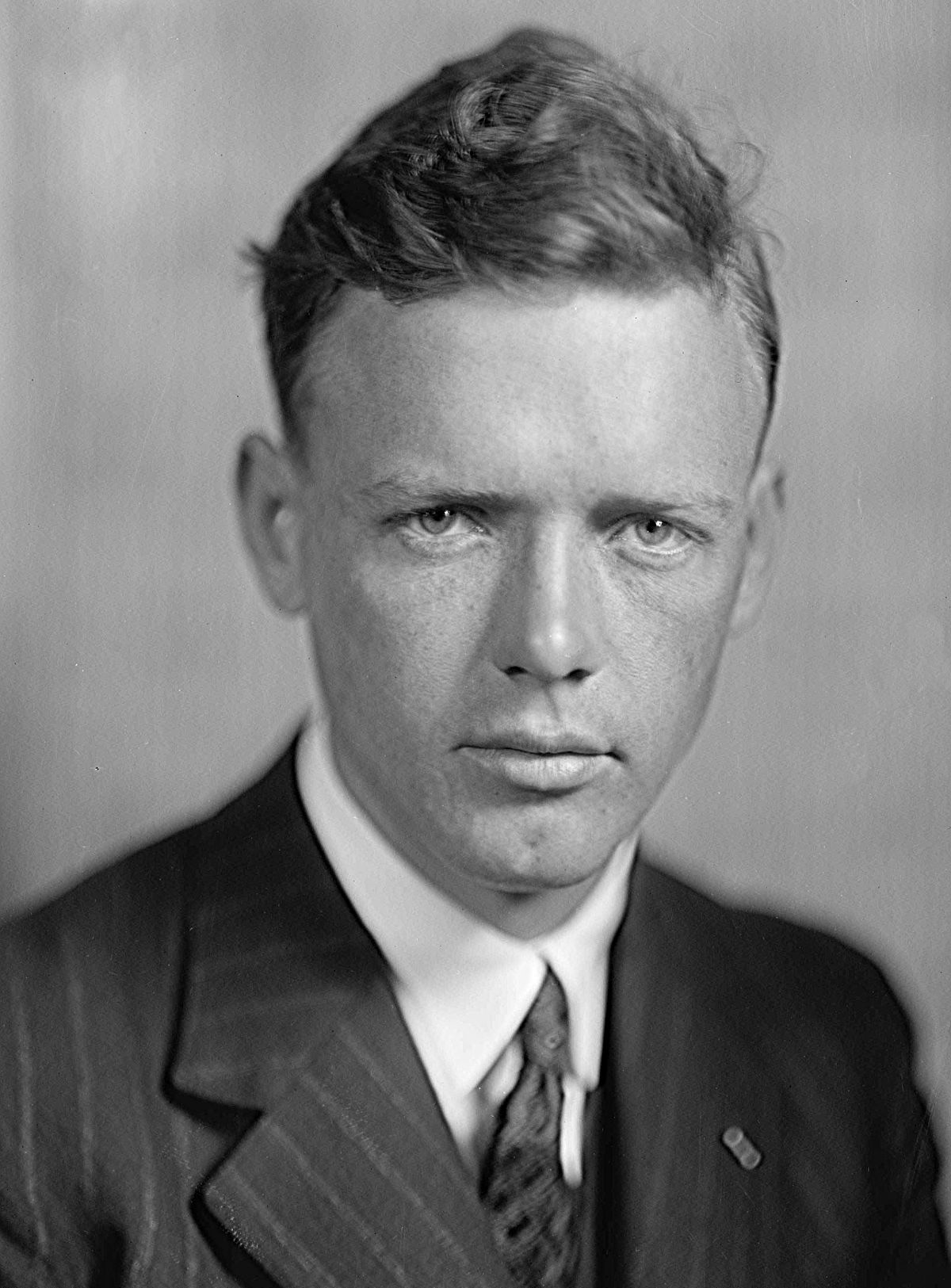
Charles Lindbergh, a name synonymous with aviation history, was an American aviator who etched his name in the annals of history with a remarkable feat that transformed him into an international hero. Born on February 4, 1902, in Detroit, Michigan, Lindbergh rose to fame for his groundbreaking solo transatlantic flight in 1927. This article delves into the life of Charles Lindbergh, exploring his age at various life milestones, his rise to fame, and the significant highlights that defined his extraordinary life.
Early Life and Passion for Aviation
Charles Augustus Lindbergh was born into a family with deep roots in American history. His father, Charles August Lindbergh, was a U.S. Congressman, and his mother, Evangeline Lodge Land Lindbergh, was a chemistry teacher. From an early age, Lindbergh exhibited a keen interest in mechanics and flight. He grew up in Little Falls, Minnesota, where he was surrounded by the burgeoning technology of the early 20th century, which undoubtedly fueled his fascination with aviation.
Lindbergh’s early education was marked by a restless curiosity. He attended several schools but was more interested in exploring the mechanics of machinery than in conventional classroom learning. His love for aviation led him to enroll in the University of Wisconsin-Madison to study engineering, but he left the university after two years to pursue his true passion—flying.
In 1922, at the age of 20, Lindbergh began his flight training, initially learning to fly at the Nebraska Aircraft Corporation’s flying school. His early experiences in the cockpit were as a barnstormer, a stunt pilot who performed aerial tricks at fairs and other events. This was a period of intense learning and honing of skills that would later prove crucial in his historic flight.
The Historic Transatlantic Flight
Charles Lindbergh’s rise to fame is inextricably linked to his historic solo nonstop flight across the Atlantic Ocean, a feat that had been attempted by many but achieved by none. On May 20, 1927, at the age of 25, Lindbergh took off from Roosevelt Field in New York in his custom-built monoplane, the Spirit of St. Louis. His destination was Paris, France—a journey of 3,600 miles over open ocean.
Lindbergh’s flight was a bold response to the Orteig Prize, a $25,000 reward offered by New York hotel owner Raymond Orteig to the first aviator to fly nonstop between New York and Paris. Lindbergh’s meticulous planning and preparation were crucial to his success. He had designed the Spirit of St. Louis specifically for this mission, prioritizing fuel capacity over safety features such as radios and parachutes to minimize weight.
The flight was fraught with challenges. Lindbergh had to stay awake for 33 hours and 30 minutes, battling sleep deprivation, inclement weather, and mechanical difficulties. He navigated using only basic instruments, relying heavily on his instincts and the stars to guide him across the vast, empty expanse of the Atlantic.
On May 21, 1927, Lindbergh landed at Le Bourget Airport near Paris, where he was greeted by a crowd of over 100,000 people. His successful flight was more than a personal triumph; it marked a significant milestone in aviation history. Lindbergh had demonstrated that long-distance air travel was not only possible but also a viable means of connecting distant continents. His achievement earned him instant fame and the nickname “The Lone Eagle.”
Life After the Flight
Charles Lindbergh’s life after the transatlantic flight was marked by both triumphs and tragedies. His success brought him immense fame and numerous accolades. He was awarded the Congressional Medal of Honor and the Distinguished Flying Cross by the U.S. government. In addition, the French government bestowed upon him the Legion of Honor, and he received honorary degrees from universities around the world.
Lindbergh embarked on a three-month nationwide tour, visiting 92 cities across the United States to promote aviation. His tour was funded by the Daniel Guggenheim Fund for the Promotion of Aeronautics, a philanthropic organization dedicated to advancing aviation technology. During this tour, Lindbergh continued to fly the Spirit of St. Louis, inspiring countless Americans with his courage and pioneering spirit.
However, Lindbergh’s life was not without its darker moments. On March 1, 1932, his 20-month-old son, Charles Augustus Lindbergh Jr., was kidnapped from the family’s home in New Jersey. Despite efforts to secure his safe return, the child was found dead several weeks later. The tragedy shocked the nation and led to what was dubbed the “Crime of the Century.” The intense media coverage and public scrutiny that followed deeply affected Lindbergh and his wife, Anne Morrow Lindbergh, leading them to retreat from the public eye.
In the years following the kidnapping, Lindbergh and his family moved to Europe, seeking privacy and peace. During this period, Lindbergh became involved in the burgeoning field of aviation technology, working with various European aircraft manufacturers. He also began to express controversial views on the political situation in Europe, advocating for American neutrality in the face of rising tensions that would eventually lead to World War II.
Lindbergh’s Role in World War II
Despite his earlier stance on American neutrality, Charles Lindbergh played a significant role in World War II. Initially, he was a vocal opponent of U.S. involvement in the war, aligning himself with the America First Committee, a non-interventionist group that sought to keep the United States out of the conflict. Lindbergh’s speeches and writings during this time were widely publicized, and he became a polarizing figure in American society.
However, after the attack on Pearl Harbor in December 1941, Lindbergh’s views shifted. Although he was unable to obtain a military commission due to his previous public statements, Lindbergh found ways to contribute to the war effort. He served as a civilian consultant to various aircraft manufacturers, including Ford and United Aircraft, and conducted test flights of new aircraft designs.
In 1944, Lindbergh traveled to the Pacific Theater, where he flew combat missions as a civilian pilot with the Marine Corps. His experience and expertise were invaluable in improving the performance of military aircraft. Lindbergh flew over 50 combat missions, earning the respect of military personnel despite his earlier controversial views.
After the war, Lindbergh continued to be involved in aviation and environmental conservation. He was a vocal advocate for the preservation of natural resources and worked with various organizations to protect wildlife and the environment. His later years were marked by a return to the values that had initially driven his passion for aviation: exploration, innovation, and a deep respect for the natural world.
Literary Contributions and Personal Life
In addition to his achievements in aviation, Charles Lindbergh was also a prolific writer. His most famous work, The Spirit of St. Louis, published in 1953, is a detailed account of his historic transatlantic flight. The book was a critical and commercial success, earning Lindbergh the Pulitzer Prize for Biography in 1954. His writing demonstrated not only his technical knowledge of aviation but also his philosophical reflections on the human experience of flight.
Lindbergh’s personal life was complex and marked by both public adulation and private struggles. His marriage to Anne Morrow Lindbergh, herself an accomplished aviator and writer, was a partnership that produced significant contributions to aviation and literature. The couple had six children, and Anne supported Charles in his various endeavors, both during and after his flying career.
In the later years of his life, Lindbergh became increasingly focused on environmental conservation. He was an early advocate for the protection of endangered species and the preservation of natural habitats. Lindbergh’s interest in conservation was rooted in his belief that technological progress should be balanced with a respect for the environment—a belief that was ahead of its time.
Lindbergh passed away on August 26, 1974, at the age of 72, after a battle with lymphoma. He spent his final days in Hana, Maui, Hawaii, where he sought solace in the natural beauty of the islands. His legacy as a pioneering aviator, a public figure, and an advocate for environmental conservation continues to inspire generations.
Legacy and Impact
Charles Lindbergh’s legacy is one of courage, innovation, and a relentless pursuit of the unknown. His solo transatlantic flight remains one of the most significant achievements in the history of aviation, a testament to human ingenuity and the spirit of exploration. Lindbergh’s impact extended beyond his flight; he played a crucial role in the development of modern aviation and was a powerful advocate for the responsible use of technology.
Lindbergh’s life was a reflection of the complexities of the 20th century—a time of rapid technological advancement, global conflict, and profound changes in society. His contributions to aviation and his efforts in conservation have left a lasting imprint on both fields, and his story continues to be studied and admired.
In conclusion, Charles Lindbergh was more than just an aviator; he was a visionary who challenged the limits of what was possible and inspired countless others to do the same. His life, marked by triumphs and tragedies, exemplifies the potential of human achievement and the importance of balancing progress with respect for the world around us.


