
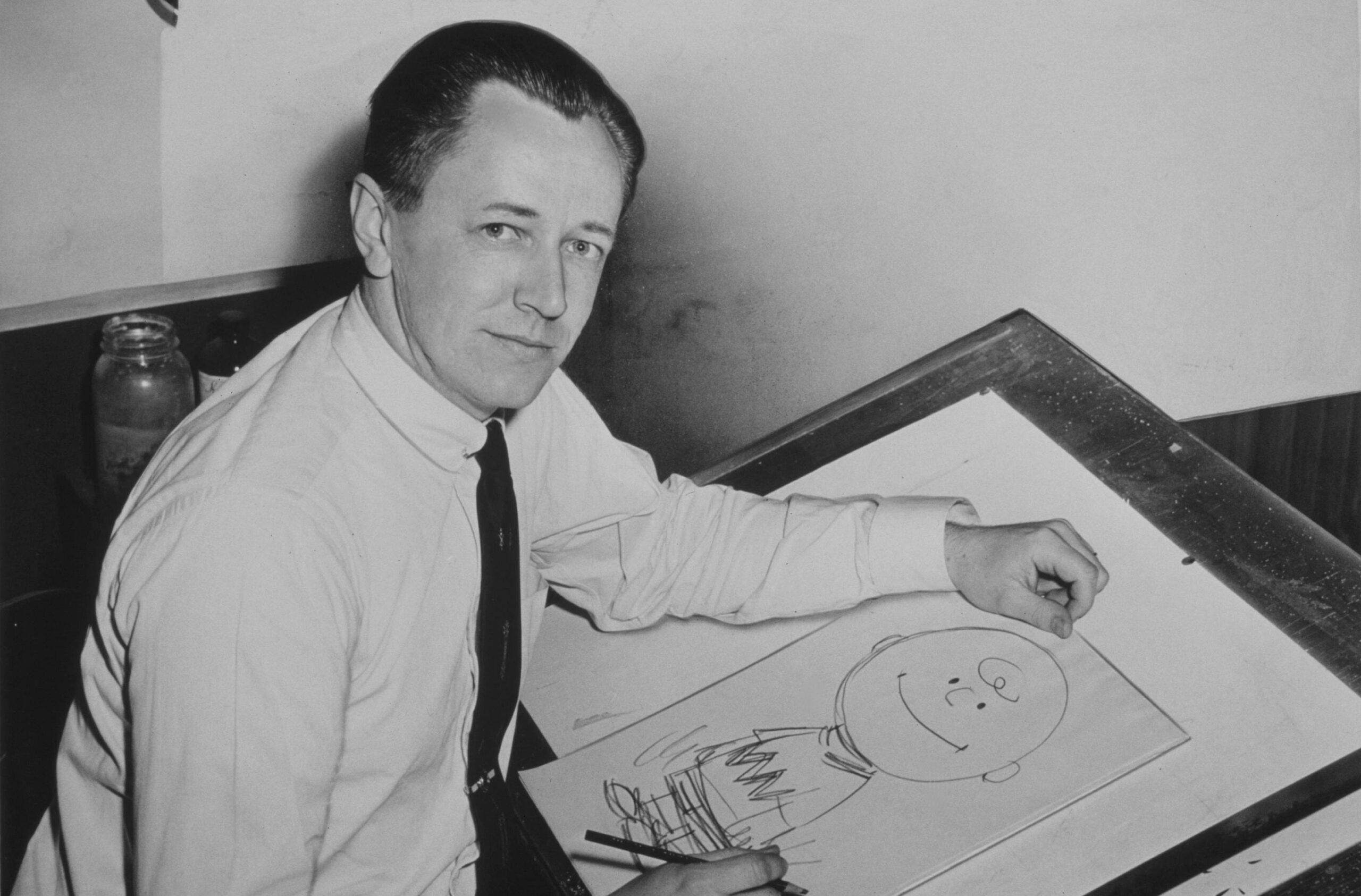
Charles Monroe Schulz, born on November 26, 1922, in St. Paul, Minnesota, is a name that resonates deeply with comic strip enthusiasts and pop culture aficionados alike. Known affectionately as “Sparky,” Schulz is the creative genius behind the beloved comic strip Peanuts, which introduced the world to iconic characters like Charlie Brown, Snoopy, and Lucy. Over the course of his life, Schulz not only revolutionized the comic strip industry but also left an indelible mark on global culture, influencing generations of readers and artists. This article delves into the life, career, and lasting impact of Charles M. Schulz, exploring the nuances of his work and the historical context that shaped his legacy.
Early Life and Influences
Charles M. Schulz was born into a modest family in the Twin Cities area of Minnesota. His parents, Carl and Dena Schulz, were supportive of his early interests in drawing, which were evident from a young age. The nickname “Sparky” was given to him by an uncle shortly after his birth, inspired by the horse Spark Plug from the comic strip Barney Google. This moniker stuck with him throughout his life and became a symbol of his early connection to the world of comics.
Schulz’s childhood was marked by a deep love for comic strips, which he avidly read in newspapers. He admired the works of cartoonists like Milton Caniff, creator of Terry and the Pirates, and Al Capp, the mind behind Li’l Abner. These early influences would later shape Schulz’s approach to storytelling and character development in his own work.
At the age of 13, Schulz experienced a pivotal moment in his life when his family adopted a black-and-white dog named Spike. This dog, with its quirky and intelligent demeanor, became the inspiration for one of Schulz’s most famous characters, Snoopy. Spike’s playful and imaginative personality would later be reflected in the adventures of Snoopy, the beagle who dreams of being everything from a World War I flying ace to a literary giant.
Early Career and the Birth of Peanuts
After graduating from high school, Schulz enlisted in the U.S. Army during World War II, serving in Europe. The war years were formative for Schulz, exposing him to a range of experiences that would later inform the subtle humor and melancholy that characterized much of his work.
Following the war, Schulz returned to Minnesota and began teaching at the Art Instruction Schools, a correspondence school where he had previously studied. It was during this time that he started to seriously pursue a career in cartooning. Schulz began submitting his work to various publications, and in 1947, his first comic, Li’l Folks, was published in the St. Paul Pioneer Press. This comic strip featured a group of children, including a character named Charlie Brown, who would later become the central figure of Peanuts.
In 1950, Schulz’s persistence paid off when he signed a contract with the United Feature Syndicate, which agreed to distribute his new comic strip. Originally titled Li’l Folks, the strip was renamed Peanuts by the syndicate—a title Schulz disliked but ultimately accepted. On October 2, 1950, Peanuts debuted in seven newspapers across the United States, marking the beginning of a cultural phenomenon that would span five decades.
The Rise of Peanuts and Cultural Impact
Peanuts quickly gained popularity for its unique blend of humor, philosophical insights, and relatable characters. The strip centered around the trials and tribulations of Charlie Brown, an everyman figure who epitomized the struggles and insecurities of the average person. Through Charlie Brown, Schulz explored themes of failure, resilience, and the human condition, all while maintaining a lighthearted tone that resonated with readers of all ages.
The character of Snoopy, Charlie Brown’s loyal but eccentric beagle, became an instant fan favorite. Snoopy’s rich fantasy life, where he imagined himself as everything from a fighter pilot to a celebrated writer, added a layer of whimsy and creativity to the strip. Other characters, such as the bossy and opinionated Lucy, the blanket-toting Linus, and the musically inclined Schroeder, each brought their own unique perspectives and personalities to the comic, making Peanuts a rich tapestry of human (and canine) experience.
By the 1960s, Peanuts had become a global sensation, appearing in thousands of newspapers in multiple languages. The strip’s success extended beyond the printed page, with the characters appearing in animated television specials, books, merchandise, and even on the big screen. The 1965 TV special A Charlie Brown Christmas became an instant classic, solidifying the Peanuts gang’s place in popular culture.
The Philosophy of Peanuts and Schulz’s Creative Process
One of the reasons for the enduring popularity of Peanuts is its philosophical depth. Schulz infused his characters with existential musings and reflections on life’s complexities. Charlie Brown’s perpetual struggle to kick a football or win a baseball game became metaphors for the broader human experience of striving and often failing, yet continuing to persevere.
Schulz’s approach to cartooning was methodical and deeply personal. He drew every strip himself, refusing to delegate the work to assistants—a rarity in the comic strip industry. This hands-on approach ensured that each Peanuts strip bore Schulz’s unique voice and artistic style. His dedication to his craft was evident in the consistency of the strip’s quality, even as it spanned nearly 50 years.
In interviews, Schulz often discussed the importance of maintaining creative control over his work. He believed that the authenticity of Peanuts was tied to his direct involvement in every aspect of its creation. This commitment to artistic integrity is one of the reasons why Peanuts remains a beloved and influential work in the world of comics.
Personal Life and Challenges
Charles Schulz’s personal life was marked by both triumphs and challenges. In 1951, he married Joyce Halverson, with whom he had five children. The couple divorced in 1972, and Schulz later married Jeannie Forsythe in 1973, a marriage that lasted until his death.
Despite his professional success, Schulz faced his own share of personal struggles. He battled feelings of insecurity and self-doubt, much like his character Charlie Brown. Schulz also dealt with health issues later in life, including a diagnosis of colon cancer in the late 1990s.
Schulz’s relationship with his children and family played a significant role in his work. His children were often the inspiration for various Peanuts characters and storylines. However, Schulz’s dedication to his work sometimes created a distance between him and his family, a dynamic that has been explored in various biographies and interviews.
Legacy and the End of an Era
Charles M. Schulz announced his retirement in December 1999, citing health reasons. His final Peanuts strip was published on February 13, 2000, just one day after his death from colon cancer at the age of 77. True to his wishes, the Peanuts comic strip ended with him, ensuring that no one else would continue the legacy he had created.
Schulz’s death marked the end of an era in comic strip history. Peanuts had become much more than just a comic; it was a cultural institution that had touched the lives of millions. Schulz’s characters had become part of the global consciousness, and his work was celebrated for its ability to address profound themes with simplicity and humor.
In recognition of his contributions to the arts, Schulz received numerous awards throughout his life, including the prestigious Reuben Award from the National Cartoonists Society, and posthumously, the Congressional Gold Medal. His influence on future generations of cartoonists and artists cannot be overstated, with many citing Peanuts as a major inspiration for their own work.
The Enduring Impact of Peanuts
Even after Schulz’s passing, the impact of Peanuts continues to be felt around the world. The characters he created remain as popular as ever, with ongoing reprints of the comic strip, new animated specials, and a continued presence in popular culture. Peanuts merchandise, from clothing to toys, continues to be a staple for fans of all ages.
The themes explored in Peanuts—such as friendship, hope, failure, and perseverance—remain relevant to modern audiences. The strip’s ability to capture the human experience in a way that is both humorous and poignant ensures that it will continue to be cherished by future generations.
Schulz’s work also laid the groundwork for the acceptance and success of other comic strips that blend humor with deeper reflections on life. His influence can be seen in the works of modern cartoonists and in the broader landscape of popular culture, where the legacy of Peanuts continues to inspire.
Conclusion
Charles M. Schulz’s life and career are a testament to the power of creativity and the enduring appeal of simple, yet profound, storytelling. Through Peanuts, Schulz captured the essence of the human condition, creating characters and narratives that resonate across generations and cultures. His dedication to his craft, his philosophical approach to cartooning, and his ability to connect with audiences on a deep emotional level have ensured that Peanuts remains one of the most beloved and influential comic strips of all time.
As the creator of Peanuts, Charles M. Schulz leaves behind a legacy that is both monumental and intimate—a legacy that will continue to bring joy, reflection, and inspiration to millions for years to come.


