
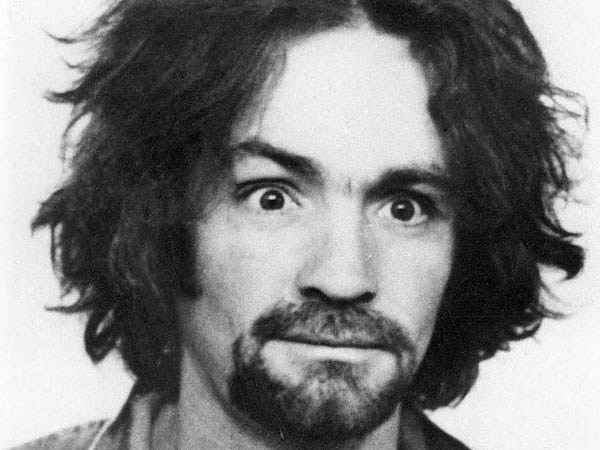
Charles Manson is a name that resonates with infamy, becoming synonymous with one of the darkest chapters in American history. Born on November 12, 1934, in Cincinnati, Ohio, Manson rose to notoriety in the late 1960s as the leader of a cult-like group known as the “Manson Family.” His involvement in a series of brutal murders, including the infamous Tate-LaBianca killings, has made him one of the most notorious figures in the annals of criminal history. This article delves into the life of Charles Manson, exploring his early years, rise to infamy, significant crimes, and the enduring impact of his legacy.
Early Life and Troubled Beginnings
Charles Manson’s early life was marked by instability and hardship. He was born to Kathleen Maddox, a 16-year-old girl with a troubled past, who would later be convicted of robbery. Manson’s childhood was tumultuous, characterized by neglect and frequent brushes with the law. His mother’s frequent incarcerations and her struggles with alcohol left young Charles in the care of various relatives and foster homes, fostering a deep-seated sense of abandonment.
By the time he was a teenager, Manson had already begun his descent into criminality. His early crimes ranged from petty theft to more serious offenses such as armed robbery. Throughout his youth and early adulthood, Manson spent more time in reformatories and prisons than outside of them. These formative years behind bars shaped his worldview, imbuing him with a sense of resentment and an obsession with power and control.
The 1960s: A Period of Transformation
The 1960s was a decade of profound social and cultural upheaval in the United States, with the counterculture movement challenging traditional values and norms. Manson, who was released from prison in 1967 after serving nearly half his life behind bars, found himself thrust into this turbulent environment. He gravitated toward the burgeoning hippie culture in San Francisco, where he began to reinvent himself as a guru-like figure.
Manson’s charisma and ability to manipulate others quickly attracted a following. He preached a distorted version of peace and love, infused with his apocalyptic visions. Manson believed in an impending race war, which he referred to as “Helter Skelter,” a term he borrowed from a Beatles song. He convinced his followers that they were destined to survive this cataclysmic event and rule the world afterward.
Manson’s followers, many of whom were young, disillusioned individuals seeking meaning in their lives, became his loyal disciples. They were drawn to his magnetic personality and his promises of a utopian future. Manson established a commune in the Spahn Ranch, a dilapidated ranch near Los Angeles, where his “Family” lived in isolation, cut off from mainstream society.
The Manson Family and the Descent into Violence
As Manson’s influence over his followers grew, so did his paranoia and delusions. He began to see himself as a messianic figure, destined to ignite the race war he had long prophesied. To bring about this “Helter Skelter,” Manson believed that a series of gruesome murders would serve as the spark needed to initiate the conflict.
The Manson Family’s descent into violence began in earnest on August 9, 1969. On that night, Manson directed a group of his followers to the home of actress Sharon Tate and her husband, filmmaker Roman Polanski, on Cielo Drive in Los Angeles. Polanski was away on business, but Tate, who was eight months pregnant, was at home with three friends: Jay Sebring, Abigail Folger, and Wojciech Frykowski. A young visitor, Steven Parent, was also at the property.
The events that unfolded that night were nothing short of horrific. The Manson Family members, under Manson’s orders, brutally murdered Tate and her companions. The sheer brutality of the attacks, which included multiple stabbings and gunshot wounds, shocked the nation. Tate’s body was found with the word “PIG” scrawled on the door in her blood, a chilling signature of the Manson Family.
The following night, Manson himself led another group of followers to the home of Leno and Rosemary LaBianca, a wealthy couple in Los Angeles. The LaBiancas were similarly murdered in a frenzied attack, with the words “DEATH TO PIGS” and “HELTER SKELTER” written in blood on the walls. These murders were intended to further incite the racial violence that Manson believed was imminent.
Investigation and Trial
The Tate-LaBianca murders sent shockwaves throughout the United States, igniting widespread fear and outrage. However, it wasn’t until months later that investigators would link the murders to Charles Manson and his followers. The breakthrough came when Susan Atkins, one of the Manson Family members, bragged about the murders to a fellow inmate while in jail on unrelated charges. This led to the arrest of Manson and several of his followers.
The trial of Charles Manson and his co-defendants began in June 1970 and became one of the most sensationalized and publicized trials in American history. Manson’s behavior during the trial was erratic and bizarre; he carved an “X” into his forehead, later turning it into a swastika, and frequently disrupted proceedings with outbursts. His followers also exhibited strange behavior, shaving their heads and carving “X” marks into their foreheads in solidarity with Manson.
Prosecutor Vincent Bugliosi successfully argued that Manson had orchestrated the murders through his influence over his followers, convincing them that the killings were necessary to bring about “Helter Skelter.” Although Manson did not physically participate in the murders, his control over the perpetrators made him just as culpable. On January 25, 1971, Manson and several of his followers were convicted of first-degree murder and conspiracy to commit murder.
On March 29, 1971, Manson was sentenced to death, but the sentence was later commuted to life imprisonment when the California Supreme Court temporarily abolished the death penalty in 1972.
The Legacy of Charles Manson
Charles Manson spent the rest of his life in prison, where he remained a figure of fascination and revulsion. His influence, even from behind bars, continued to captivate the public, with numerous books, documentaries, and films exploring his life and crimes. Manson’s ability to manipulate and control others, combined with the horrific nature of the murders, made him a symbol of evil in the American psyche.
Throughout his imprisonment, Manson showed little remorse for his actions, often giving cryptic and chilling interviews that only served to deepen his notoriety. His name became synonymous with the dark side of the 1960s counterculture, a stark reminder of how the ideals of peace and love could be twisted into something monstrous.
Manson also became a symbol in popular culture, inspiring everything from songs to movies. His name was even adopted by the controversial musician Marilyn Manson, who sought to combine the names of infamous figures with those of pop culture icons.
Manson’s story serves as a cautionary tale about the dangers of charismatic leaders who exploit vulnerable individuals for their own ends. His ability to command his followers to commit such heinous acts highlights the power of manipulation and the devastating consequences it can have.
Death and Aftermath
Charles Manson died on November 19, 2017, at the age of 83, from natural causes in Bakersfield, California. Even in death, Manson remained a figure of controversy and intrigue. His body became the subject of a legal battle over who would claim his remains, and the debate over his legacy continues to this day.
While Manson is often remembered for the sheer brutality of his crimes, it is also important to recognize the broader impact of his actions. The Tate-LaBianca murders marked the end of the 1960s and the idealism that defined much of that decade. The horror of the Manson Family’s crimes shattered the illusion of the era’s innocence and ushered in a period of societal introspection and skepticism.
Conclusion
Charles Manson’s life and crimes are a stark reminder of how quickly ideology and manipulation can lead to unspeakable acts of violence. His ability to exploit the fears and vulnerabilities of his followers resulted in one of the most infamous killing sprees in American history. Today, Manson remains a symbol of evil, his name forever linked with the dark underbelly of the 1960s counterculture.
The legacy of Charles Manson serves as a chilling example of the destructive power of charismatic leadership and the dangers of blind devotion. His story continues to be a subject of fascination, study, and reflection, reminding us of the potential for darkness that exists within society.


