
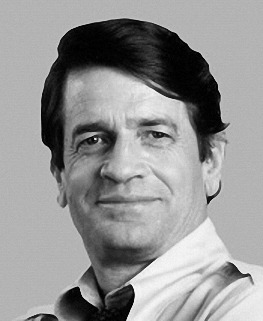
Charles Nesbitt Wilson, often referred to as “Charlie,” is a figure whose life has been intertwined with both controversy and acclaim. Born on June 1, 1933, in Trinity, Texas, Wilson’s journey from a small-town boy to a significant political player in Washington D.C. is as intriguing as it is complex. His life story offers a unique glimpse into the often unseen machinations of American politics during the Cold War era. This article delves into the life, achievements, and the controversial legacy of Charles Wilson, offering a comprehensive view of his contributions and the lasting impact of his decisions.
Early Life and Education
Charles Wilson’s early years were marked by a blend of ambition and defiance. Growing up in Trinity, a small town in Texas, Wilson was exposed to the harsh realities of life at an early age. His father, a farmer, instilled in him a strong sense of duty and responsibility. Wilson’s determination to make a difference became evident when, at just 13 years old, he orchestrated a successful campaign to oust a local city councilman who had poisoned his dog. This incident, often cited as the catalyst for his political career, foreshadowed the fierce and relentless spirit that would define his later years.
Wilson attended Trinity High School before enrolling at the Sam Houston State University in Huntsville, Texas. His time at university was cut short when he gained admission to the United States Naval Academy, where he graduated with a degree in science in 1956. Following his graduation, Wilson served in the United States Navy, achieving the rank of lieutenant before leaving the service in 1960. His military background would later play a significant role in shaping his political views and strategies.
Entry into Politics
Wilson’s entry into politics was marked by a combination of personal vendetta and a desire for justice. His first taste of political success came in 1960 when he ran for the Texas State House of Representatives. Despite the challenges of running a campaign while still serving in the Navy, Wilson’s determination paid off, and at the age of 27, he secured his first political victory. His early political career was characterized by his liberal views, particularly his advocacy for social programs like Medicaid and his support for women’s reproductive rights.
Wilson’s political ideology was a mix of progressive social policies and staunch anti-communism. His liberal stance on domestic issues was coupled with a fierce opposition to the spread of communism, a stance that would later define his most controversial and impactful actions.
Rise to National Prominence
Wilson’s rise to national prominence came in 1972 when he was elected to the U.S. House of Representatives, representing Texas’s 2nd congressional district. He would go on to serve 12 consecutive terms, becoming one of the most influential members of Congress during his tenure. Wilson’s time in Congress was marked by his involvement in foreign policy, particularly his role in the United States’ covert operations in Afghanistan during the 1980s.
The Soviet invasion of Afghanistan in 1979 marked a turning point in Wilson’s career. As a member of the House Appropriations Subcommittee on Defense, Wilson found himself in a position to influence U.S. foreign policy in a significant way. He became a key advocate for increasing U.S. support for the Afghan Mujahideen, the rebel groups fighting against the Soviet forces. Wilson’s efforts were instrumental in securing substantial funding for the CIA’s covert operations in Afghanistan, a campaign that would later be dubbed “Charlie Wilson’s War.”
Charlie Wilson’s War: The Controversy and Impact
The term “Charlie Wilson’s War” refers to the covert operation orchestrated by Wilson to supply the Afghan Mujahideen with the resources they needed to fight the Soviet occupation. What began as a small-scale operation quickly escalated into one of the largest covert operations in CIA history. Wilson, with the help of CIA officer Gust Avrakotos, successfully lobbied for a significant increase in funding for the Mujahideen, eventually securing over $300 million in U.S. support.
Wilson’s actions were driven by a deep-seated belief that the United States had a moral obligation to support the Afghan resistance. His visits to Afghan refugee camps in Pakistan, where he witnessed the devastating effects of the war on civilians, particularly children, fueled his resolve. Wilson was determined to ensure that the Soviet Union paid a high price for its invasion of Afghanistan, and he used his political influence to achieve that goal.
However, Wilson’s war was not without controversy. The substantial financial and military support provided to the Mujahideen had far-reaching consequences. While the immediate result was a victory for the Afghan resistance and a significant blow to Soviet power, the long-term impact was more complex. The Mujahideen, who had been empowered by U.S. support, eventually contributed to the rise of the Taliban and the establishment of a haven for terrorist groups like Al-Qaeda. Critics argue that Wilson’s actions, while successful in the short term, inadvertently laid the groundwork for future conflicts in the region.
Personal Life and Legacy
Beyond his political career, Wilson was known for his flamboyant personal life. His reputation as a “Good Time Charlie” was well-earned, as he was often seen in the company of beautiful women and was known for his love of a good time. This aspect of his personality, while endearing to some, also contributed to his notoriety.
In 1997, after serving in Congress for over three decades, Wilson retired from politics. His departure marked the end of an era, but his legacy continued to influence U.S. foreign policy for years to come. Two years after his retirement, Wilson married Barbara Alberstadt, a dancer he had met two decades earlier. The couple’s marriage was marked by Wilson’s declining health, which culminated in a heart transplant in 2007.
Wilson’s life and career were immortalized in the 2003 book “Charlie Wilson’s War: The Extraordinary Story of the Largest Covert Operation in History” by George Crile III. The book was later adapted into a film in 2007, with Tom Hanks portraying Wilson and Julia Roberts and Philip Seymour Hoffman in supporting roles. The film brought Wilson’s story to a wider audience, highlighting the complexities and contradictions of his life.
Conclusion: A Complex Legacy
Charles Wilson’s life was one of contradictions. He was a man who fought for liberal causes at home while supporting controversial covert operations abroad. His actions in Afghanistan, while aimed at combating Soviet aggression, had unintended consequences that continue to affect global politics today. Wilson’s legacy is a testament to the complexity of international relations and the unintended consequences that can arise from even the most well-intentioned actions.
While some view Wilson as a hero who played a crucial role in ending Soviet expansion, others see him as a cautionary tale about the dangers of interventionist foreign policy. Regardless of how one views his legacy, there is no denying that Charles Wilson was a man of significant influence whose actions had a lasting impact on the world.


